

News from Our Journals
Browse News by Journal
Award | Announcing the 2027 JAB Review Award competition
We are happy to announce the third open competition for the JAB Review Award, given to an early career research scientist with an exceptional mini-review manuscript. Submission deadline: 15 October 2027.
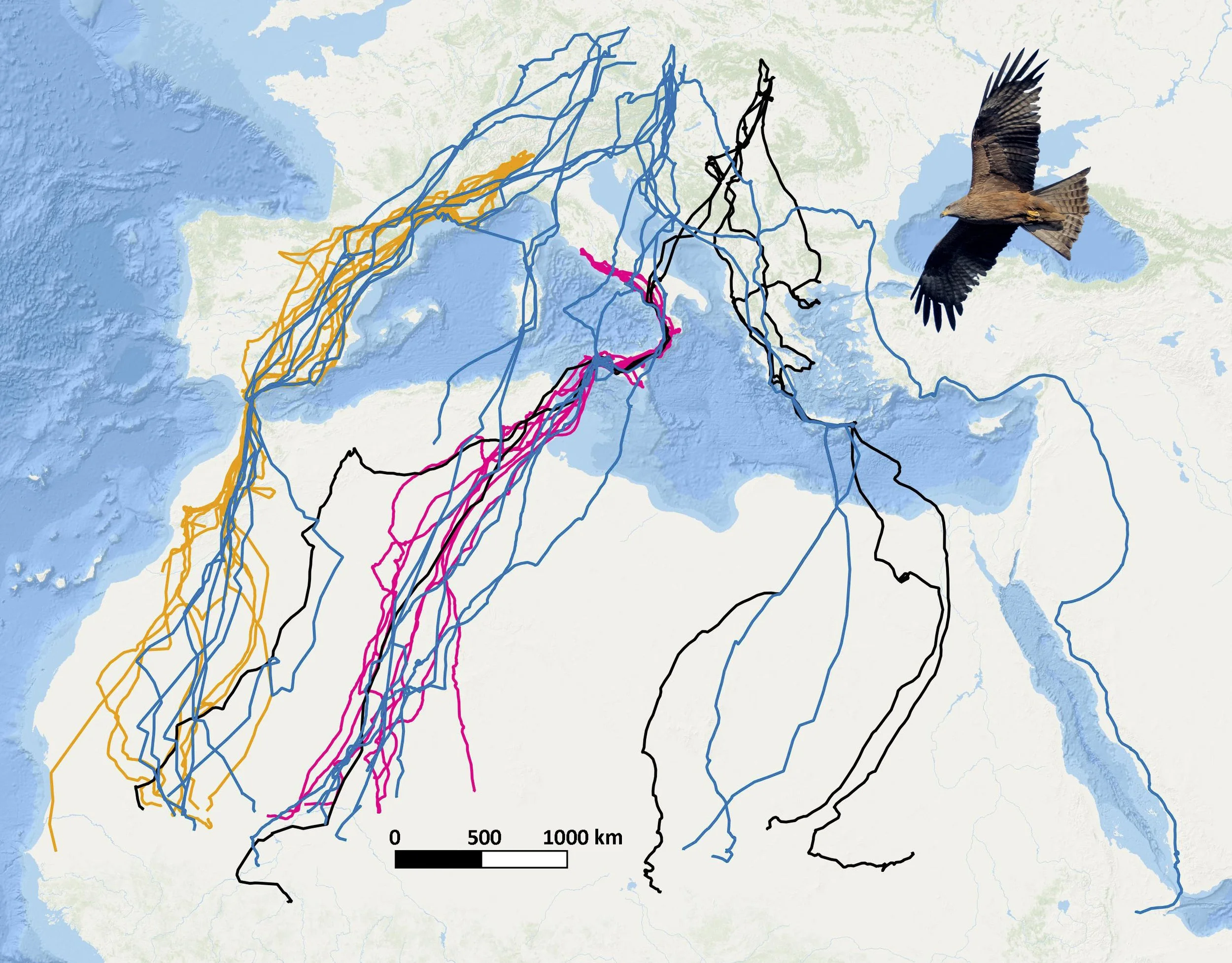
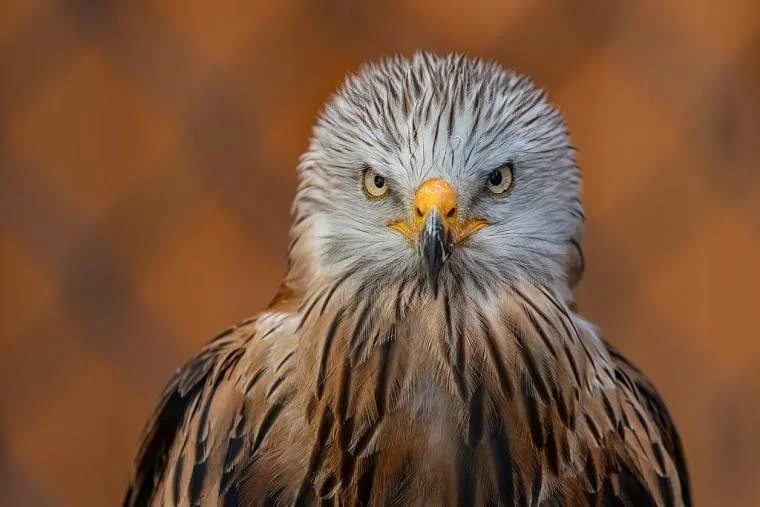
Study | Migratory divides highlight intraspecific flexibility in the stop-over tactic of black kites
A new study on black kites shows that migratory journeys can be remarkably flexible, shaped by geography, population origin and the resources that birds encounter along the way.
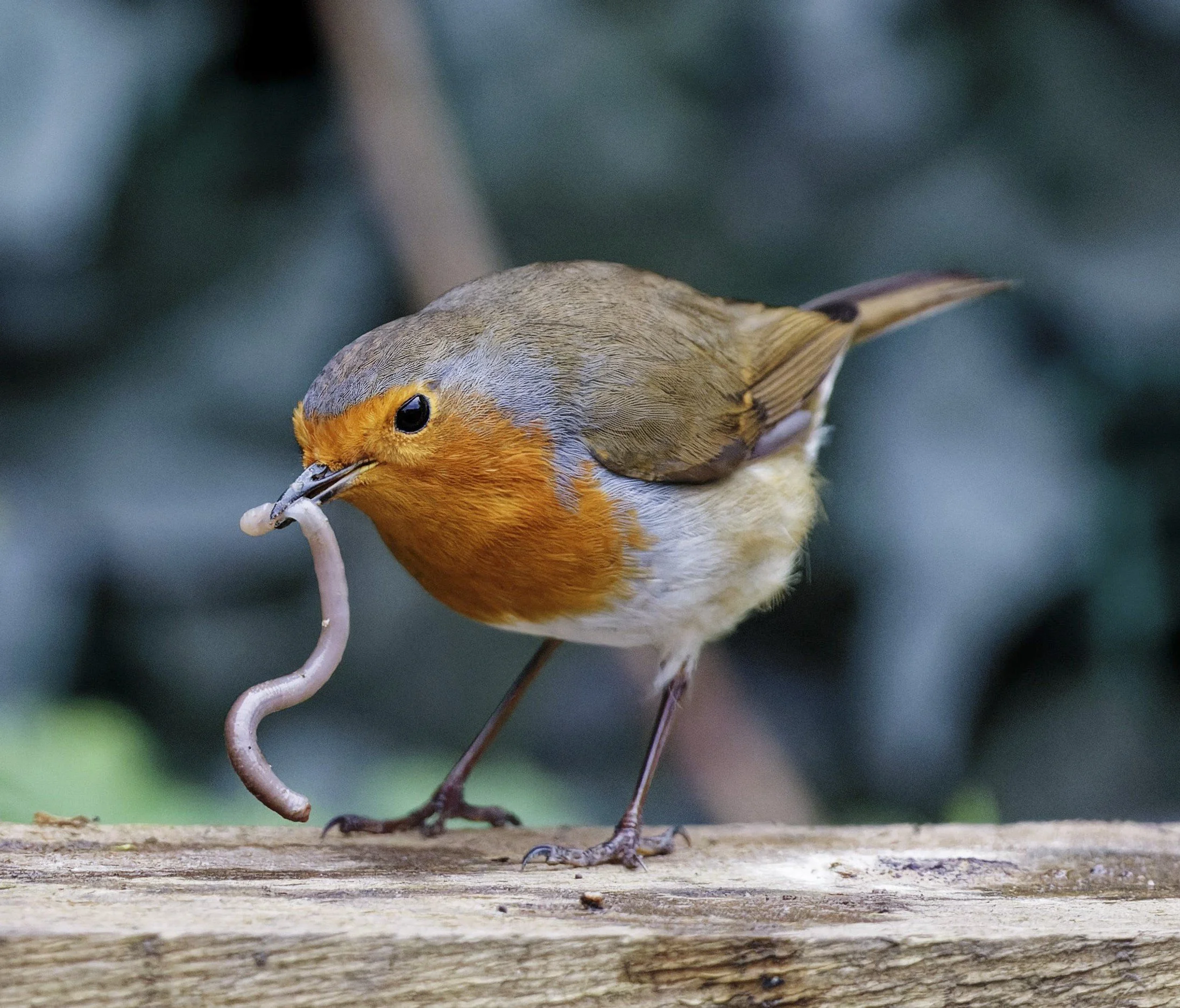
Call for Papers | Special issue “Decomposing avian diet: linking food, foraging and fitness”
The Journal of Avian Biology is inviting contributions for the special issue “Decomposing avian diet: linking food, foraging and fitness.” Submission deadline: 30 September 2027.
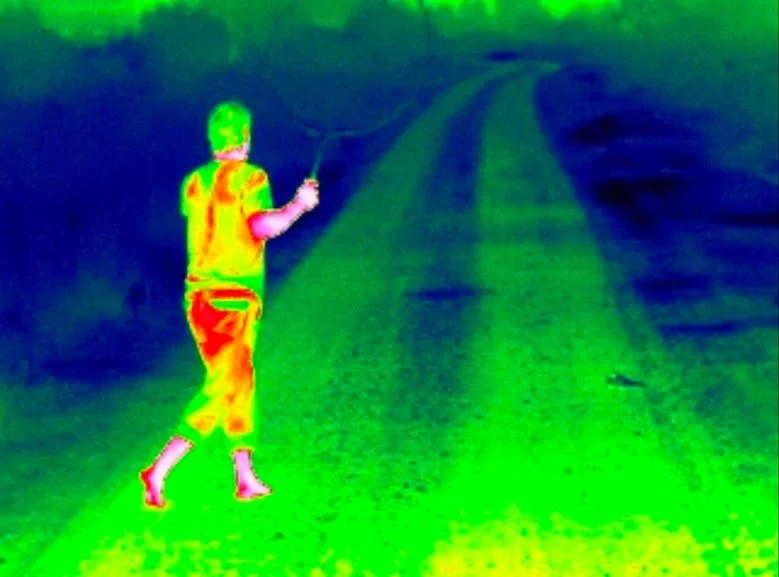
Study | Migratory nightjars roost on asphalt to reduce thermoregulatory costs and increase fuel accumulation
An 8-year study of red-necked nightjars found that birds preferentially roosted on thermally favorable asphalt roads during moonlit nights, potentially reducing thermoregulatory costs. This behavioral thermoregulation may improve energy balance and facilitate faster fuel deposition before migration.
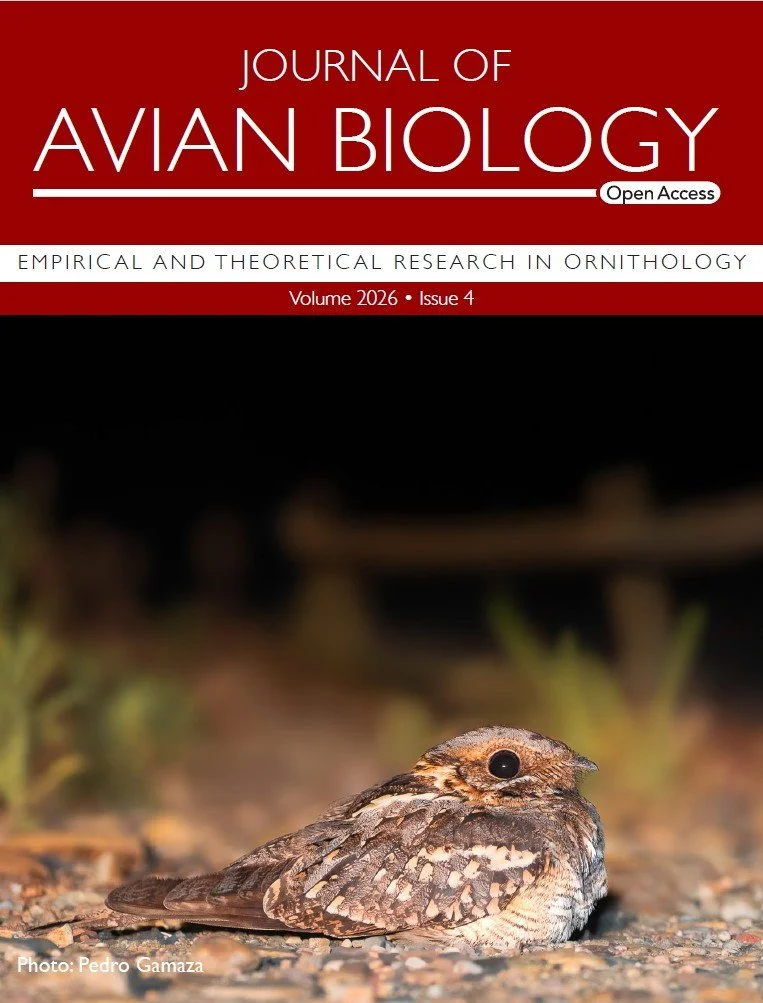
Cover | Do warm roads help nightjars fuel for migration?
Our 2026 issue 4 cover depicts a red-necked nightjar, photographed by Pedro Gamaza.
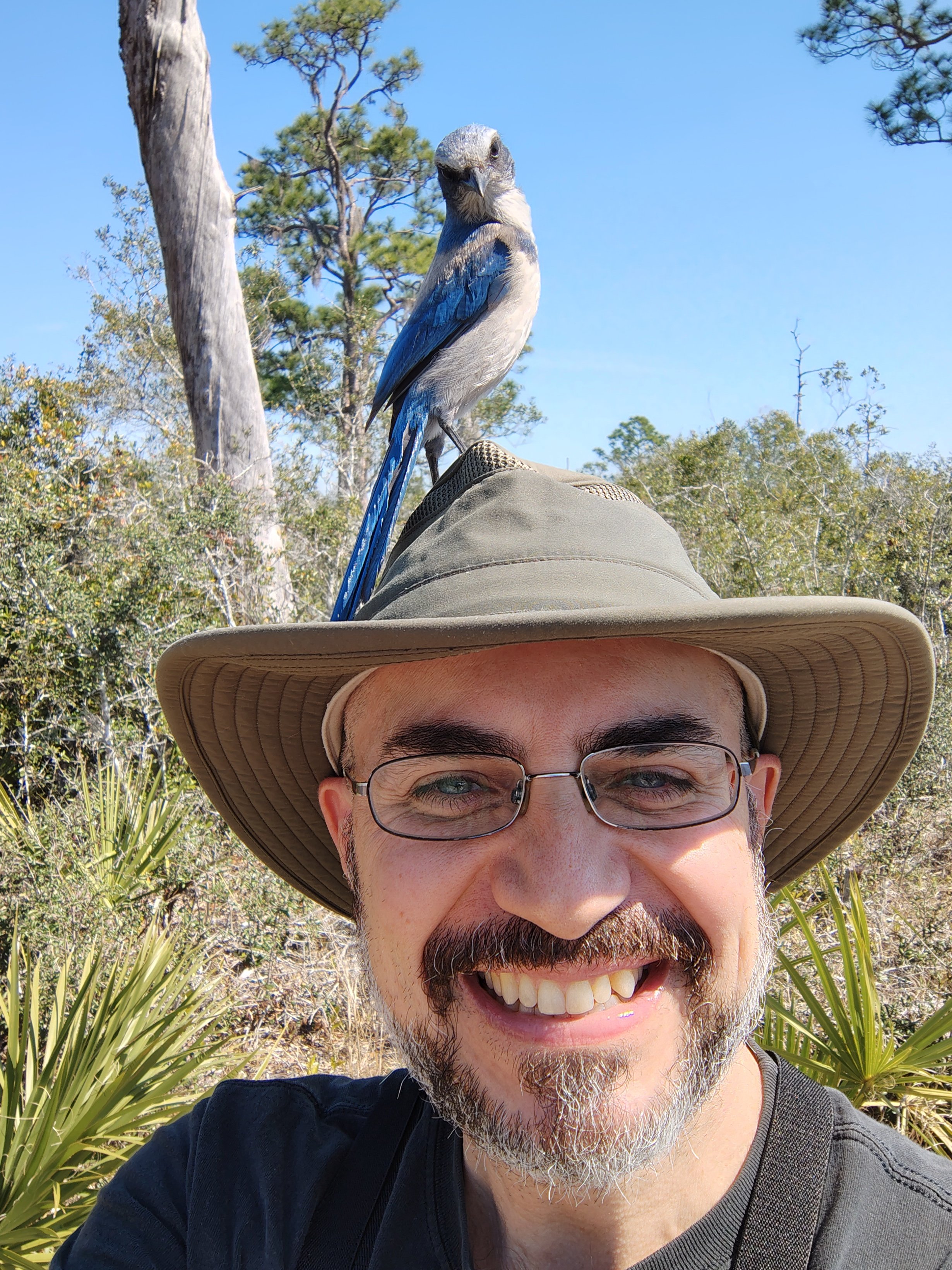
New Editor | Diego Santiago Alarcon, subject editor for JAB
We welcome Diego Santiago Alarcon to the editorial board of Journal of Avian Biology! Diego is a disease and community ecologist studying how human infuences shape bird-parasite interactions.
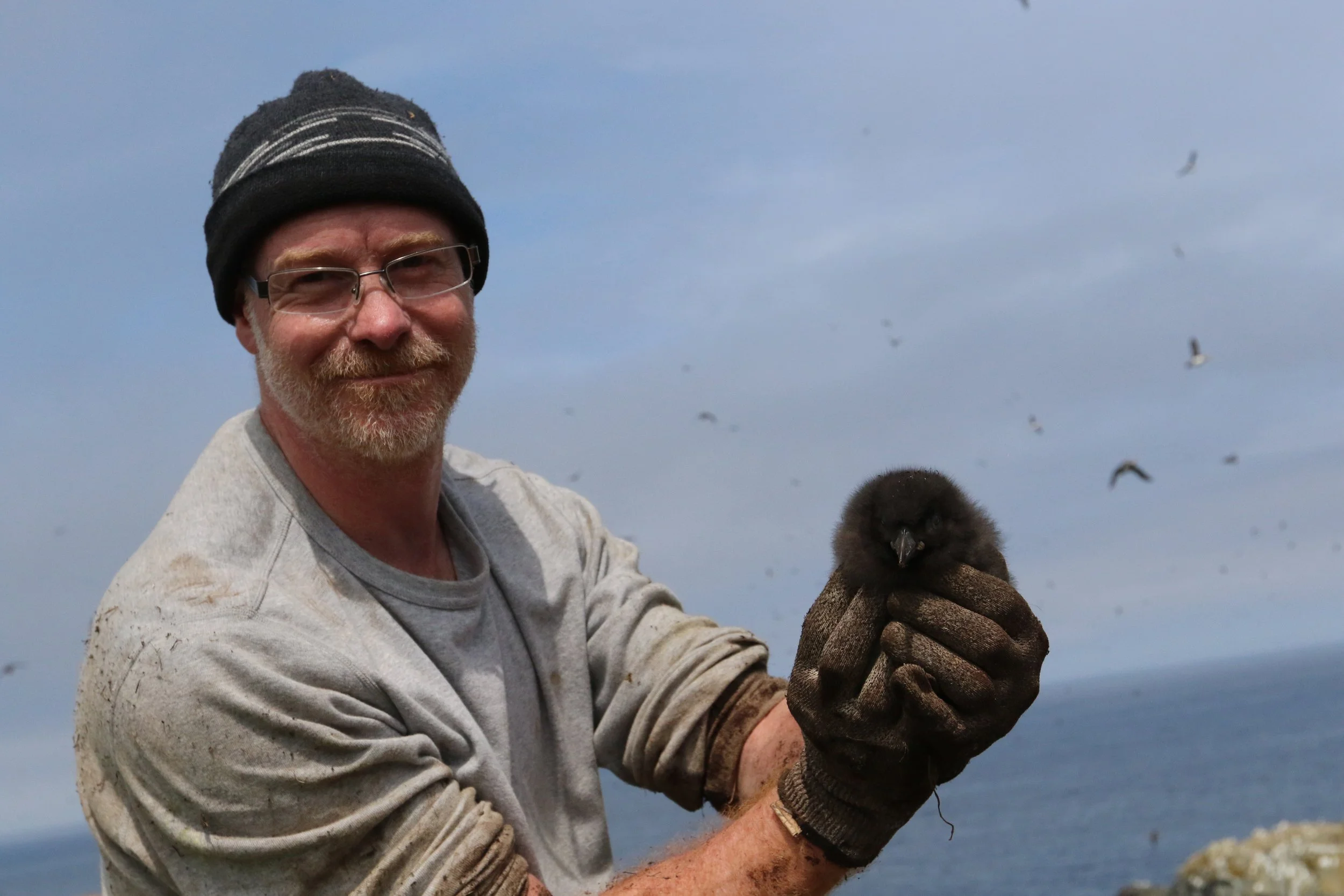
New Editor | Pierre-Paul Bitton, subject editor for JAB
We welcome Pierre-Paul Bitton to the editorial board of Journal of Avian Biology! Pierre-Paul is a seabird ecologist studying visual communication, coloration and social networks.
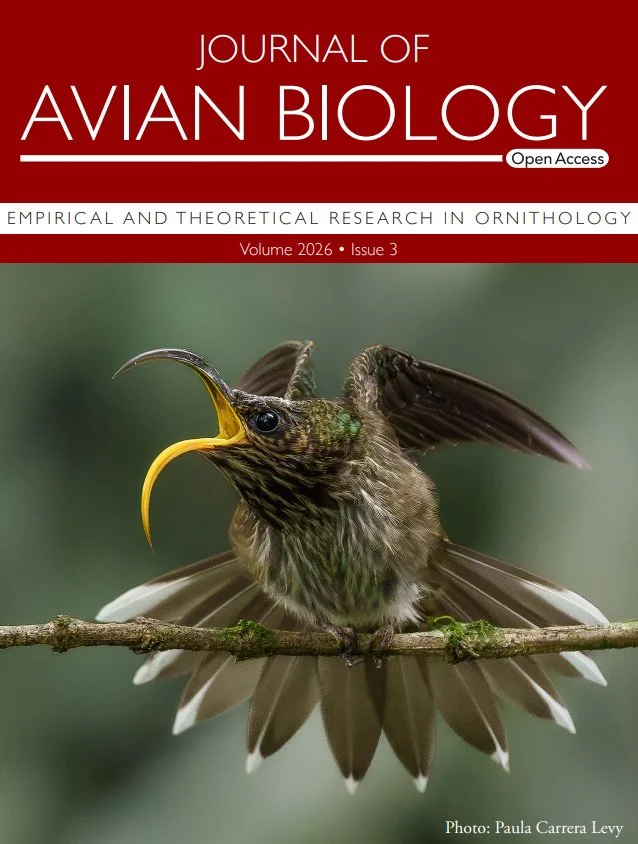
Cover | What does the white-tipped sicklebill tell us about connectivity and gene flow across the Andes?
Our 2026 issue 3 cover depicts a white-tipped sicklebill, photographed by Paula Carrera Levy.
Journal Update | Journal of Avian Biology launches a new article type
To help launch our new article type, ‘Methods and Tools’, we have put together a Virtual Issue of method-focused Research Articles or Short Communications that have been published in the journal during the last three years.

Special Issue | Guest editor interview: new frontiers in migration physiology
We asked the guest editors Tiia Kärkkäinen, Pablo Salmón and Barbara Helm how the issue came together, what discoveries that surprised them most, and why the field remains wide open for the next generation of curious minds.
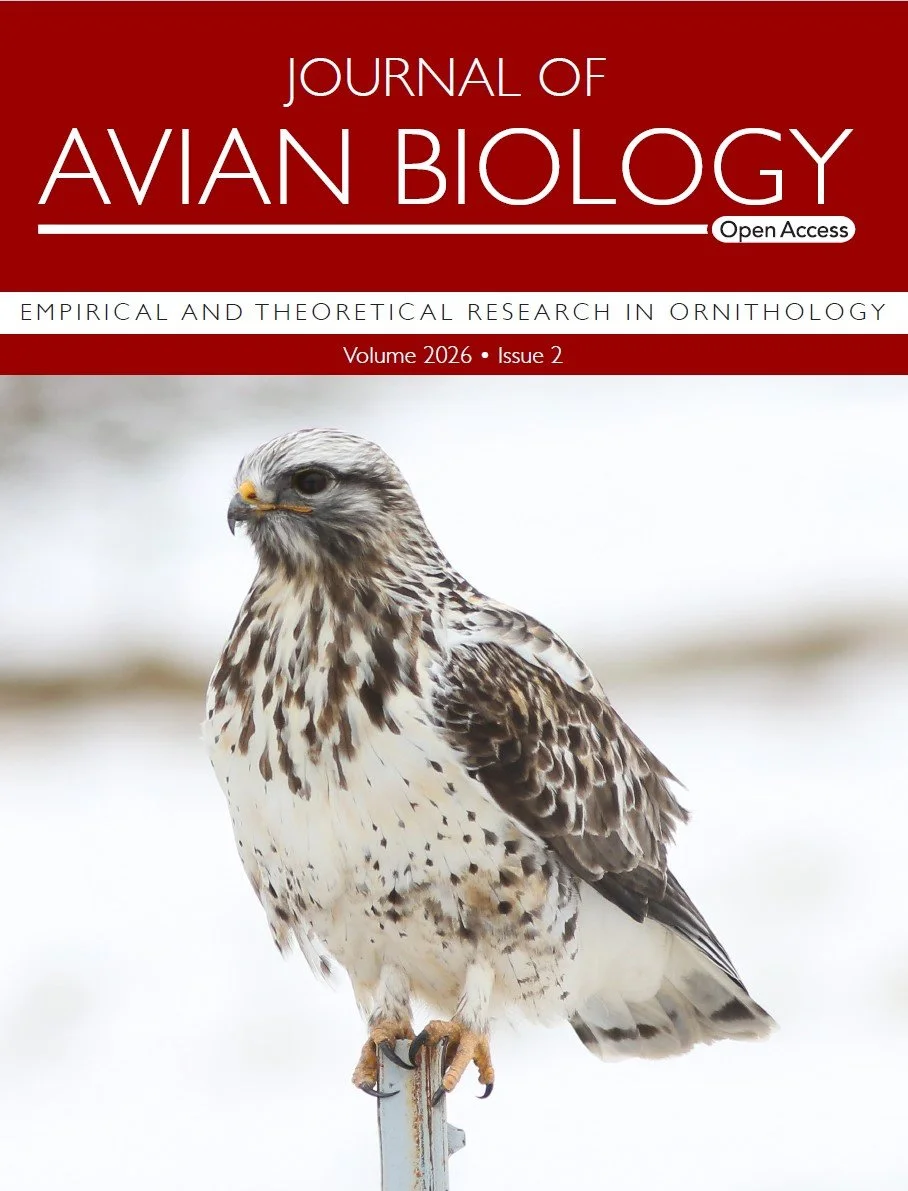
Cover | How do disease outbreaks reshape the cost of migration?
Our 2026 issue 2 cover depicts a rough-legged buzzard/hawk, photographed by Neil Paprocki.
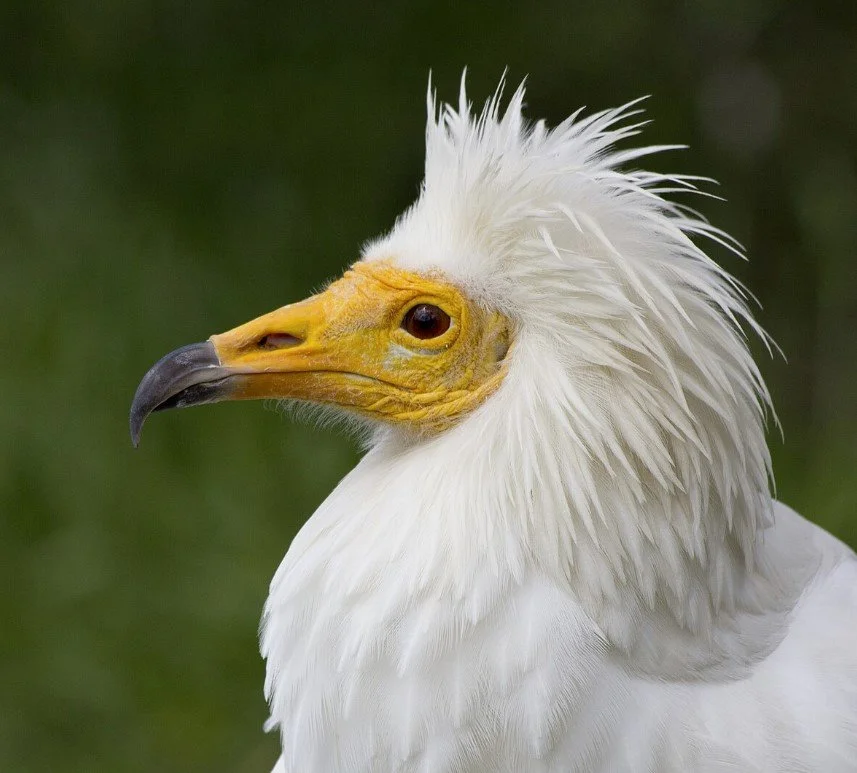
Study | Balancing moult, migration, and breeding in a long-lived partial migrant raptor
Balancing moult, migration, and breeding is not simply a matter of distance travelled. It is the outcome of a complex energetic compromise shaped by climate, life stage, and reproductive demands.
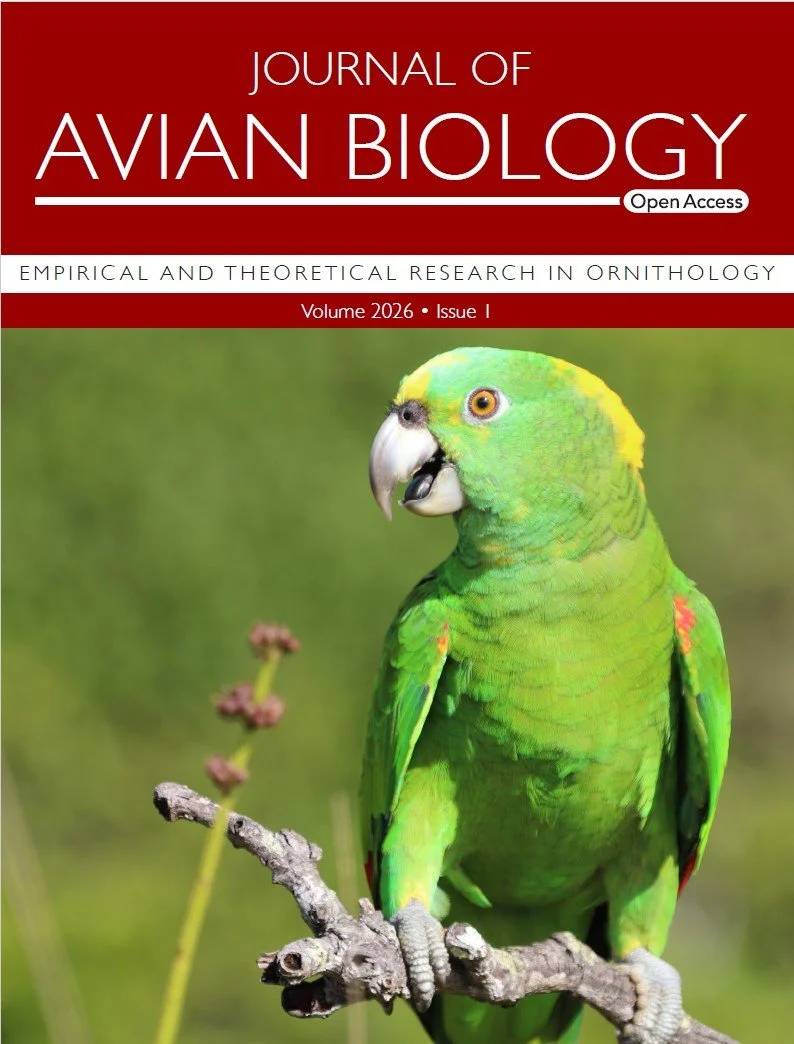
Cover | How complex are parrot duets? Evidence for large repertoires and syntactic structure in a wild species
Our latest cover depicts a yellow-naped amazon, photographed by JD Gilardi, World Parrot Trust.
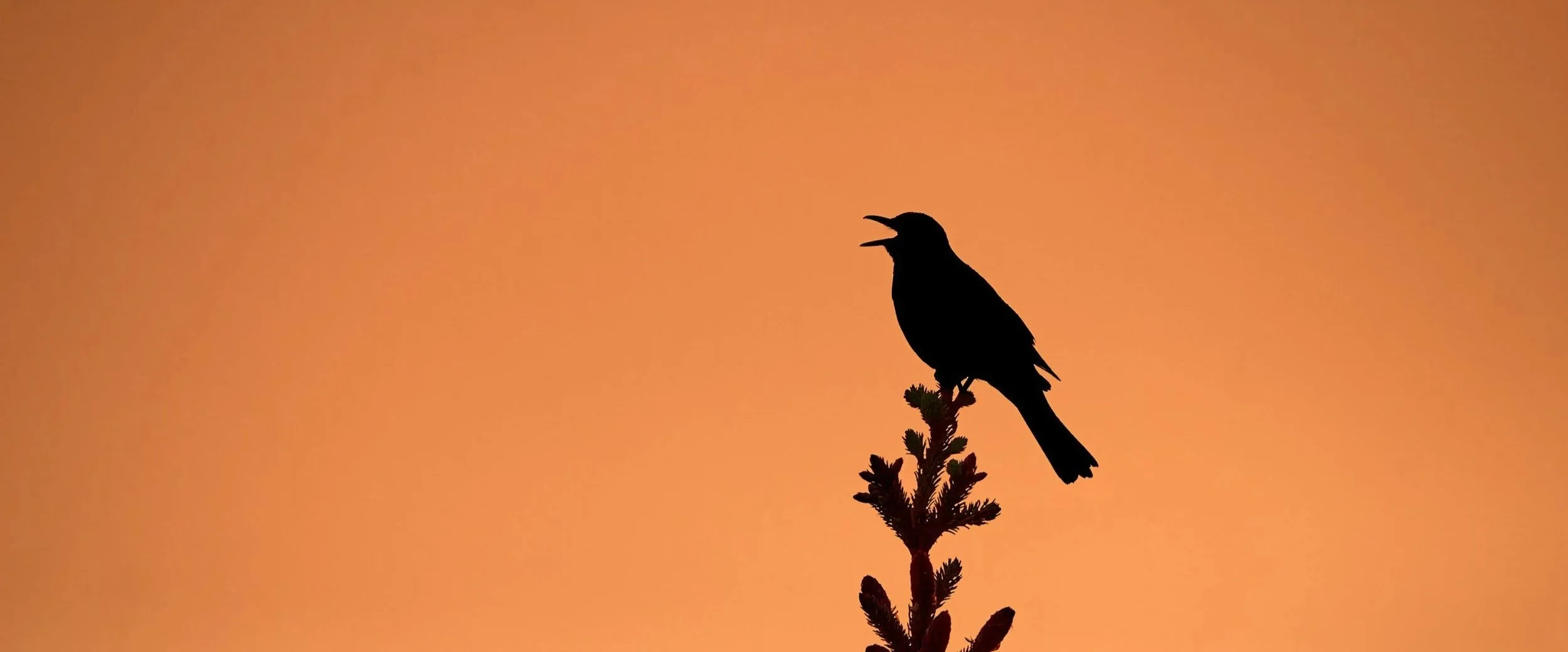
Call for Papers | Special issue “From chirps to insights”
The Journal of Avian Biology is inviting contributions for the special issue “From chirps to insights: passive acoustic monitoring for applied ornithology.” NEW submission deadline: 30 September 2026.
Award | Announcing the 2026 JAB Review Award competition
We are happy to announce the fourth open competition for the JAB Review Award, given to an early career research scientist with an exceptional mini-review manuscript. Submission deadline: 15 Oct 2027.
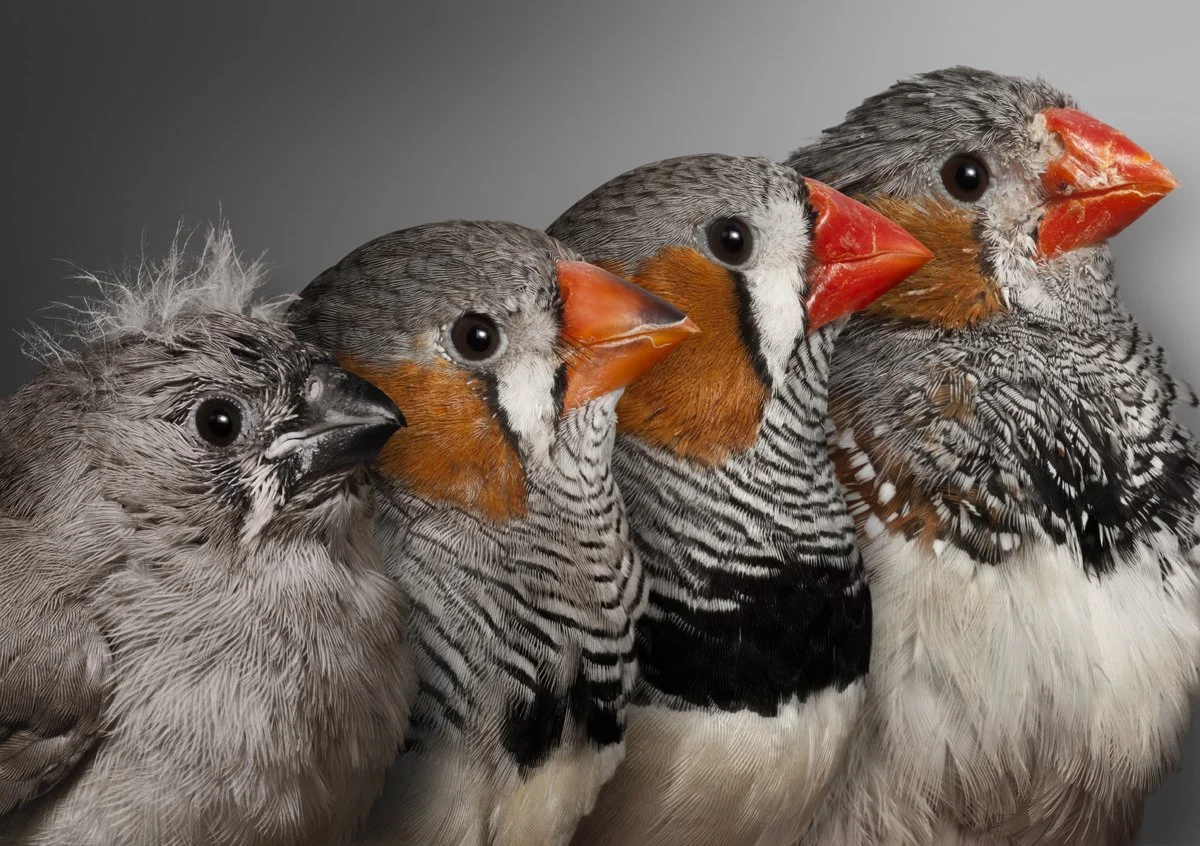
Call for Papers | Special issue on avian senescence
The Journal of Avian Biology is inviting contributions for the special issue “Avian senescence: patterns, mechanisms and new perspectives.” Submission deadline: 30 June 2026.
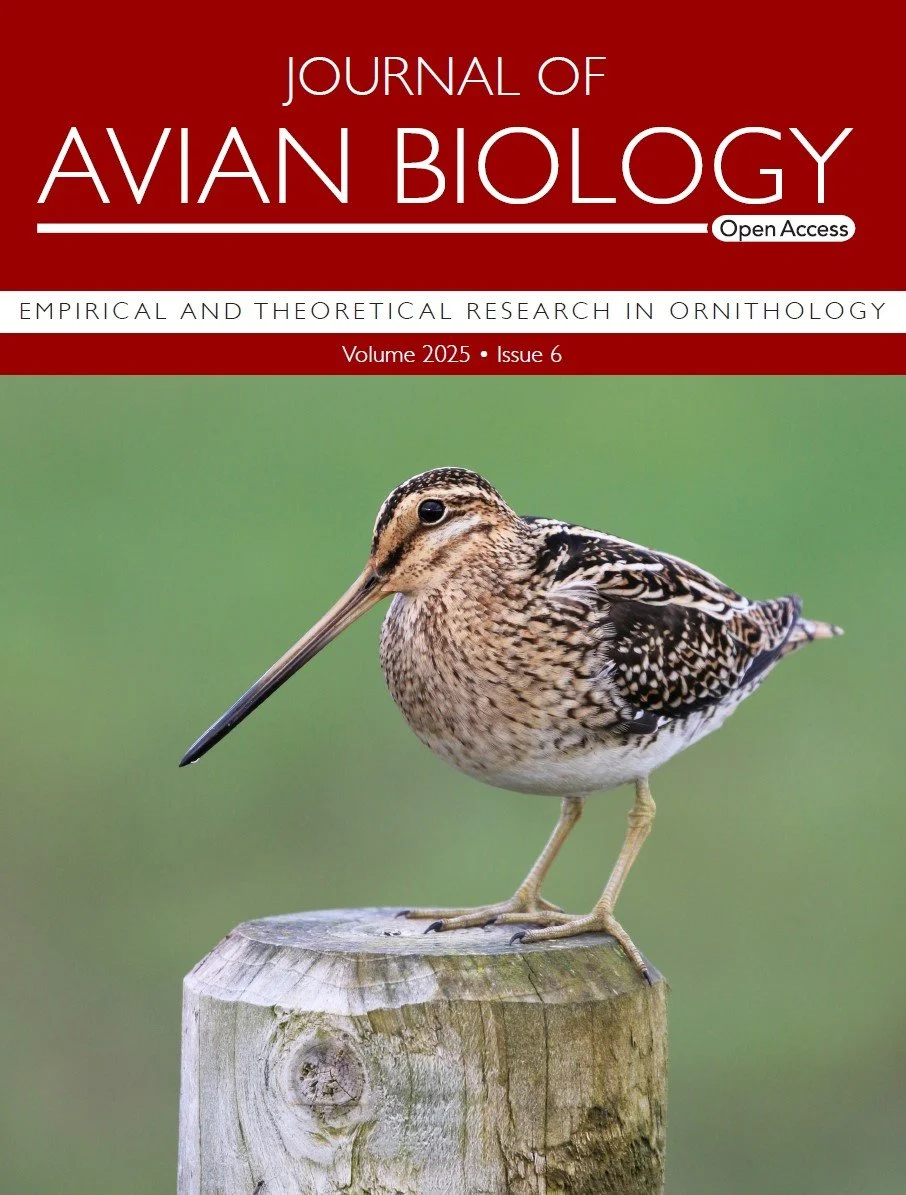
Cover | How do low-traffic roads affect ground-nesting birds?
Our latest cover depicts a common snipe, photographed by Tómas G. Gunnarsson.
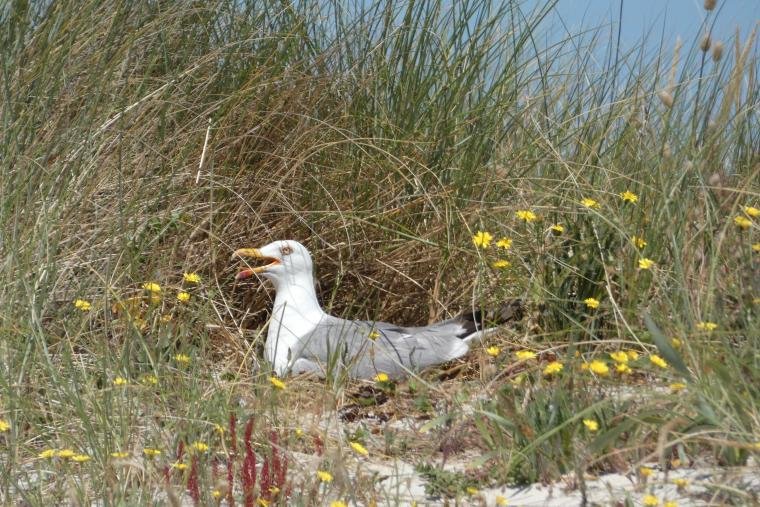
*Study | Gulls promote multi-species colonies as they leave former refuges
The yellow-legged gull (Larus michahellis) is often considered an over-abundant pest species, stemming from a belief that is not entirely correct.
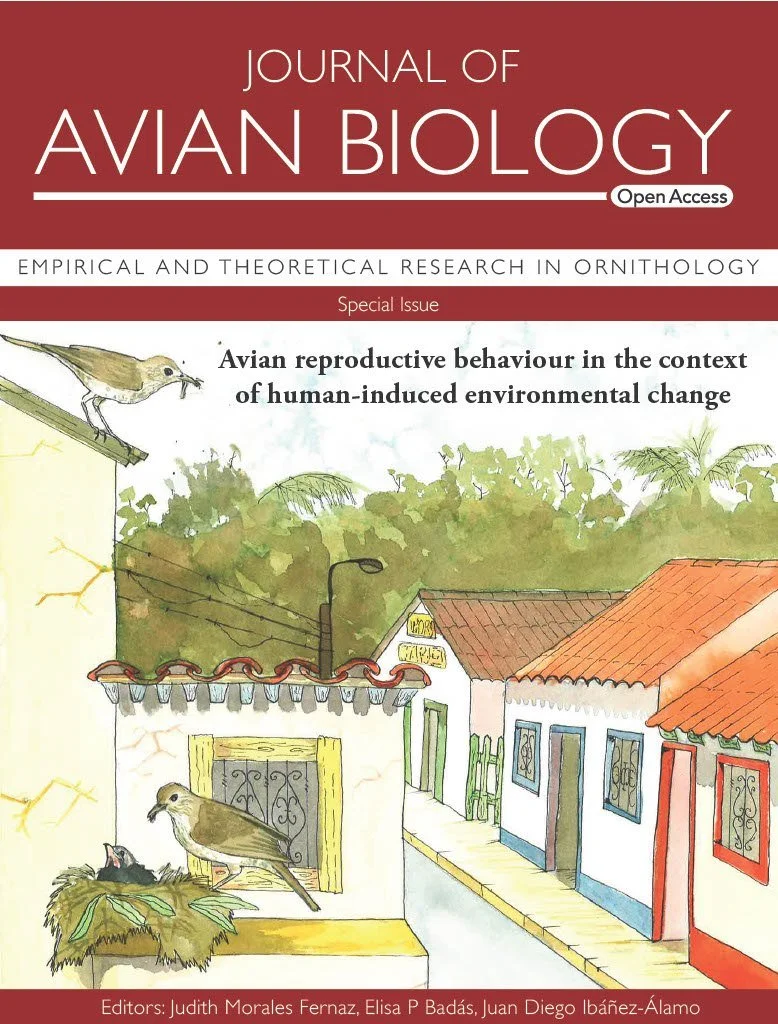
Special Issue | Ask the editors: human pressures on bird reproduction
What’s it like to edit a special issue for JAB? Hear it from the guest editors of “Avian reproductive behaviours in the context of human-induced environmental change.”
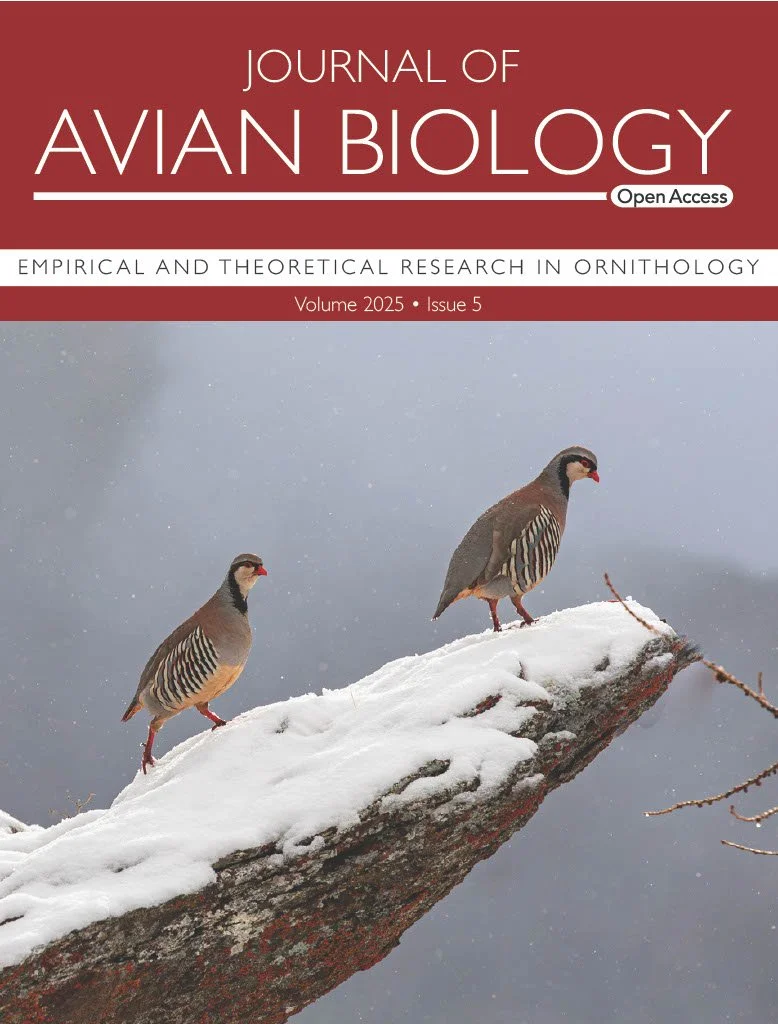
*Cover | Incubation behaviour in a double-nesting alpine bird Alectoris graeca saxatilis: similar nest attendance by males and females
September-October cover depicting a rock partridge pair, featuring the article 'Incubation behaviour in a double-nesting alpine bird Alectoris graeca saxatilis: similar nest attendance by males and females' by Bernard-Laurent et al. Photo credit: Jean Guillet.