

News from Our Journals
Browse News by Journal
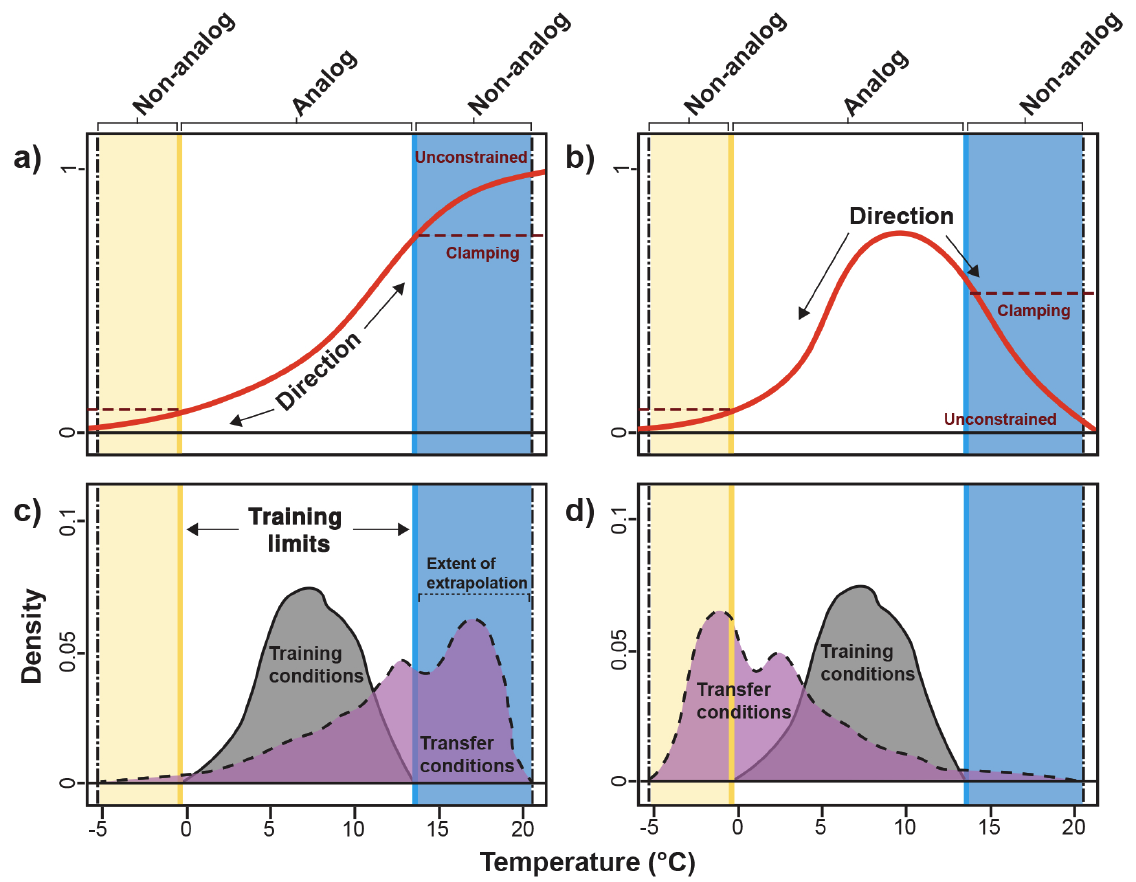
Study | To clamp or not to clamp? That is the extrapolation question
Species distribution models often extrapolate when transferred to novel climates or regions—and how you handle that extrapolation can drastically change your predictions. A new ENMeval workflow helps you visualize model behavior and choose the best strategy for each variable, leading to more realistic forecasts.
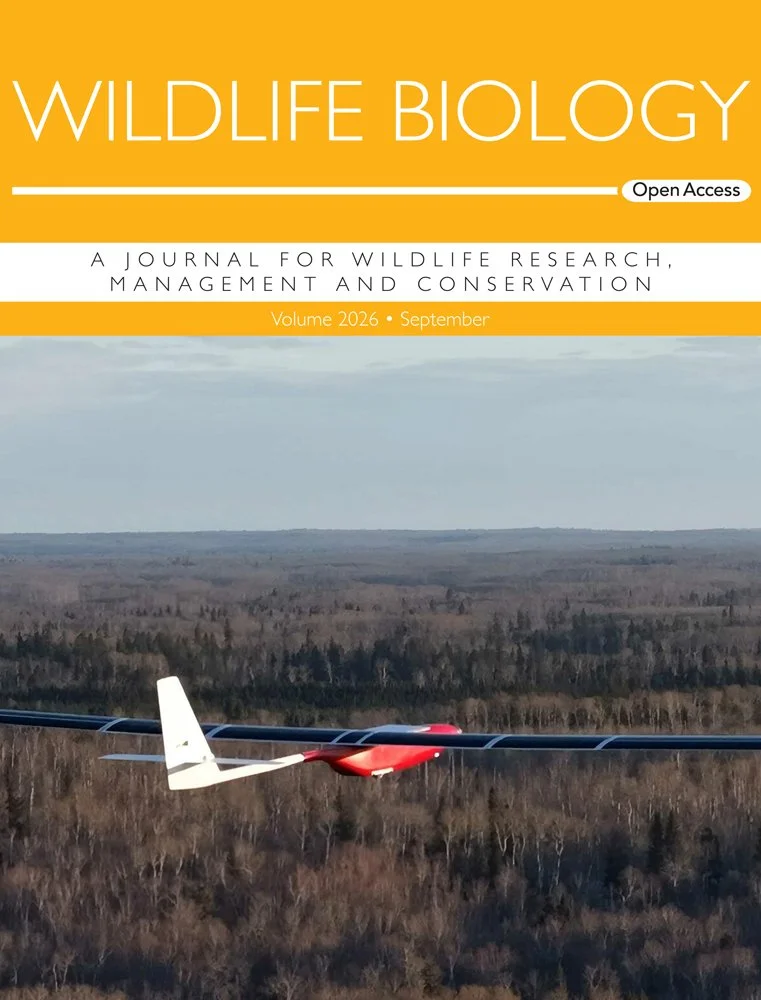
Cover | 450 Hours Above the Wild
In this cover, a fixed-wing, solar-electric small uncrewed aerial vehicle (UAV) is showcased, which was used to monitor wildlife.
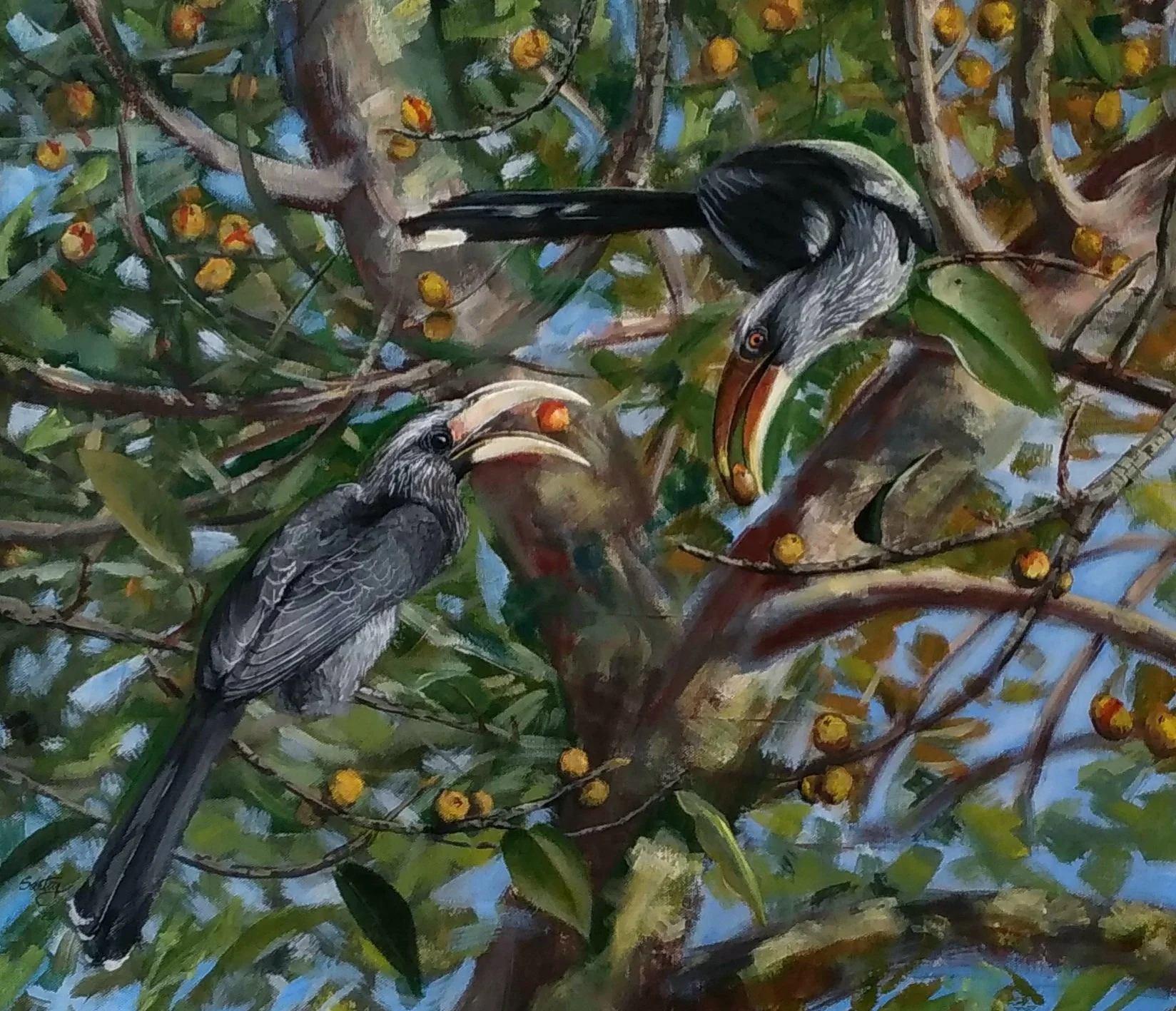
Field Story | An Encounter in the Elephant Hills
A field story by Rintu Mandal, narrating a chase by an elephant in the forests of the Western Ghats during data collection for this study. Illustration by Sartaj Ghuman.
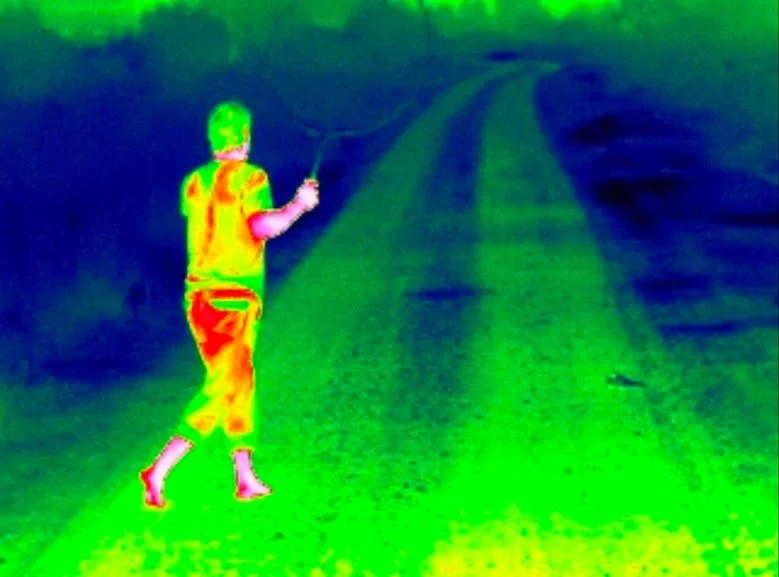
Study | Migratory nightjars roost on asphalt to reduce thermoregulatory costs and increase fuel accumulation
An 8-year study of red-necked nightjars found that birds preferentially roosted on thermally favorable asphalt roads during moonlit nights, potentially reducing thermoregulatory costs. This behavioral thermoregulation may improve energy balance and facilitate faster fuel deposition before migration.
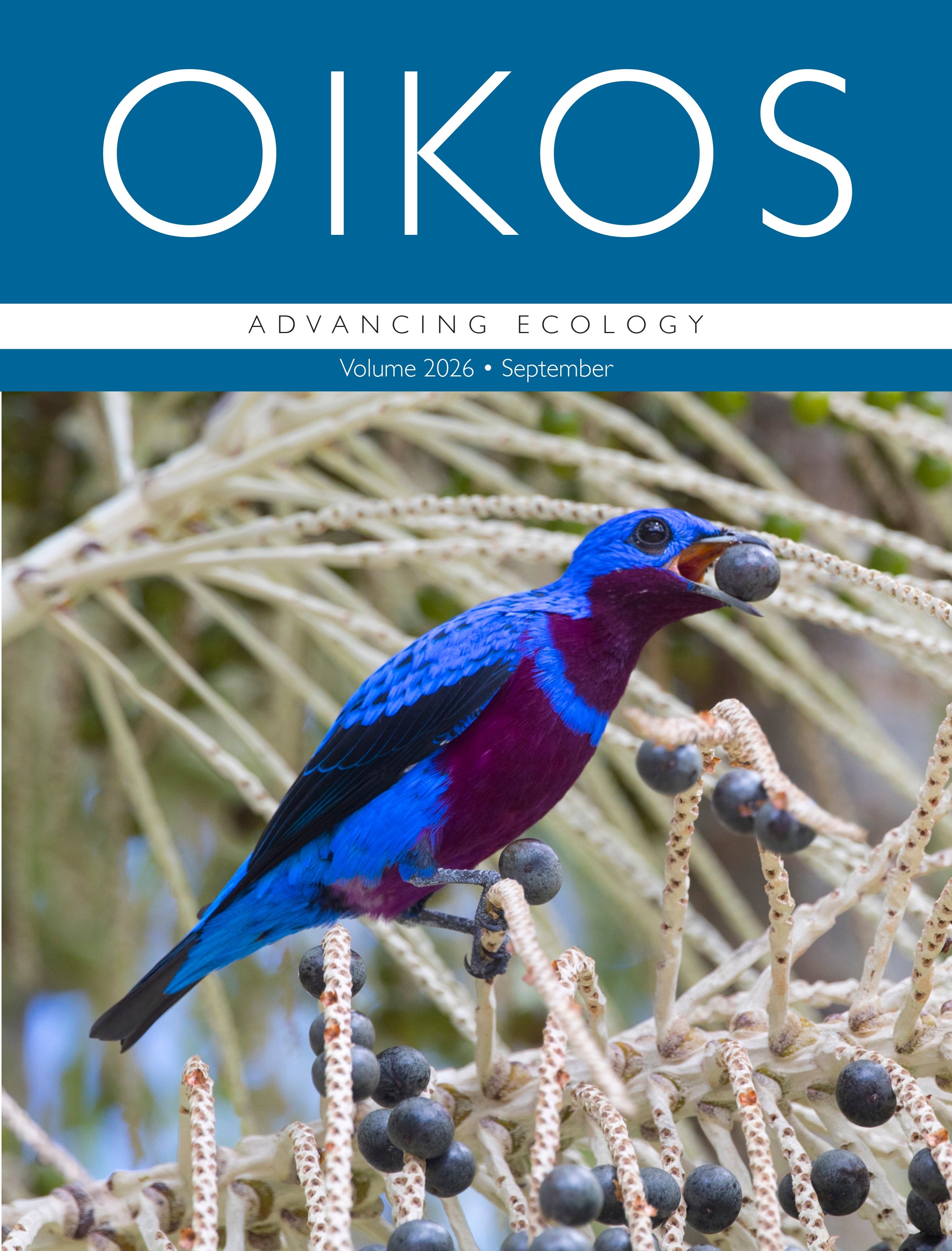
Cover | Frugivory and Seed Dispersal Issue
A crejoá (Cotinga maculata, Cotingidae), an endemic and endangered frugivorous bird of the Brazilian Atlantic Forest, feeding on the fruits of açaí (Euterpe oleracea, Arecaceae) in an açaí plantation in Porto Seguro, Bahia, Brazil. Photo by Ciro Albano
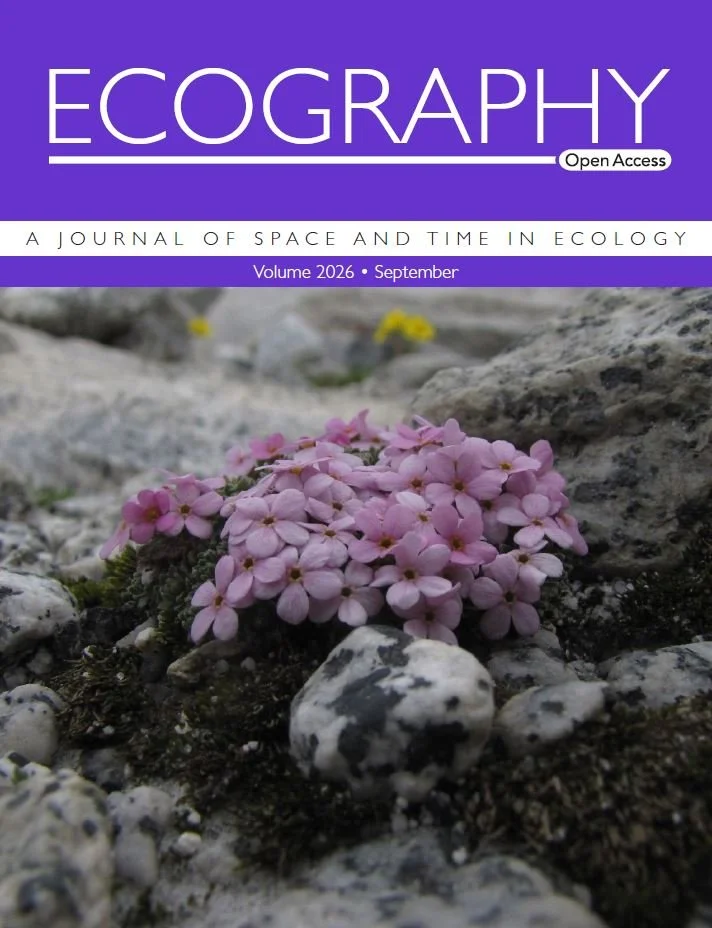
Cover | Ice Patches as Lifelines for Alpine Species
The cover shows Androsace alpina from the Amola Glacier in the Italian Alps. Global warming is threatening the survival of cold-adapted Alpine species like one. Ice-related landforms like debris-covered glaciers may buffer such negative effects on species able to grow on them. Photo credit: Marco Caccianiga.
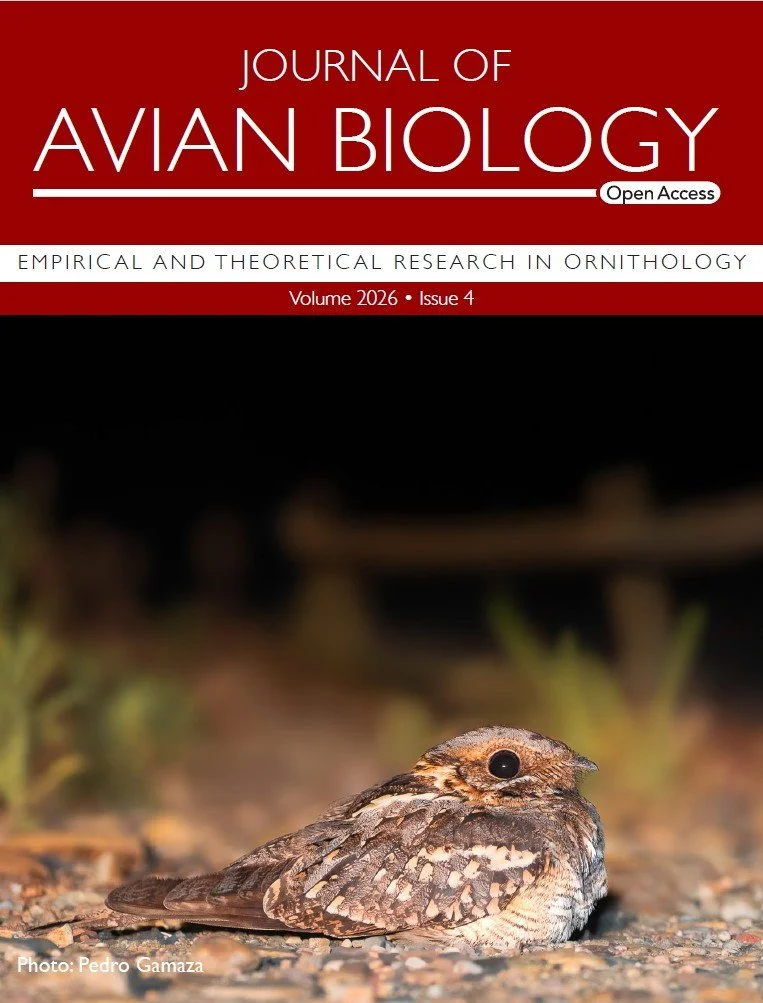
Cover | Do warm roads help nightjars fuel for migration?
Our 2026 issue 4 cover depicts a red-necked nightjar, photographed by Pedro Gamaza.
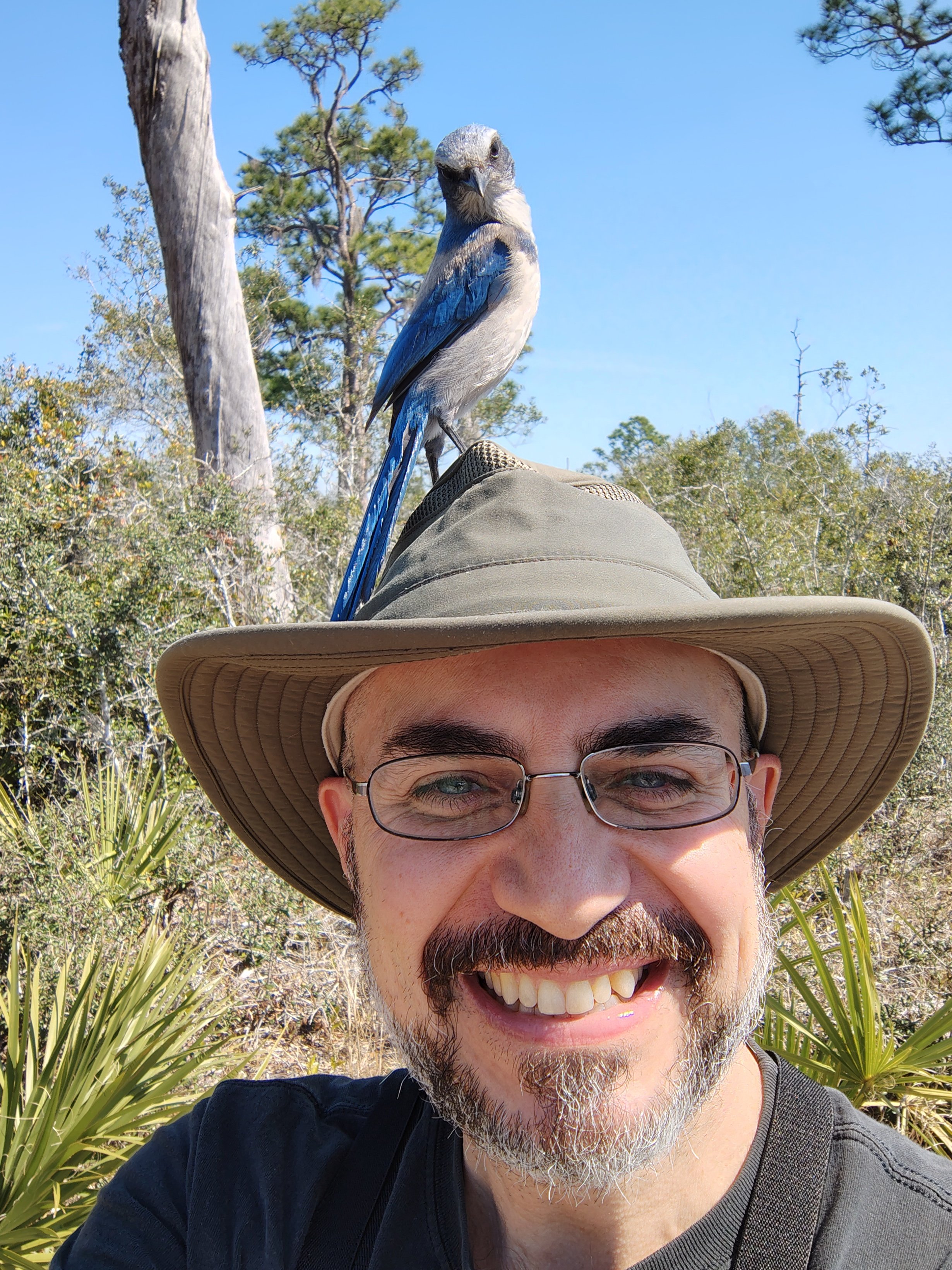
New Editor | Diego Santiago Alarcon, subject editor for JAB
We welcome Diego Santiago Alarcon to the editorial board of Journal of Avian Biology! Diego is a disease and community ecologist studying how human infuences shape bird-parasite interactions.
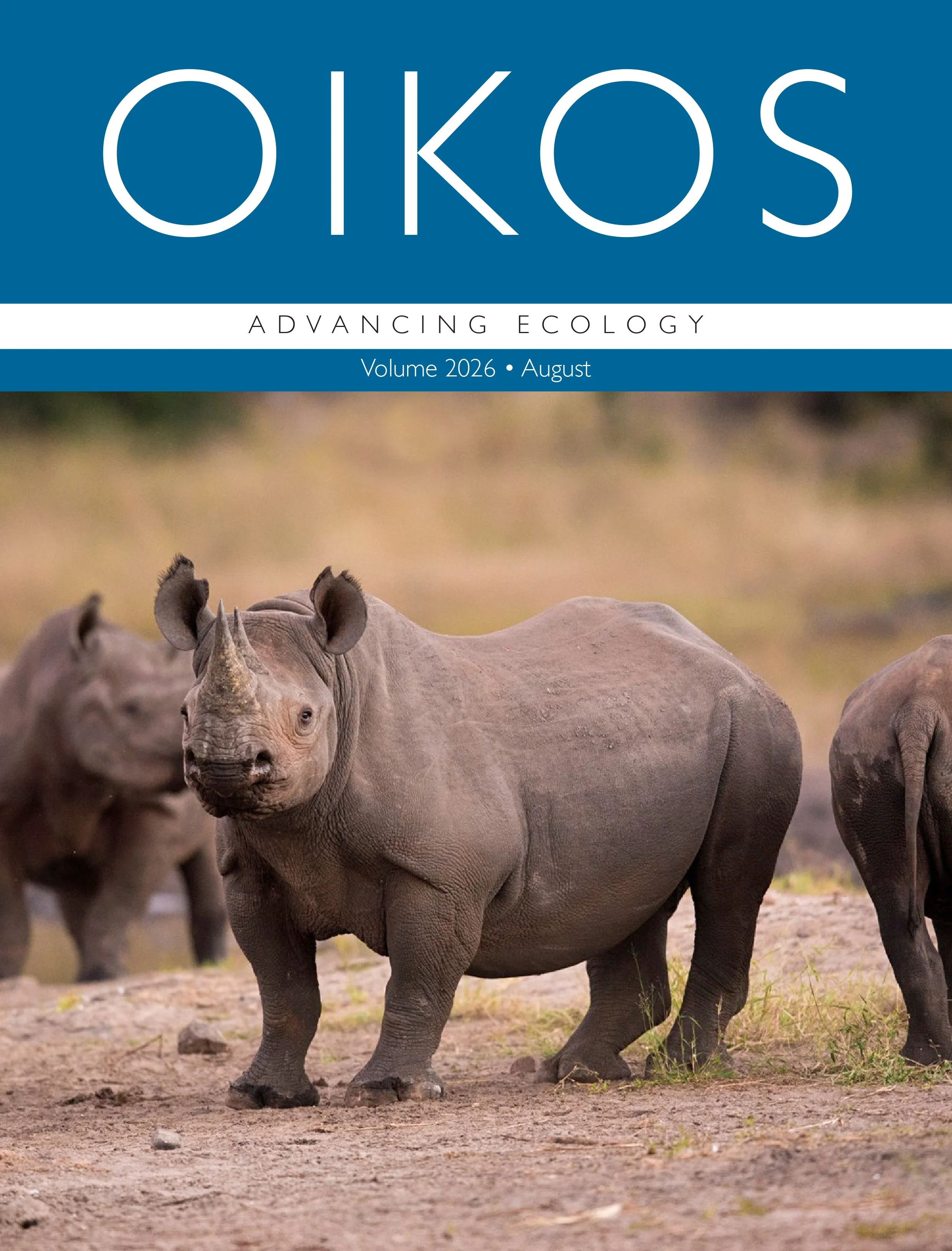
Cover | Social Lives of Solitary Rhinos
Periodic social interactions are important to animal fitness, even in solitary species. For solitary species, these interactions can be unexpected and shaped by previous encounters. Photo by Jenny Hishin
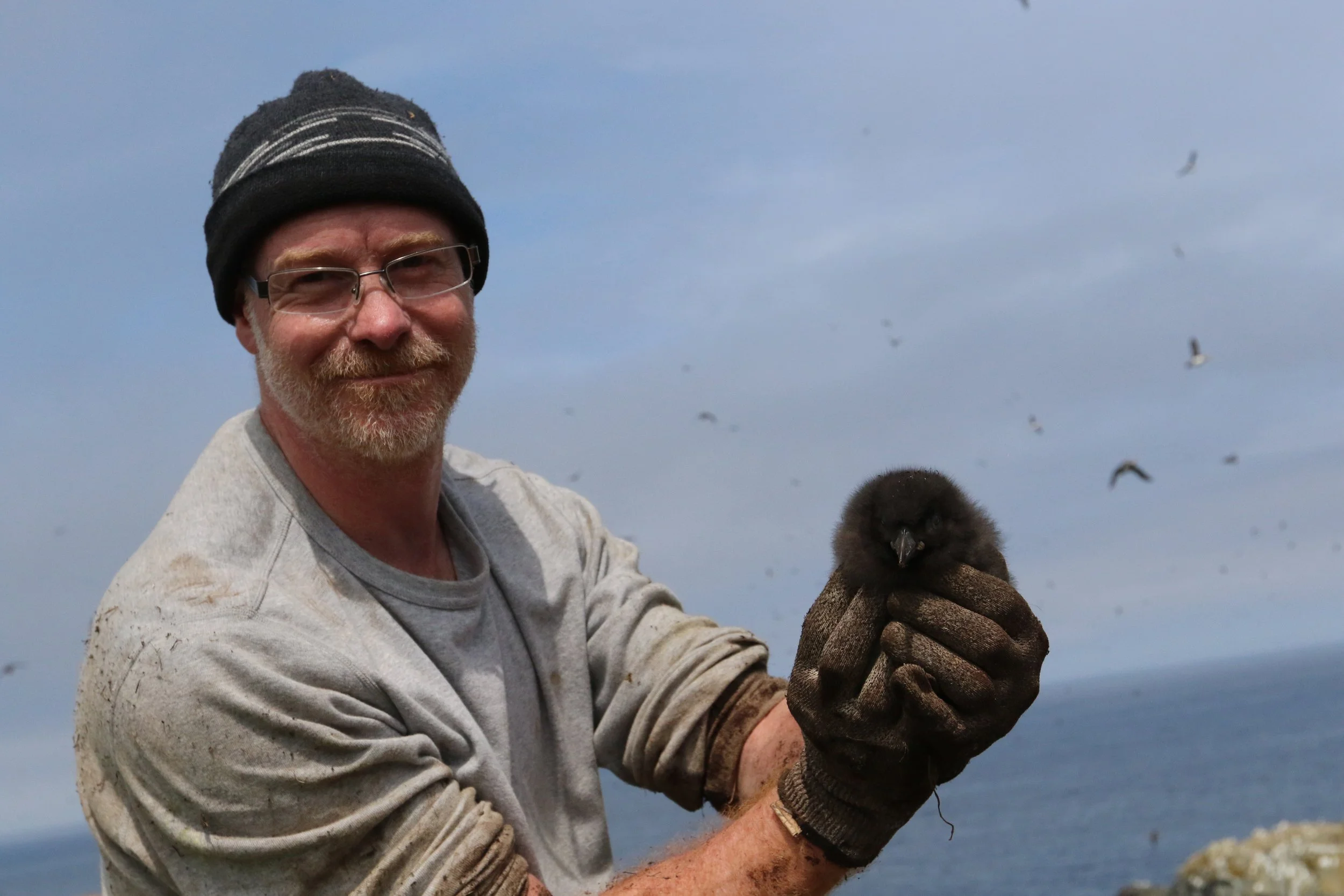
New Editor | Pierre-Paul Bitton, subject editor for JAB
We welcome Pierre-Paul Bitton to the editorial board of Journal of Avian Biology! Pierre-Paul is a seabird ecologist studying visual communication, coloration and social networks.

View from the editor's desk | Should journals reject papers after “too many” unsuccessful reviewer invitations?
Reviewer availability is not a measure of manuscript quality; journals should keep searching and authors should help broaden the reviewer pool. Read more from Oikos Editor-in-Chief Pedro Peres-Neto.
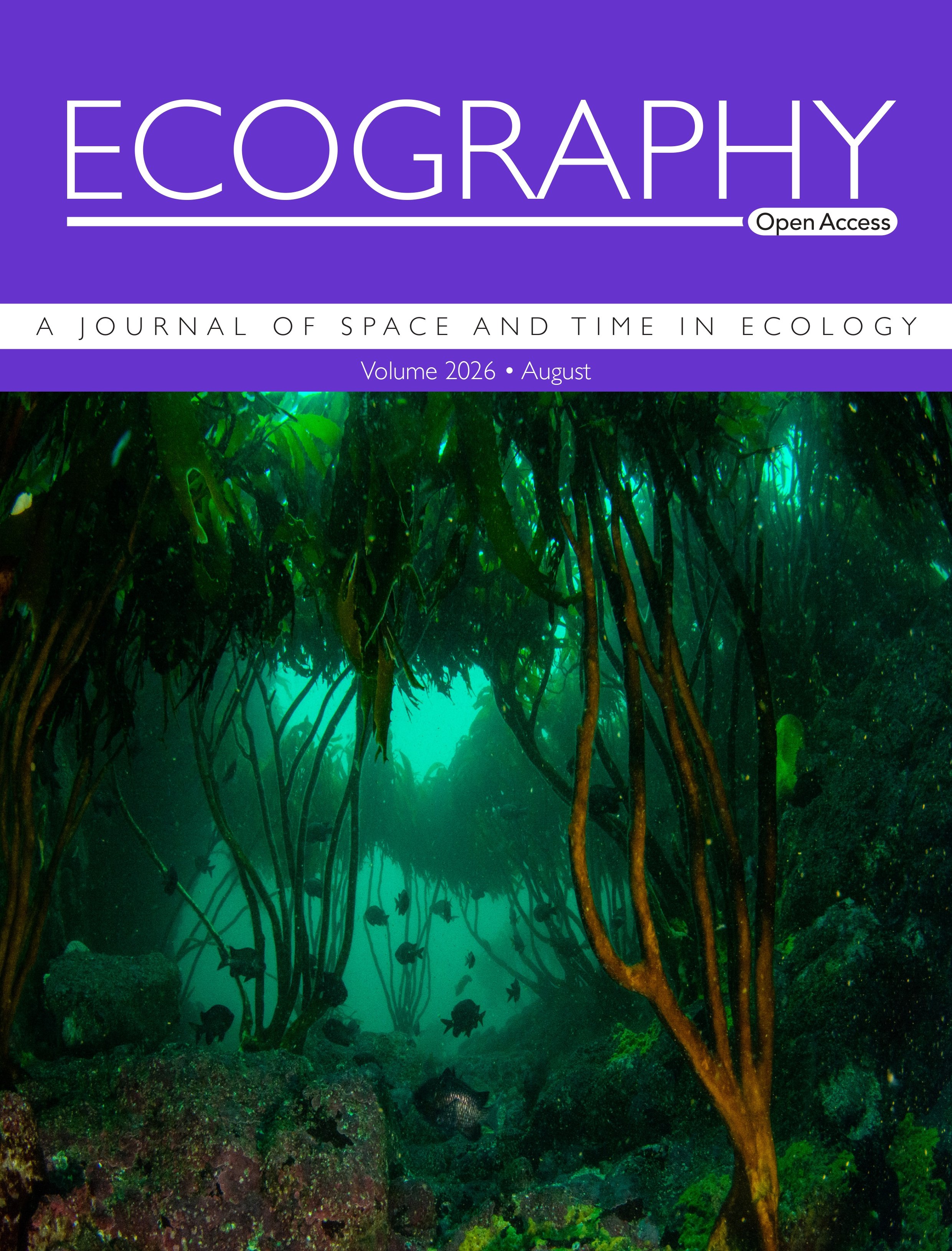
Cover | The Complex Menu of Coastal Chile
The photo features a Subtidal kelp forest of Lessonia trabeculata with fish assemblage, representative of the rocky reefs from the Chilean coast, where the study was conducted.. Photo credit: Alejandro Perez-Matus.
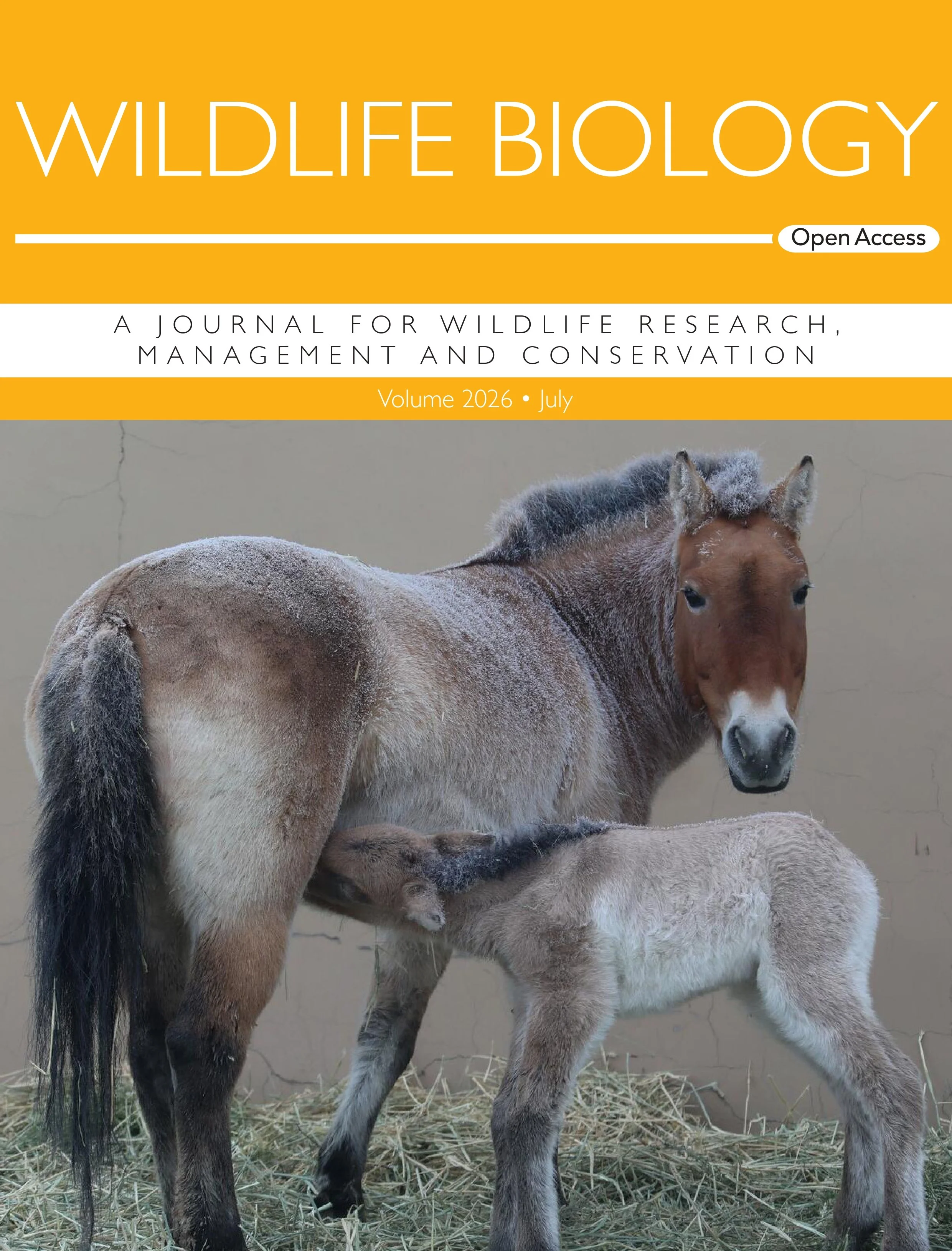
Cover | Przewalski's Horse: A Conservation Success with a Genetic Cost
The newborn foal Snowflake Princess, born on January 30, 2021, was the first foal born in winter in the breeding center’s 40-year history. Unlike foals born during the normal breeding season, she required intensive care and veterinary assistance. Photo by Qing Cao

New Editor | Lauren Talluto, subject editor for Ecography
We welcome Lauren Talluto to our Ecography editorial board! She is an ecological modeller and macroecologist, specialised in statistics and ecological modelling and working at spatial scales ranging from (meta-) ecosystem-level to continental and global analyses.

New Editor | Eduardo Fuentes-Lillo, subject editor for Ecography
We welcome Eduardo Fuentes-Lillo to our Ecography editorial board! He is a plant ecologist interested in understanding how biological invasions, environmental gradients, microclimate, and human disturbance shape biodiversity patterns in mountain and high-latitude ecosystems.

New Editor | Evangelina Schwindt, subject editor for Ecography
We welcome Evangelina Schwindt to our Ecography editorial board! She is a marine ecologist studying the patterns, processes, and consequences of marine and estuarine invasions. Based on the coast of Patagonia, Argentina, her work spans coastal ecosystems, including ports and marine protected areas.

New Editor | Oscar Alejandro Pérez-Escobar, subject editor for Ecography
We welcome Oscar Alejandro Pérez-Escobar to our Ecography editorial board! He is an evolutionary biologist and plant systematist at the Royal Botanic Gardens, Kew, who studies how orchids diversify across space and time.

Cover | What does the white-tipped sicklebill tell us about connectivity and gene flow across the Andes?
Our 2026 issue 3 cover depicts a white-tipped sicklebill, photographed by Paula Carrera Levy.
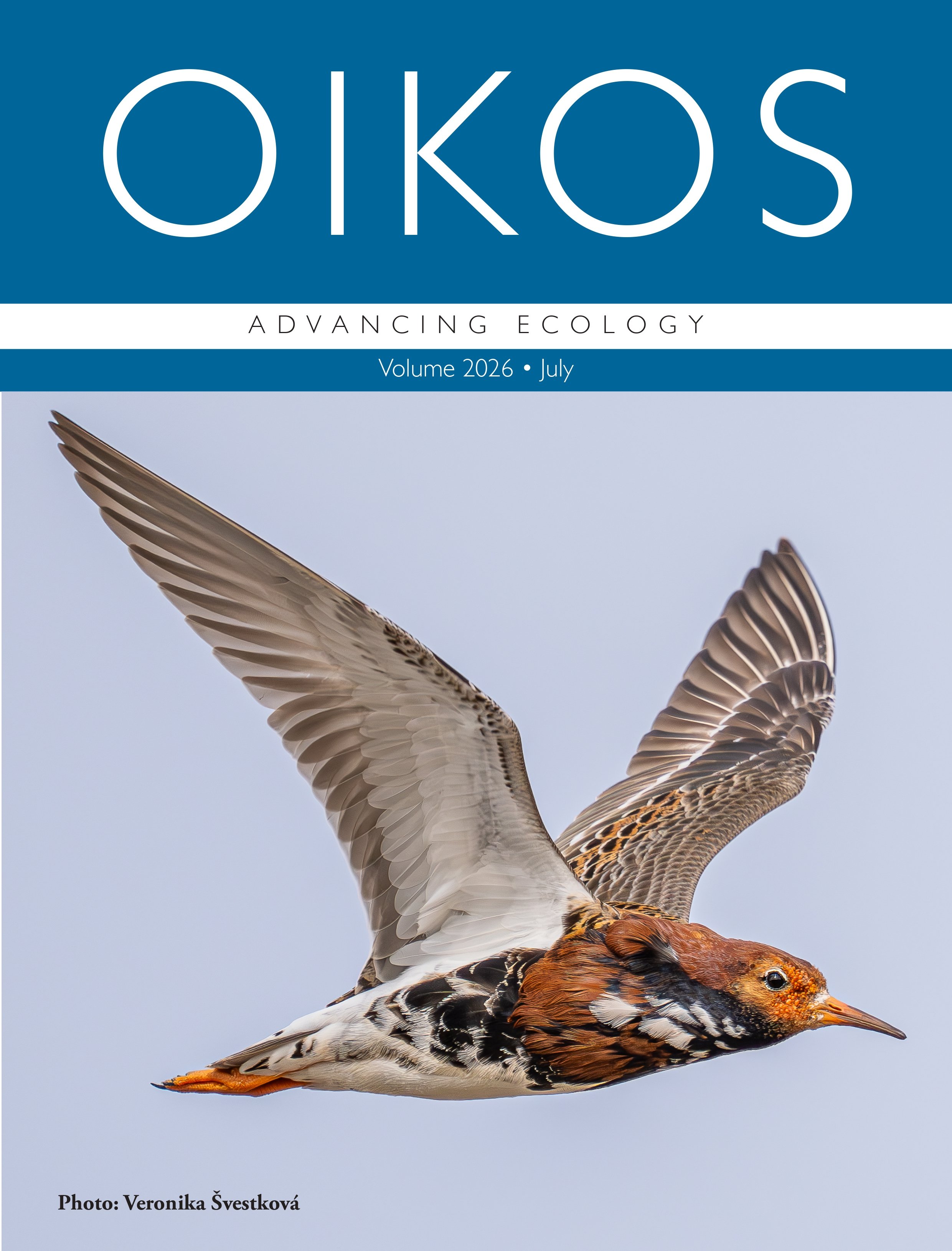
Cover | A Century of Declining Survival in Shorebirds
A global review of more than 100 shorebird species reveals that annual survival has declined significantly since 1980, particularly among adults, highlighting growing conservation concerns and the need for long-term monitoring. Photo by Veronika Švestková.
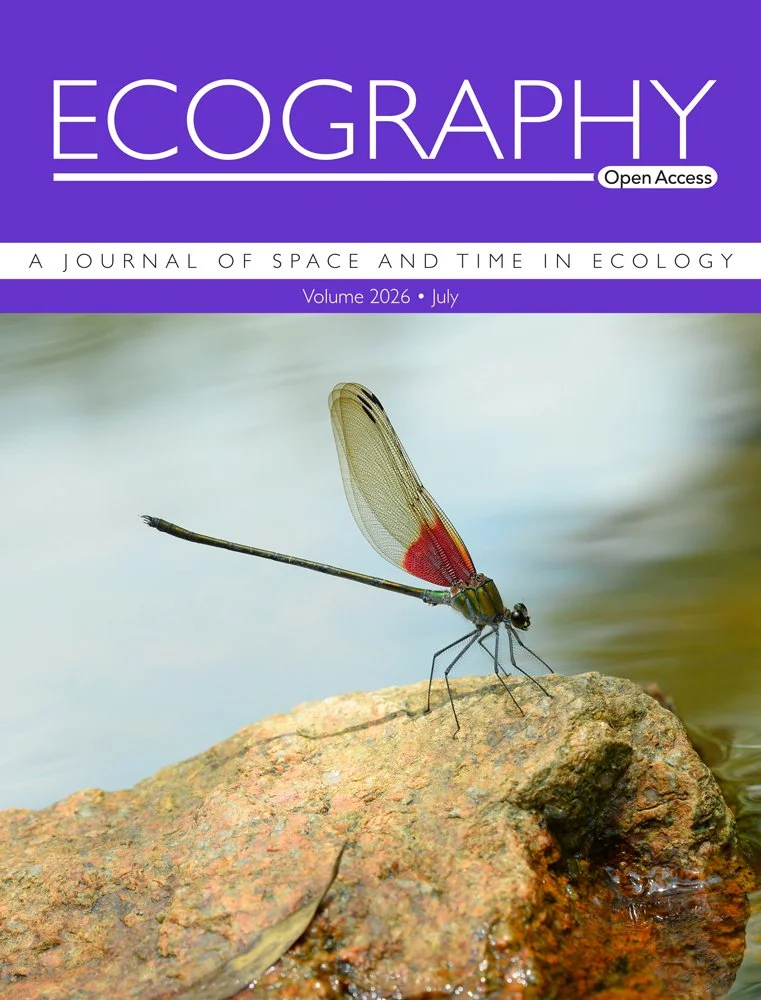
Cover | Climate in the Hills, People in the Plains
The photo features an endemic damselfly (Archineura incarnata) of eastern China, and the largest species within its family in Odonata, perching at the water's edge and waiting for a mate. Photo credit: Haomiao Zhang and Ruibin Song.