

News from Our Journals
Browse News by Journal
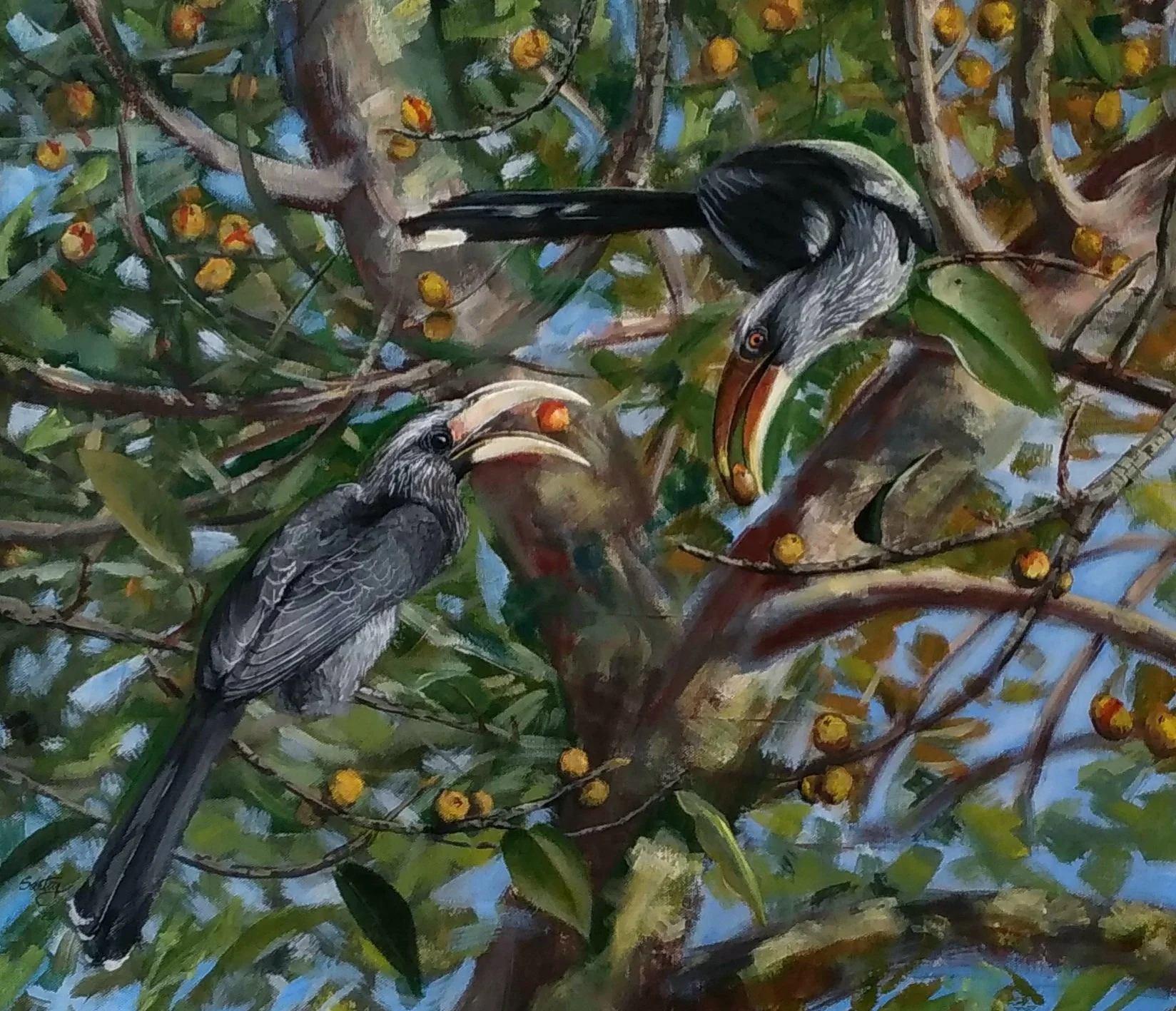
Field Story | An Encounter in the Elephant Hills
A field story by Rintu Mandal, narrating a chase by an elephant in the forests of the Western Ghats during data collection for this study. Illustration by Sartaj Ghuman.
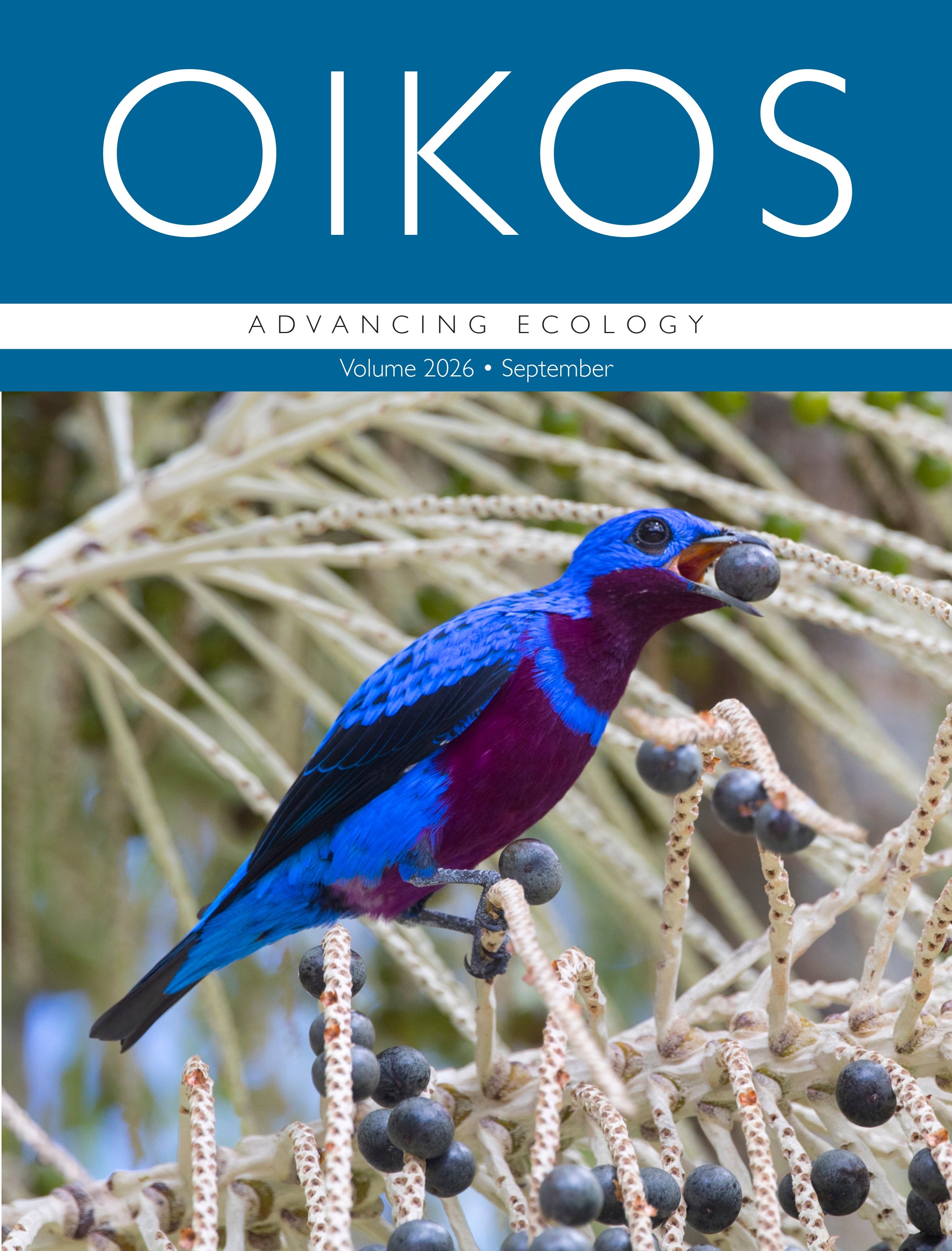
Cover | Frugivory and Seed Dispersal Issue
A crejoá (Cotinga maculata, Cotingidae), an endemic and endangered frugivorous bird of the Brazilian Atlantic Forest, feeding on the fruits of açaí (Euterpe oleracea, Arecaceae) in an açaí plantation in Porto Seguro, Bahia, Brazil. Photo by Ciro Albano
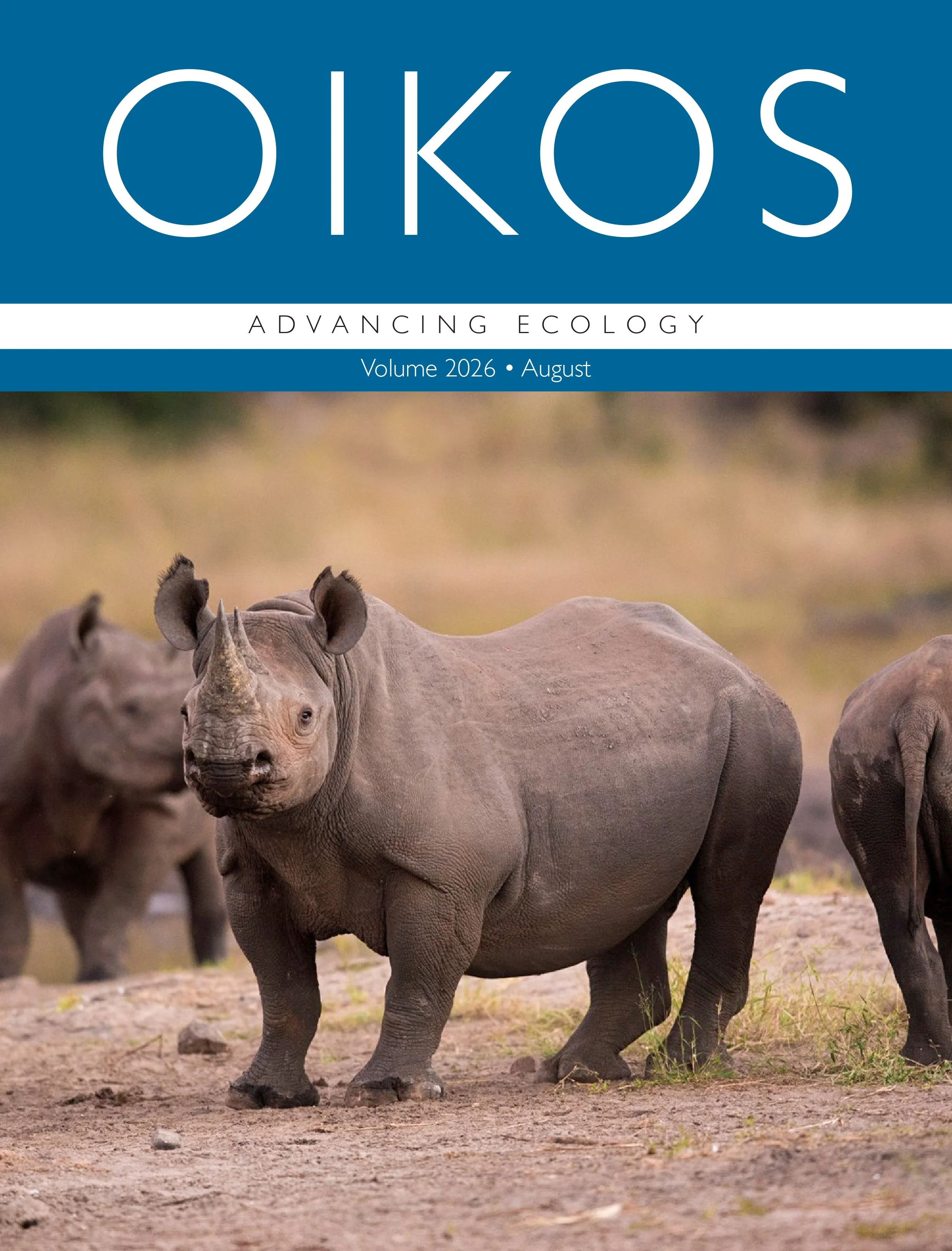
Cover | Social Lives of Solitary Rhinos
Periodic social interactions are important to animal fitness, even in solitary species. For solitary species, these interactions can be unexpected and shaped by previous encounters. Photo by Jenny Hishin

View from the editor's desk | Should journals reject papers after “too many” unsuccessful reviewer invitations?
Reviewer availability is not a measure of manuscript quality; journals should keep searching and authors should help broaden the reviewer pool. Read more from Oikos Editor-in-Chief Pedro Peres-Neto.
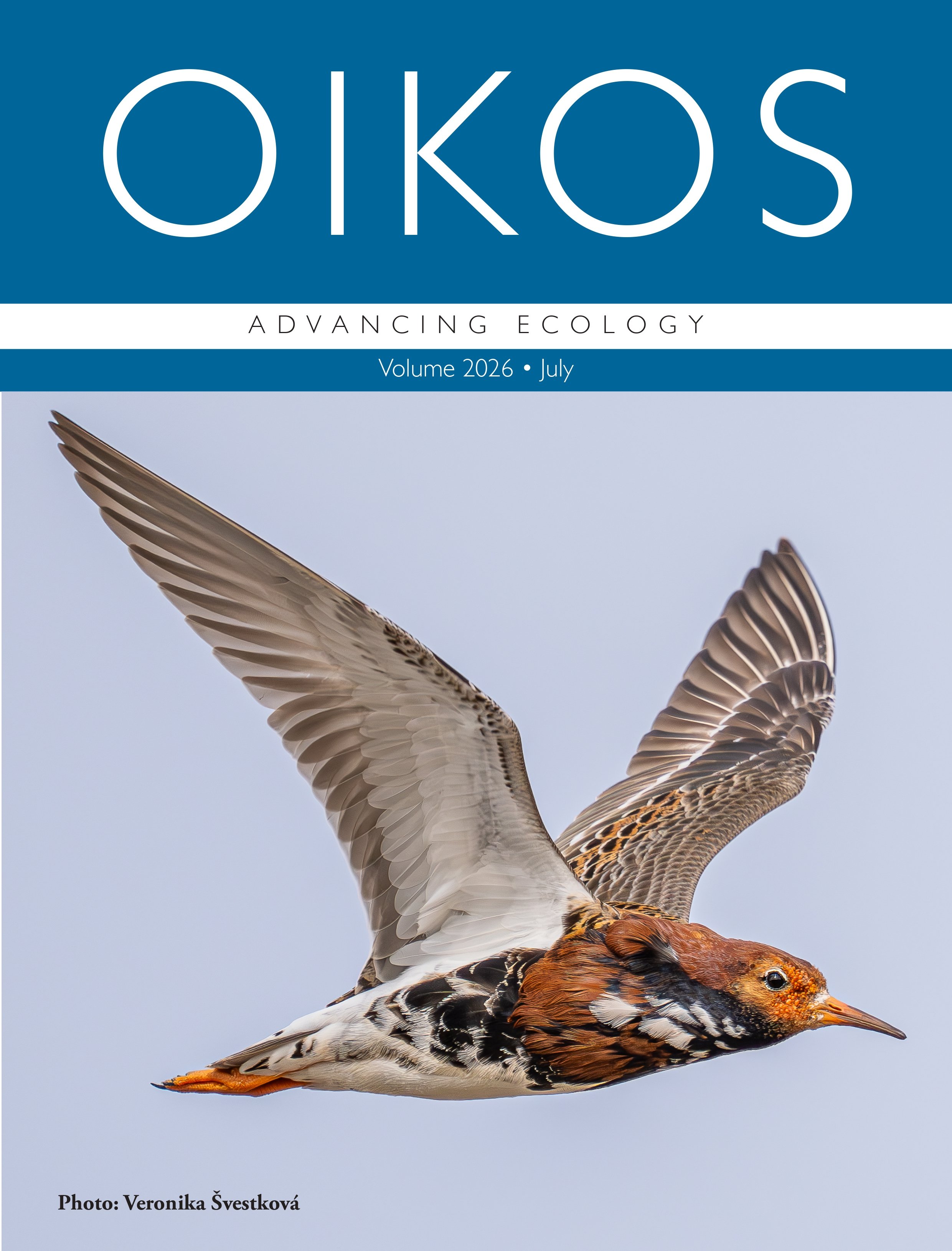
Cover | A Century of Declining Survival in Shorebirds
A global review of more than 100 shorebird species reveals that annual survival has declined significantly since 1980, particularly among adults, highlighting growing conservation concerns and the need for long-term monitoring. Photo by Veronika Švestková.
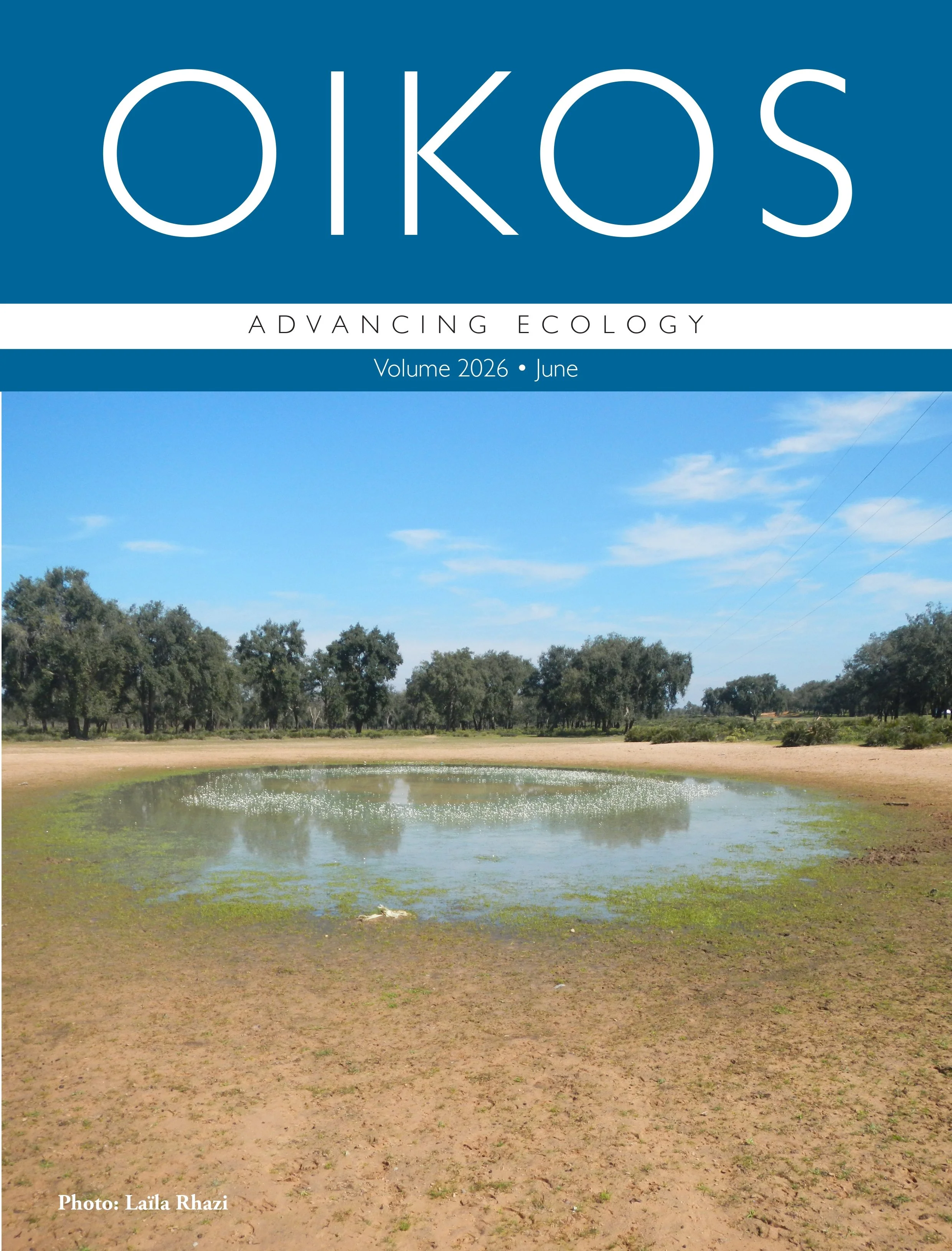
Cover | The Shape-Shifting Plants of Temporary Ponds
A study across Morocco found that differences in growth and reproduction along a climate gradient are driven largely by phenotypic plasticity rather than local adaptation. Photo by Laïla Rhazi.
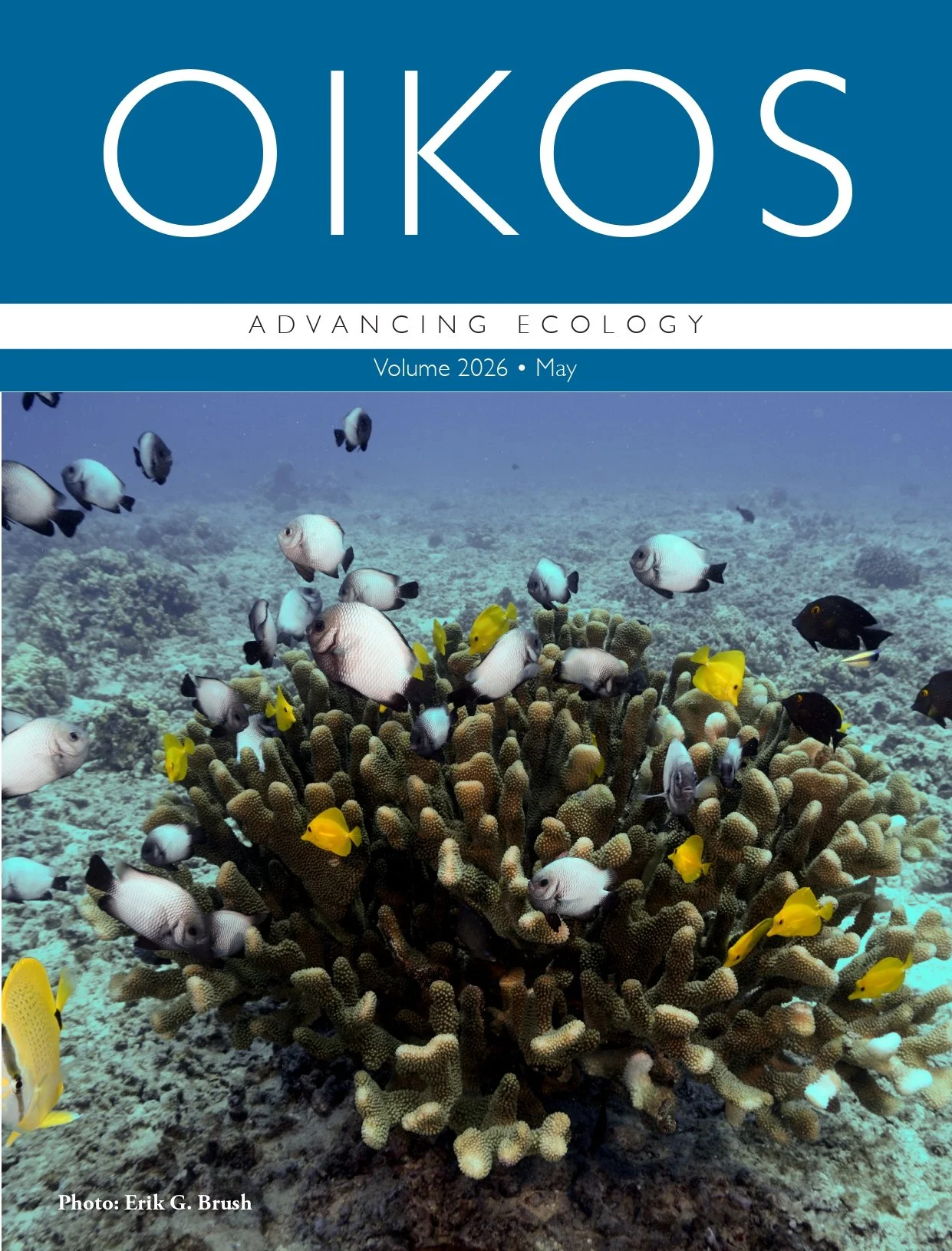
Cover | First Come, First Served on Hawaiʻi’s Coral
On Hawaiian reefs, a field experiment shows that early-arriving competitors and predators can strongly shape who gets to live on coral colonies. Photo by Erik Brush.
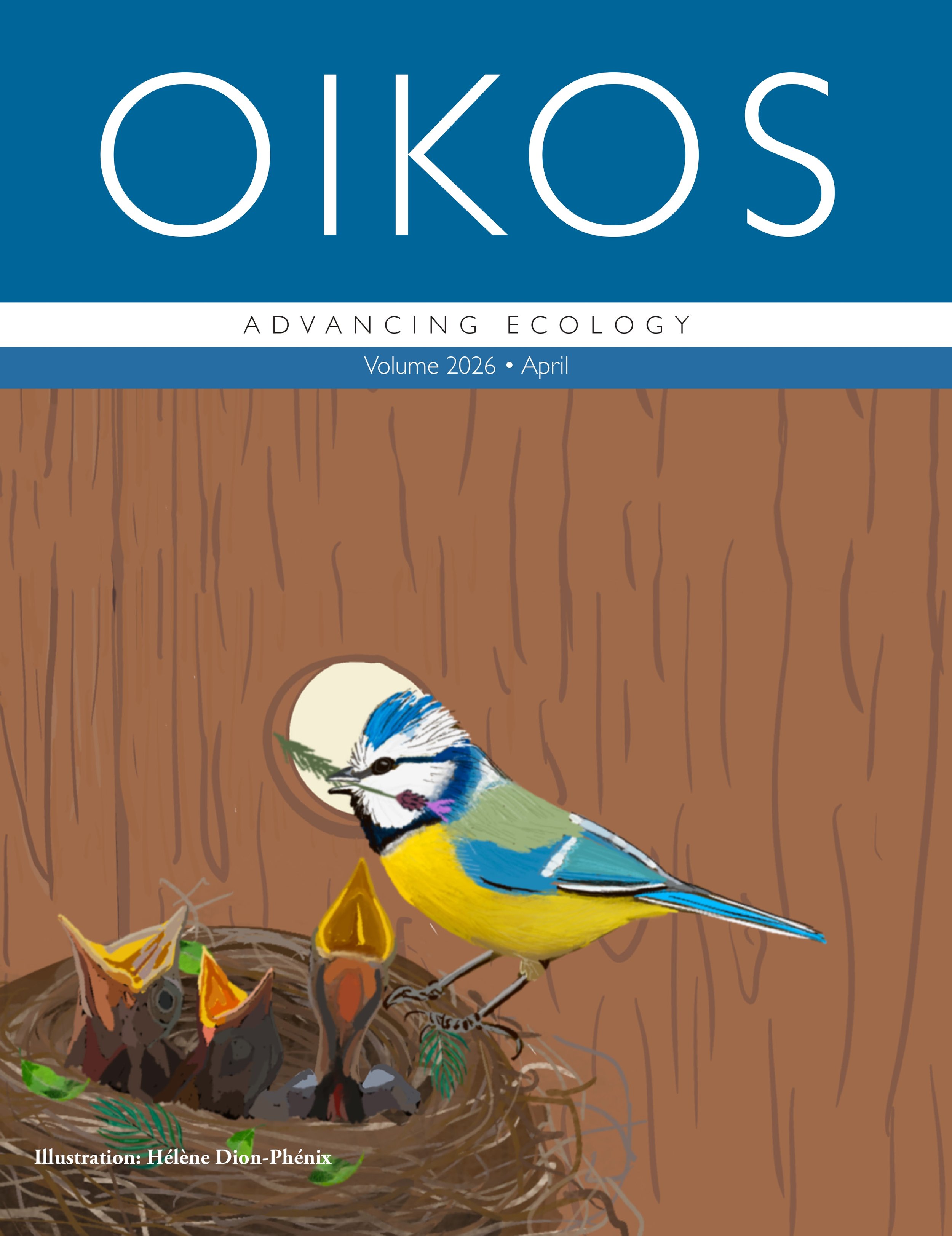
Cover | The Herbal Nest Sanitizer
A study of Corsican blue tits shows that adding aromatic plants to nests can reduce bacterial diversity supporting that birds use these plants to protect their offspring from harmful microbes. Illustration by Hélène Dion-Phénix.

View from the editor's desk | From code to credit
Citing software packages is essential, but treating them as the origin rather than the implementation of ideas risks obscuring the intellectual history of methods. Read more from Oikos Editor-in-Chief Pedro Peres-Neto.
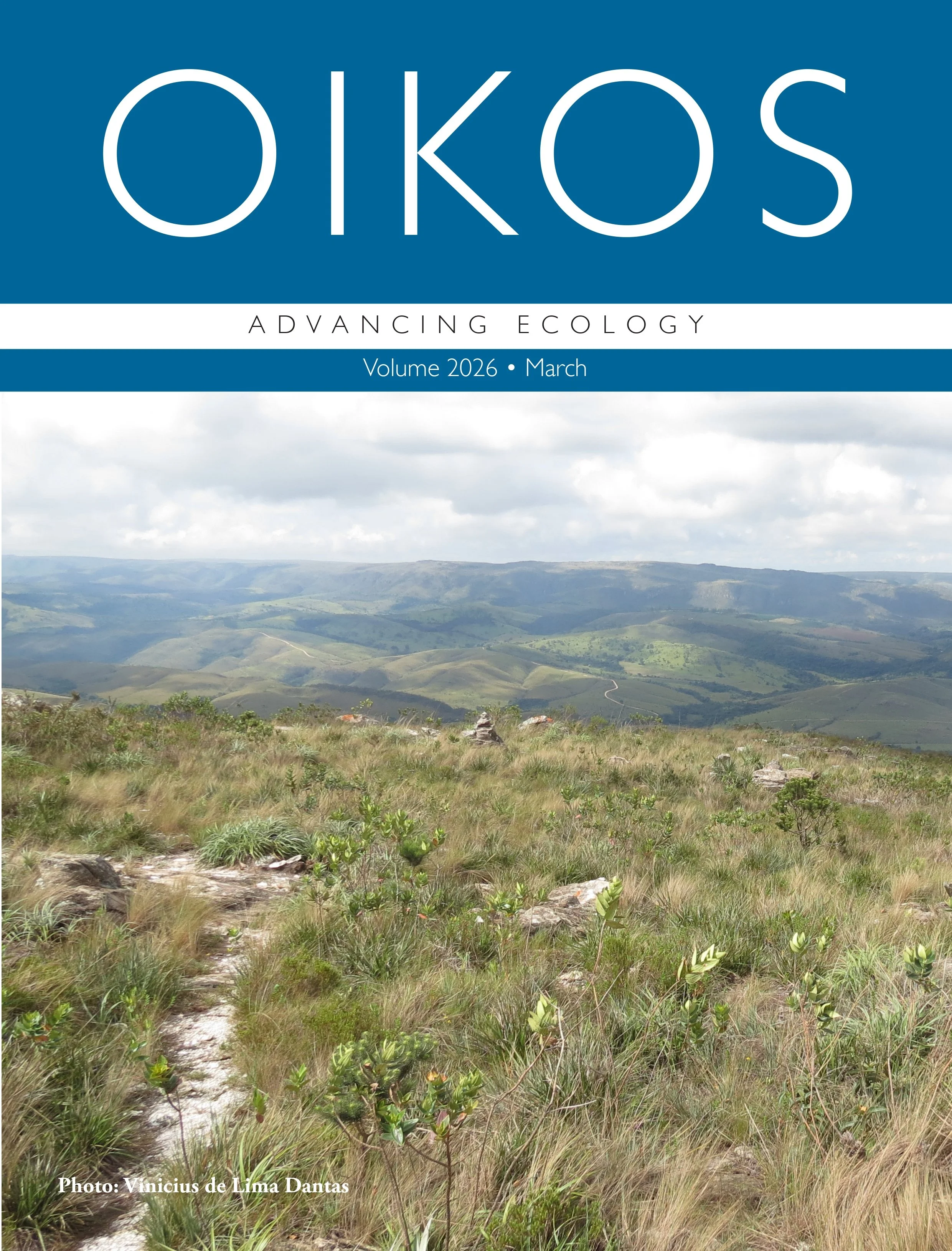
Cover | From Flames to Patterns: What Fuels the Fire in Savannas
A study of Brazilian savannas shows that fuel traits—especially grass biomass—strongly shape fire behavior, helping predict where fires are most likely to occur. Photo by Vínicus de Lima Dantas.
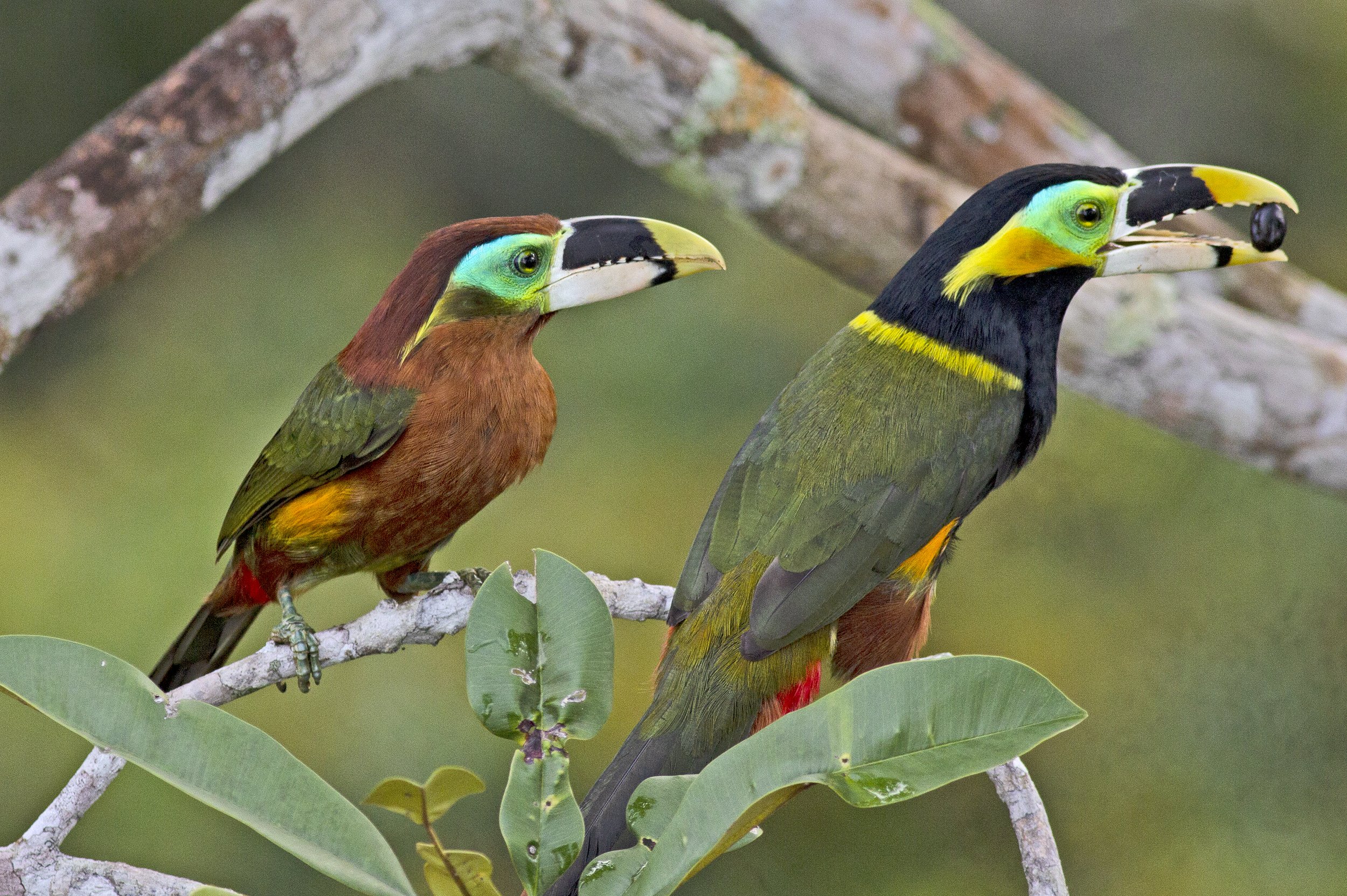
Editor's Choice 2025 | Conceptual and Empirical Advances in Ecology
Editor's choices are papers that engage ecologists across general ecology while advancing understanding of ecological mechanisms, processes, and patterns — precisely Oikos goals.

View from the editor's desk | Where is double-blind review headed in the age of preprints?
Double-blind review may no longer be a shield, but it can still be a compass, according to Oikos Editor-in-Chief Pedro Peres-Neto.
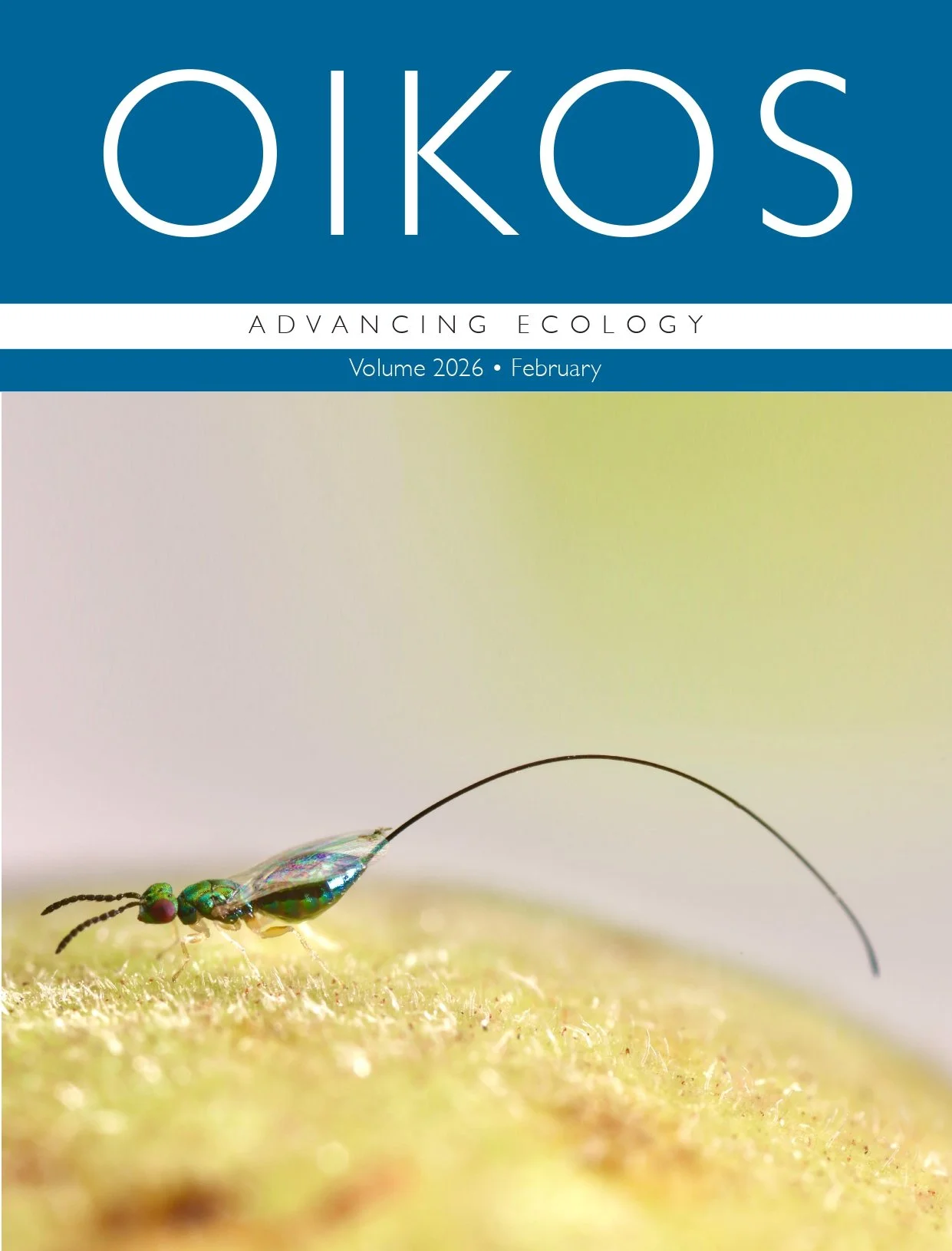
Cover | What Drives Diversity in Fig Wasp Communities
A study of fig wasps by shows that communities linked to Neotropical fig trees change dramatically across space, with high species turnover. Photo by Jean-Yves Rasplus.
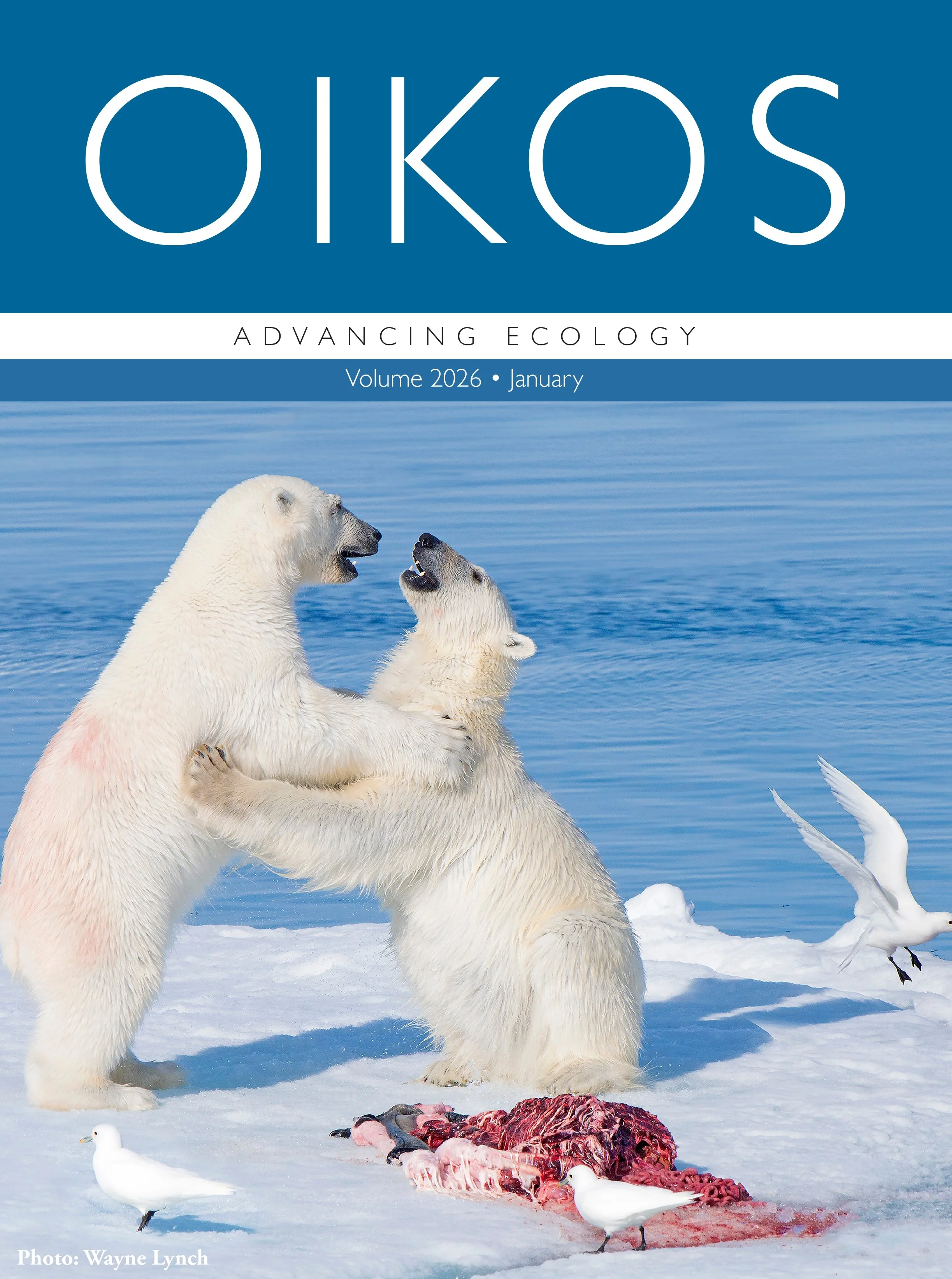
Cover | The Polar Bear Provision: Architects of an Arctic Food Web
A new study highlights polar bears as key providers of food in the Arctic, showing that the carrion from their seal kills fuels a network of scavengers. Photo by Wayne Lynch.
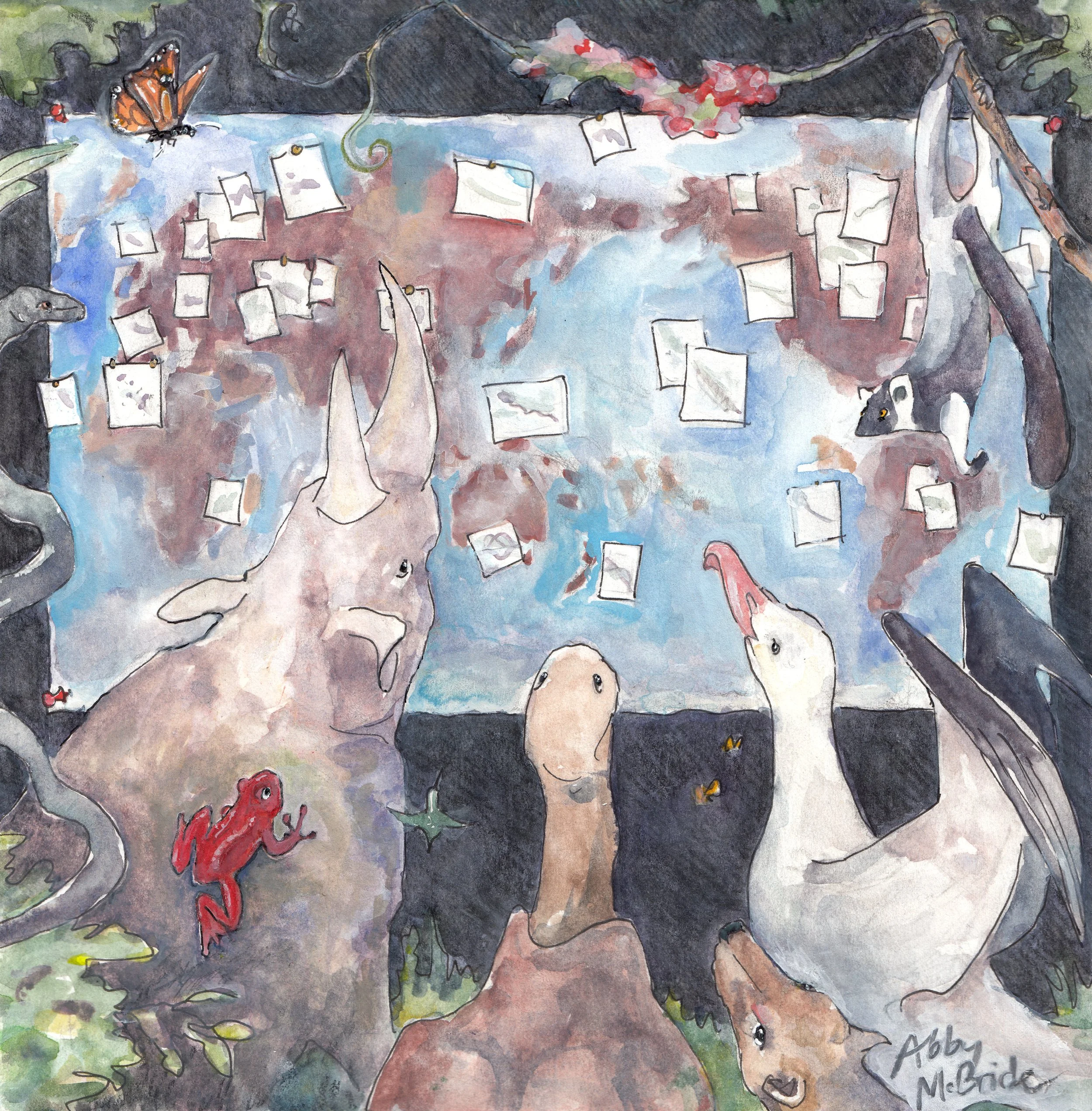
Forum | Sources of confusion in global biodiversity trends
Sounds counterintuitive: if we want to mitigate global loss of biodiversity, we should take a hard look at research that seems to contradict biodiversity loss.

Speculations and Alternative Viewpoints | Small text, big returns
We at Oikos want to contribute to encourage debate, which is why we keep encouraging authors to contribute small texts for our sessions Speculations and Alternative Viewpoints, where researchers can share unresolved questions and bold perspectives.
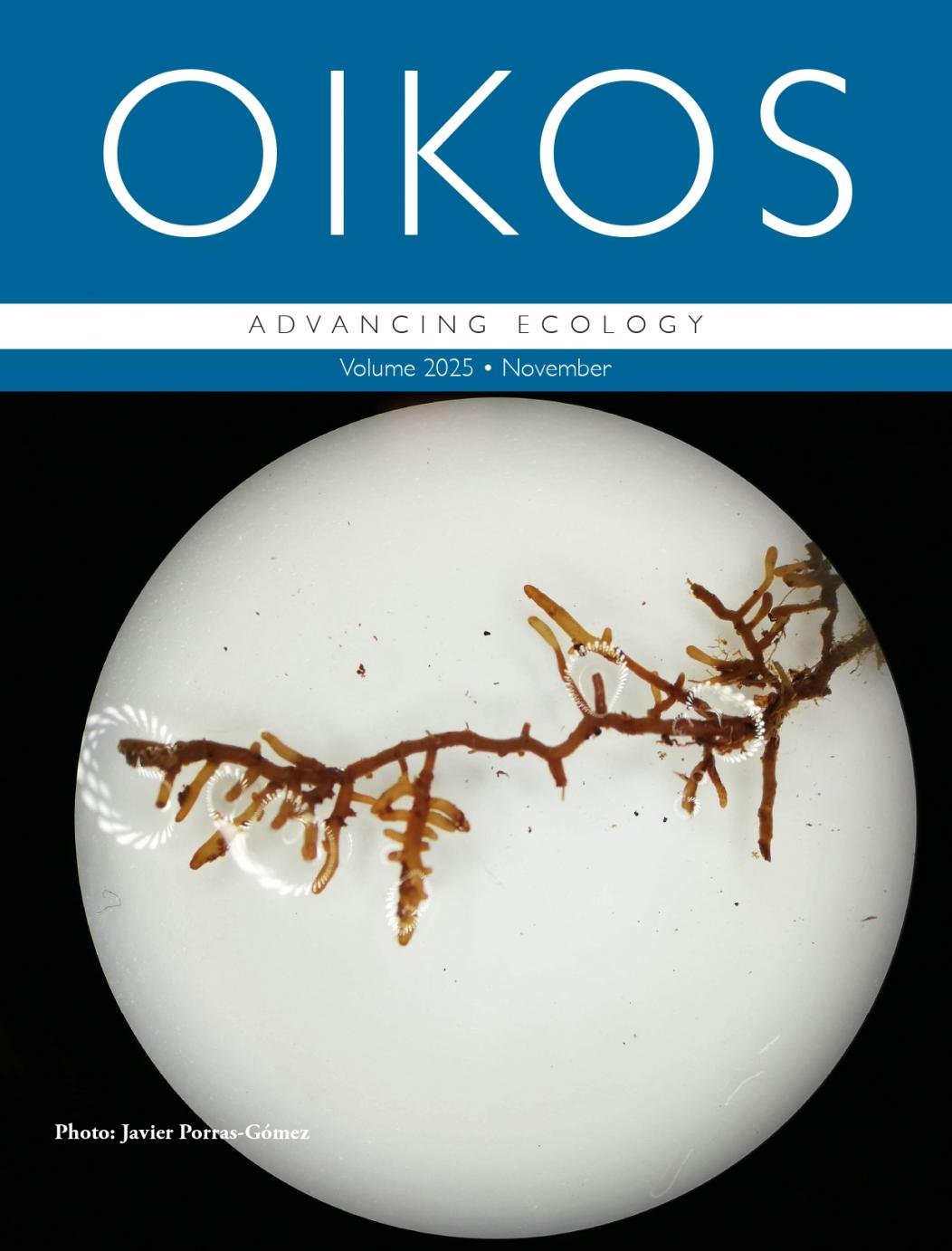
*Cover | Ectomycorrhizal fungi and root water uptake respond independently to water availability
A study of European beech forests reveals that trees can maintain water uptake during drought by drawing from deeper soil layers, but dry conditions reduce the diversity of their root-associated fungi.
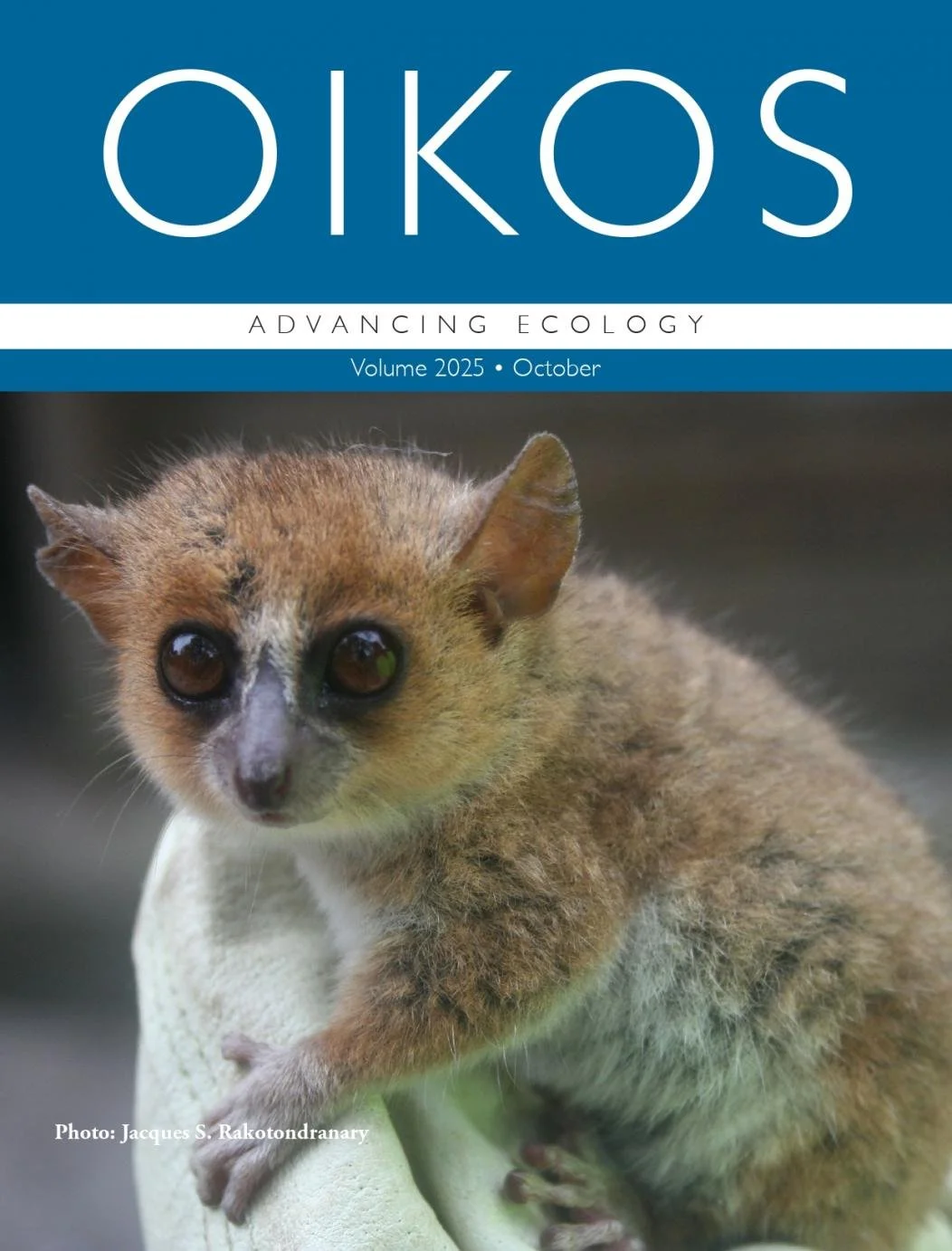
Cover | Protecting forests for mouse lemurs in Madagascar
A study of mouse lemurs in Madagascar shows that protected forests significantly boost survival compared to degraded habitats. Photo by Jacques S. Rakotondranary.
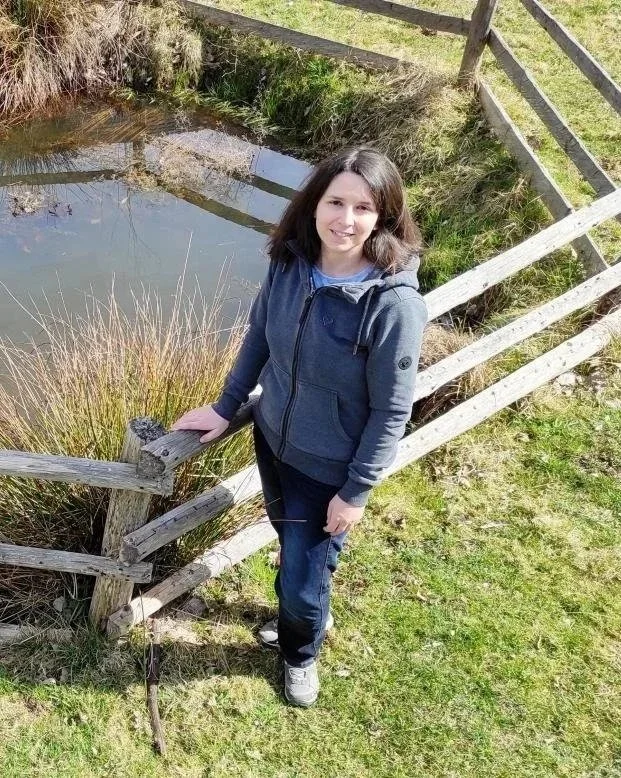
New editor | Zsófia Horváth, subject editor for Oikos
Dr. Zsófia Horváth studies how connectivity sustains aquatic biodiversity in ponds and how how networks of secondary habitats operate in urban environments.

New editor | Elisa Thébault, subject editor for Oikos
Dr. Elisa Thébault aims to investigate the responses of communities and ecosystems to global changes and to better understand the links between diversity, structure of interaction networks between species and stability of ecosystem functioning.