
*Forum | Patchy Indirect Effects of Predation
Sean M. Johnson-Bice, Thomas D. Gable, James D. Roth, Joseph K. Bump
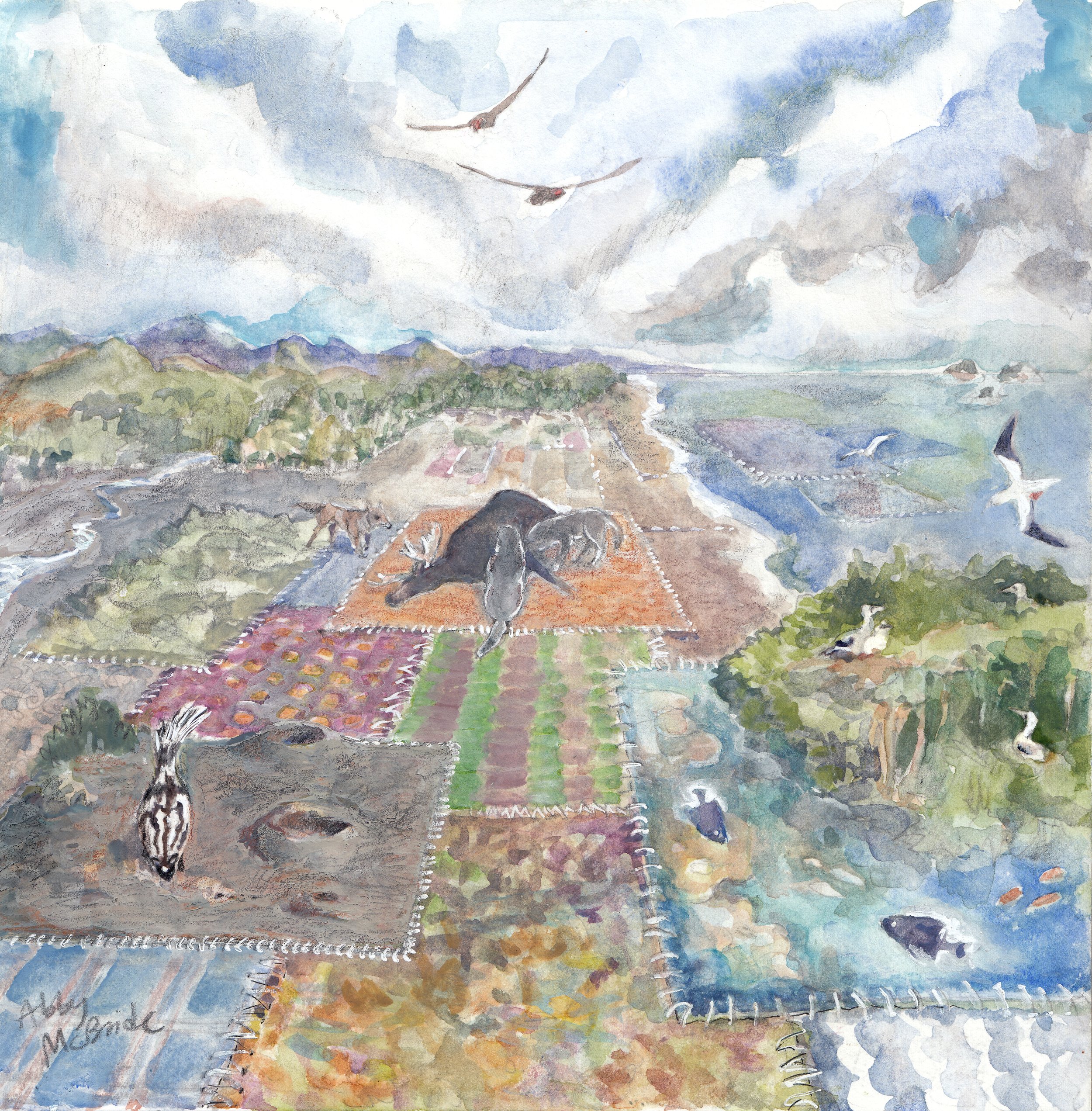
We know that predators influence many other species, directly and indirectly. But we tend to think about their effects in terms of one starting point: changes in the prey population. ThisForumpaper looks at other important ways that predators alter the ecosystem—not necessarily by shaping prey abundance or behavior, but by shaping discrete patches in the landscape.
The study outlines three pathways for creating patches. First of all, predators distribute carcasses that create sites of interaction between scavengers, decomposers, and local soils and plants. Predators also create nutrient hotspots by concentrating waste at home sites and gathering places like dens, breeding colonies, latrines, and roosts. Predators even alter patches of the landscape by subtraction, when they prey upon influential "ecosystem engineers" such as ants or beavers.
The authors summarize predictions of where and when these patchy indirect effects are important. They describe ways to quantify the effects at different scales, and they evaluate the challenges of distinguishing many interacting effects of predators.
Oikos Forum is a place where ecological ideas can be kicked around and examined from new angles. Forum papers bring together multiple fields, push boundaries, and offer new ways of interpreting existing data. They strive for conceptual unification and serve as a point of departure for future work rather than simply summarizing previous bodies of theory and data. Through the Forum we seek to challenge current thinking on ecological issues and provide a high level of synthesis in the field of ecology. Artwork and summaries by Abby McBride.
More News from Oikos
Oikos is a leading and long-standing journal in ecology, proudly owned by the Nordic Society Oikos. We publish empirical and theoretical research that spans across diverse taxa, systems, and disciplines, advancing our understanding of ecological mechanisms, processes, and patterns. Our journal fosters debate and speculation, encouraging innovative and provocative ideas that shape ecological thinking. Learn more about Oikos.
More News from NSO Journals
The Nordic Society Oikos publishes five international journals—Oikos, Ecography, Journal of Avian Biology, Wildlife Biology, and Nordic Journal of Botany—and supports the national ecological societies of the five Nordic countries. Learn more about the Nordic Society Oikos and the NSO Journals.