
View from the editor's desk | Where is double-blind review headed in the age of preprints?

The question: Where is double-blind review headed in the age of preprints?
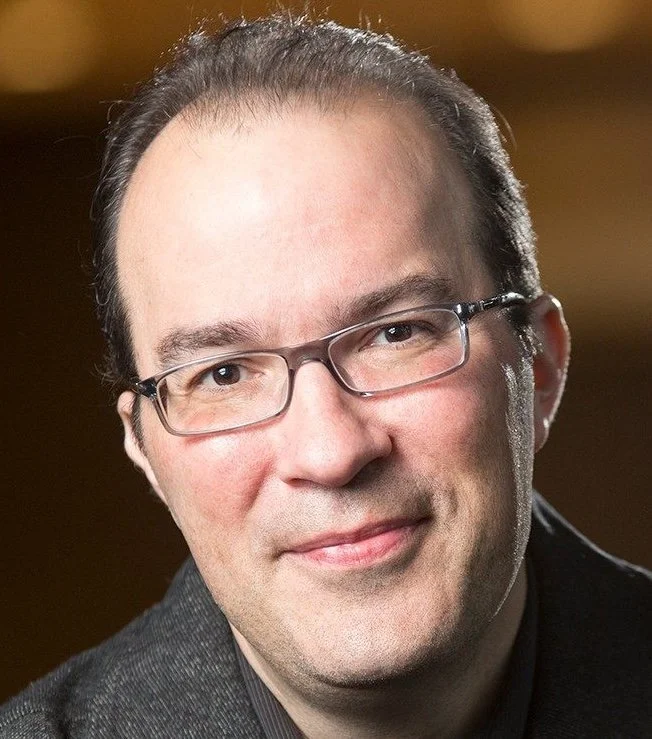
By Pedro Peres-Neto
Concordia University, Canada
Editor-in-Chief, Oikos
The gist
Preprints are now widely shared, cited, and discussed before formal peer review, making full anonymity increasingly difficult to maintain. This does not make double-blind review obsolete, but it does change what it can realistically achieve. Rather than eliminating all bias, double-blind review now functions more as a norm-setting framework that encourages evaluation of ideas over identities. It may no longer be a shield, but it can still be a compass.
The longer answer
For a long time, double-blind peer review has felt like a clear moral good. Hide the names, focus on the science, reduce bias. Simple enough! But science publishing is changing fast, and it’s fair to ask whether double-blind review still works the way we think it does, especially now that preprints are everywhere.
I’ll be frank from the beginning. I think now, as I discuss in this post, that double-blind review may no longer be a shield, but it can still be a compass.
This post is motivated by years of conversations with authors, reviewers, colleagues, editors, students, and on social media, in which the question “Where is double-blind review headed in the age of preprints?” has repeatedly surfaced and is intended to provide some context and raise some questions rather than settle them.
Although this post appears on the Oikos blog and I serve as one of the Editors-in-Chief, the views expressed here reflect my own experience as an editor at Oikos and other journals.
The preprint era
In ecology and evolution, and many other fields, posting a preprint is no longer unusual. In many research cultures, it’s increasingly the default. Preprints are not just about sharing work early anymore; they can be now even part of how research is evaluated. Funding agencies now allow applicants to cite preprints in grant proposals, and journals themselves increasingly cite preprints in published articles. Researchers routinely refer to their own and others’ preprints in talks, many of which are now recorded and reach far wider audiences than they once did. Preprints are no longer just informal drafts; they are part of the scholarly conversation and often influence how work is perceived long before peer review is complete. A quick scan of Google Scholar shows that many preprints are highly cited. Hiring committees read them. Collaborators comment on them. Preprints are widely shared and discussed on social media, both by researchers and by preprint servers themselves. And in many cases, a preprint may shape how a piece of work is perceived before it ever enters formal peer review.
This shift matters because it changes the role of anonymity. When preprints circulate widely, authorship becomes part of the conversation from the start. Reviewers may already know the work, have formed opinions about it, or even have cited it. Reviewers are not supposed to go hunting for author identities, but in reality, many will already know. Sometimes they simply recognize it because science communities are small, or because the work has already circulated widely online. As a result, by the time a manuscript reaches double-blind review, authorship and visibility can be already known within the community. At that point, double-blind review starts to feel less like a guarantee and more like a best-effort norm.
Why double-blind review still feels important
With preprints and online visibility now the norm, it’s hard not to ask an uncomfortable question: what, exactly, is still being blinded? The original motivation for double-blind review hasn’t gone away. If anything, it’s become more relevant, I think.
We know that reputations matter! Seniority, institutional prestige, geography, language, and name recognition all shape how work is perceived. Double-blind review is an imperfect but genuine attempt to shift attention from who wrote a paper to what the paper does. Even something as simple as referencing numbers instead of names can help, if only briefly, by forcing readers to engage with the research before the researcher; and many ecology and evolution journals already do this.
Even when reviewers can guess authorship, the double-blind framework itself sends a signal. It reminds reviewers of the ideal they are supposed to aim for: evaluate the work, not the CV behind it. For a journal like Oikos, which serves a broad, international community, that signal matters.
I’ve posed this question to many editors of journals that still use single-blind review: What do you lose, exactly, by adopting double-blind review? If anything, it seems to offer something to the community rather than take something away. The usual answer is “I’ve to think about it”.
Does that mean double-blind review is obsolete?
Not necessarily, but it does mean we should be honest about what it can and cannot do. Double-blind review no longer reliably prevents reviewers from knowing who the authors are. What it can still do is shape expectations and behaviour. It can reduce explicit reliance on reputation, and it can protect authors in cases where anonymity really does hold, especially for early-career researchers or those working outside dominant networks.
At the same time, pretending that double-blind review offers perfect anonymity risks undermining trust. When everyone quietly knows that blinding is partial, but the system acts as if it were absolute, a disconnect may emerge between policy and practice.
Trade-offs we don’t always talk about
There are real tensions here. Preprints promote openness, speed, and community feedback. Double-blind review promotes fairness, restraint, and perhaps even epistemic humility. These values are not opposed, though they can pull in slightly different directions. In some cases, preprints may even increase visibility biases. Well-known labs may attract more attention, commentary, and informal endorsement before peer review begins, shaping expectations long before a reviewer ever opens the manuscript. On the other hand, preprints can also level the playing field by giving early-career researchers immediate visibility and by allowing work to be assessed openly rather than behind closed doors (i.e., review process).
The role of peer review in a visible world
Rather than asking whether double-blind review “still works,” a better question might be: what do we want peer review to do now? If the goal is to eliminate all bias, double-blind review has never fully succeeded, and preprints make that even clearer. If the goal is to set norms, slow down judgment, and foreground evaluation of ideas over identities, then double-blind review still plays a meaningful role, even in a preprint-driven world.
The future may not lie in choosing between double-blind review and open science, but in recognizing that peer review is increasingly part of a broader ecosystem: one that includes preprints, post-publication discussion, and evolving expectations about transparency and fairness.
So where do we go from here?
What I suggest below may not be ideal, but it may be worth considering. This is a blog meant to spark discussion, not to prescribe policy.
One possible way forward is simply to be more explicit about the reality we already operate in. Journals could collect basic information at submission, e.g., whether a preprint exists, where it is posted, and whether the title or abstract differs from the submitted version; some journals already do it. This is meant not to police preprints, but to give editors context about how reviews are written.
Similarly, reviewers could indicate whether they were already aware of the work, had seen a preprint, or recognized the study. The goal would not be to disqualify reviewers, but to document context. Knowing whether a review reflects first exposure or prior familiarity can help editors interpret strong opinions, confidence, or disagreement between reviewers.
None of this would resolve the tension between double-blind review and preprints, but it would move the conversation away from pretending that full anonymity is always achievable and toward a more honest view of how peer review works in practice. Used carefully, this information could strengthen double-blind review by making the process more self-aware and transparent.
As I mentioned from the start, double-blind review may no longer be a shield, but it can still be a compass.
Oikos—who are we?
OIKOS: Advancing Ecology is a leading and longstanding journal in ecology, owned by the Nordic Society Oikos.
We publish innovative empirical and theoretical research that spans across diverse taxa, systems, and disciplines. With a focus on advancing our understanding of ecological mechanisms, processes, and patterns, Oikos fosters debate and speculation, encouraging innovative and provocative ideas that shape ecological thinking. Alongside standard Research papers and Meta-Analyses, we have unique categories of Forum, Ignite, and Dialogue papers.
Thinking about publishing with us?
Oikos offers optional sections for speculations and alternative viewpoints.
We value ethical standards in science (EDI, accessible data and code, CRediT)
Check out Oikos’s journal metrics and see our Author Guidelines
Our journals, our society—join us!
The Nordic Society Oikos engages the global scientific community through five international journals…

…and supports the national ecological societies of the five Nordic countries. Anyone worldwide can join the Nordic Society Oikos.
NSO is a home for ecologists, a nexus for knowledge, and a guiding light for ecology worldwide. We are an active network of ecologists in the Nordic region and around the globe.
Why join NSO? Membership benefits include:
Connections across a global community of ecologists and five national societies
NSO newsletters with member-only updates about Nordic ecology and society activities
Ongoing opportunities for promotion on NSO’s digital platforms and social media channels
Discounted registration for NSO’s biennial conference
Eligibility to apply for NSO Grants
Each member receives additional benefits from one of our five national societies:
Danish Oikos Society
Oikos Finland
Icelandic Ecological Society
Norwegian Ecological Society
Swedish Oikos Society
When you join NSO, you also become a member of one of our national societies. Which one? That’s up to you! Each national society provides its own benefits, including discounts to national conferences. Learn more about us at nordicsocietyoikos.org.