
Award | Announcing the new NJB Review Award
We are happy to announce Mini-Reviews and the NJB Review Award
Nordic Journal of Botany is delighted to announce the article category Mini-Reviews and the NJB early-career researcher Review Award!
Inspired by our sister journal Journal of Avian Biology, we believe that reviews are an important format for synthesizing knowledge and identifying new directions in research. However, comprehensive reviews can be time-consuming and too broad to address specific questions or controversies. We therefore offer a shorter, more focused format that helps readers quickly stay current on specific topics. By offering a lower-threshold format that fits within the time-frame, and often the requirements, of a research degree, we also want to encourage early-career researchers to dive deep into a particular aspect or field and share with us their thought-provoking and forward-looking ideas within their expertise.
NJB Review Award
The NJB review award is given to early-career research scientists who have an exceptional mini-review manuscript accepted for publication in Nordic Journal of Botany.
A mini-review does not need to cover an entire research area, but should be a concise synthesis (approx. 6000 words including references) on an exciting sub-topic or timely debate in plant or fungal ecology, biodiversity, conservation, biogeography or systematics. They provide a succinct and clear overview of the research topic and give readers a quick grasp of the most recent and significant advances, as well as an insight into important future directions of research. Authors of any career stage can submit a mini-review, but only ECRs are eligible for the mini-review award (see below). If the award is given for a paper with multiple authors (the lead and corresponding author(s) must be early-career) those meeting the early-career research criteria at the time of publication will share the monetary prize.
The winner of the NJB review award will receive a 1000€ honorarium and the runner-up will receive 500€. All accepted papers that are entered in the competition will appear together in a virtual issue in Nordic Journal of Botany. To increase visibility and readership, we will actively promote NJB review award papers on social media, and we will help authors to write blog posts and create video abstracts.
To be considered for the NJB review award, authors must submit their manuscript by the annual submission deadline for the award which is communicated on the journal webpage. Contenders for the award must communicate to the journal that they wish to enter their manuscript in the competition for the NJB review award by directly contacting the editorial office at njb@oikosoffice.lu.se.
Manuscripts that meet the basic criteria for a NJB review award paper will go through the normal peer review process. However, as much as possible, mini-reviews considered for the NJB review award will be reviewed by members of the editorial board to reduce review time.
Accepted submissions will be assessed by a committee that will choose the winner and runner-up of the NJB review award. All submissions, whether or not they win a prize, will appear in Nordic Journal of Botany if they meet the journal’s standards.
Author criteria
To be eligible, the author(s) must have finished their PhD within 8 years prior to the deadline (MSc students and PhD students are also eligible). NJB realises that life intervenes occasionally, so this cut-off is meant to be a suggestion and not a hard requirement. However, applicants should provide an explanation if they are requesting an exception (e.g. absence due to family leave, drastic shifts in research area, etc.). NJB particularly encourages submissions coming from underrepresented geographic areas and historically underrepresented groups.
Evaluation criteria
Manuscripts that meet the basic criteria for a NJB review award paper go through the normal peer review process. NJB operates with double-blind peer review where the reviewers don't know the identity of the authors and vice versa. Reviewers are not made aware of that the submission is part of the competition. To be considered for the NJB review award a manuscript must be accepted in NJB for publication. Accepted articles are ranked based on two scores: a score based on the subject editor's and the reviewers' assessment (= scientific score) and a score based on the assessment of the award committee (= writing and readability score). The award committee consists of members of the NJB editorial board. Editors who have co-authored a manuscript that was entered in the current competition cannot be members of the award committee.
Scientific score: All mini-reviews entered into the review award competition will receive a score by the reviewers and the subject editor. The score is based on the priority for publishing the article (score 1-10, 1 is the highest priority, 10 is the lowest priority). The average of all reviewer scores and the subject editor's score makes up the scientific score.
Writing and readability score: the award committee rates the accepted articles based on three criteria: 1) clarity of text, 2) flow between sentences and paragraphs, and 3) engagement (is the text engaging; no reader fatigue?). The committee members rate the accepted articles in the same way as the reviewers (score 1-10, 1 is the highest, 10 is the lowest). The average of the committee members' scores makes up the writing and readability score.
The scientific score and the writing and readability score are summed up and the article with the lowest score (i.e. highest rating) is pronounced as the winner, and the article with the second lowest score as the runner-up. Although the two scores are not independent, the reviewers/editors and the committee members have a different focus when rating the manuscripts/articles. Reviewers are not given the authors' names before rating the article and, hence, scoring is part of the double-blind peer review. Editors and committee members are asked not to factor into the evaluation who the authors are or where they are from.
Open Access
As Nordic Journal of Botany is a full Open Access journal, we charge an Article Processing Charge (APC) for all accepted papers. However, the APC should not be a barrier for early career researchers to participate in the review award competition. As part of the Nordic Society Oikos' (NSO) commitment to increase equity in scientific publishing we offer alternative routes to cover APCs so that early career researchers from all parts of the globe can publish their research in NJB.
In many cases where OA publishing mandates for authors exist, APCs will be covered by the funder or institution mandating open access and corresponding authors must pursue this route of APC funding. More and more funders/institutions/universities have unique agreements with our publisher Wiley, where the full or part of the APC is covered. See a list of the current agreements. Wiley also offers automatic waivers and discounts to corresponding authors based in low and lower middle-income countries in partnership with research4life (a list of countries with automatic waivers and discounts). The lists with agreements and waivers are updated annually and corresponding authors intending to submit to the journal are advised to check the list prior to submission.
The NSO recognizes that in some cases, work suitable to be submitted to NJB by early career researchers was not externally funded or that national or institutional/departmental support may not be available to corresponding authors to cover the APC. In such cases, the NSO is able to grant a number of society-funded waivers every year. These waivers must be requested before submission of the manuscript. Society-funded waivers can be requested by any early career researcher but priority will be given to submissions coming from underrepresented geographic areas or topics. You can read more about how to request society-funded waivers.
For questions about the award or waivers please contact the editorial office: njb@oikosoffice.lu.se.
Nordic Journal of Botany—who are we?
NORDIC JOURNAL OF BOTANY: An International Journal for Botany and Mycology is an Open Access journal owned by the Nordic Society Oikos.
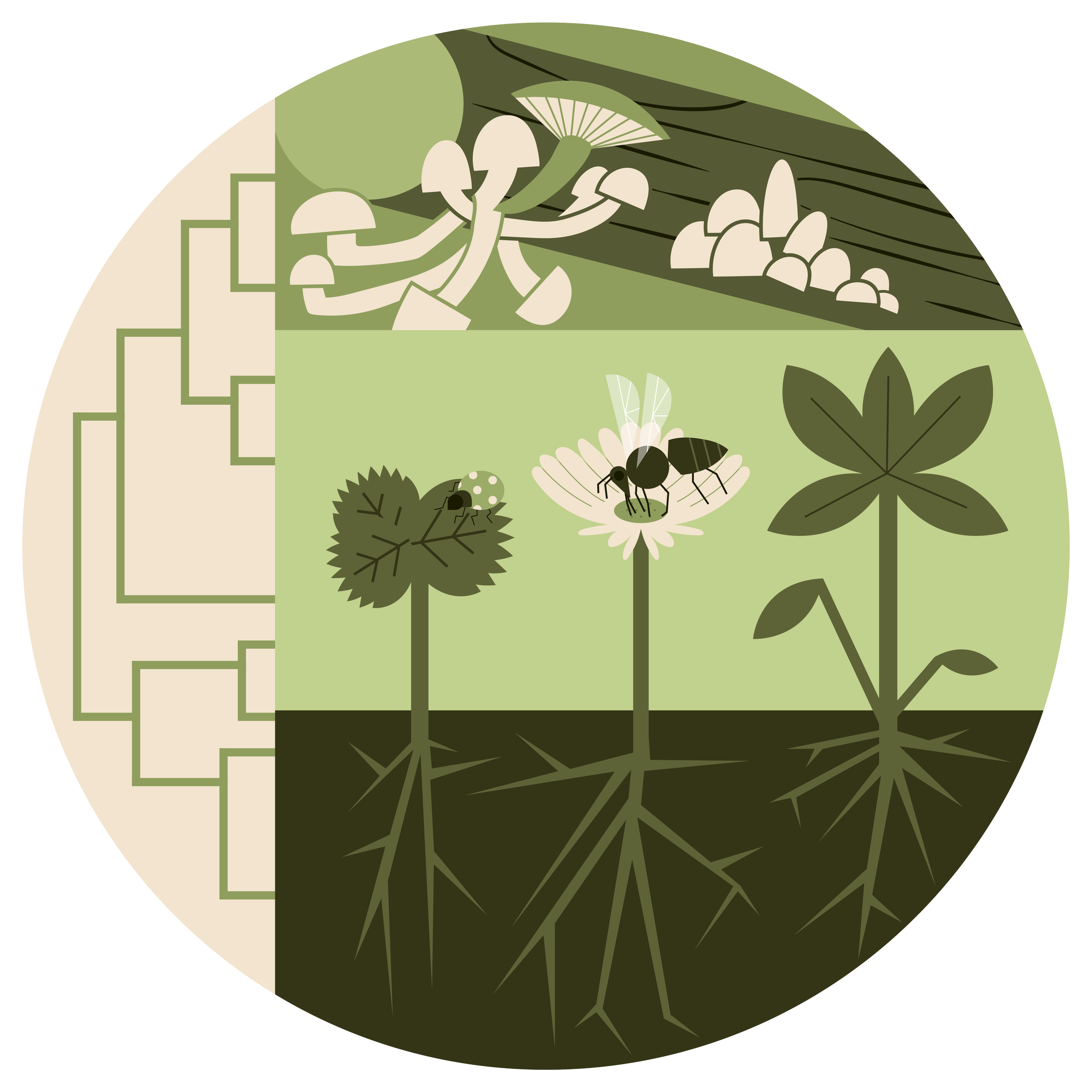
We are an international journal publishing research on all aspects of plant and fungal ecology, evolution, conservation, biogeography, and taxonomy. We welcome cross-disciplinary research such as plant-pollinator interactions, human-plant relations, and plant-ecosystem connections. Our scope includes algae and bryophytes and all groups of fungi. We explore trending topics in plant sciences and publish research from both established experts and early-career researchers.
Thinking about publishing with us?
NJB publishes Research Articles, Short Communications, and Review Papers
We value ethical standards in science (EDI, Open Access, waivers, accessible data and code, CRediT)
Check out NJB’s journal metrics and see our Author Guidelines
Our journals, our society—join us!
The Nordic Society Oikos engages the global scientific community through five international journals…

…and supports the national ecological societies of the five Nordic countries. Anyone worldwide can join the Nordic Society Oikos.
NSO is a home for ecologists, a nexus for knowledge, and a guiding light for ecology worldwide. We are an active network of ecologists in the Nordic region and around the globe.
Why join NSO? Membership benefits include:
Connections across a global community of ecologists and five national societies
NSO newsletters with member-only updates about Nordic ecology and society activities
Ongoing opportunities for promotion on NSO’s digital platforms and social media channels
Discounted registration for NSO’s biennial conference
Eligibility to apply for NSO Grants
Each member receives additional benefits from one of our five national societies:
Danish Oikos Society
Oikos Finland
Icelandic Ecological Society
Norwegian Ecological Society
Swedish Oikos Society
When you join NSO, you also become a member of one of our national societies. Which one? That’s up to you! Each national society provides its own benefits, including discounts to national conferences. Learn more about us at nordicsocietyoikos.org.