
E4 award papers over the years
The E4 Award is given every year to an early-career research scientist who writes an exceptional Review manuscript. The winner receives a €1000 cash prize and the runner-up receives €500. The topic of the paper should focus on spatial and/or temporal patterns, particularly studies of population and community ecology, macroecology, biogeography, ecological genetics, historical ecology, evolution, macroevolution, and conservation.
Our early-career E4 award papers are more downloaded and cited than the average research paper for Ecography. In addition, they tend to have high altmetrics scores. Learn more and find out how to apply: https://nso-journals.org/all-news/award-announcing-the-2026-e4-award-competition.
Virtual issues of all E4 award papers:
Video abstracts of E4 Award winners/runner-ups:
2022 winner: How and why species are rare: towards an understanding of the ecological causes of rarity
2022 runner-up: Ecological and evolutionary consequences of temporal variation in dispersal
2021 winner: Coupling eco-evolutionary mechanisms with deep-time environmental dynamics to understand biodiversity patterns
2020 winner: Using multi-scale spatially explicit frameworks to understand the relationship between functional diversity and species richness
2019 winner: The challenge of novel abiotic conditions for species undergoing climate‐induced range shifts
2018 winner: Understanding extinction debts: spatio–temporal scales & a future roadmap
2017 winner: Understanding ecological change across spatial, temporal & taxonomic scales
2016 winner: Biogeography of human infectious diseases for global health management
2021 runner-up: The predictive performance of process-explicit range change models remains largely untested
2020 runner-up: Species distribution models rarely predict the biology of real populations
2019 runner-up: The Moran effect revisited: spatial population synchrony under global warming
2018 runner-up: Inference of biogeography history with distinct lines of evidence
2017 runner-up: Incorporating microclimate into species distribution models
2016 runner-up: Spatial & temporal variation in climate change limits species dispersal
Ecography—who are we?

ECOGRAPHY: A Journal of Space and Time in Ecology is an Open Access journal owned by the Nordic Society Oikos.
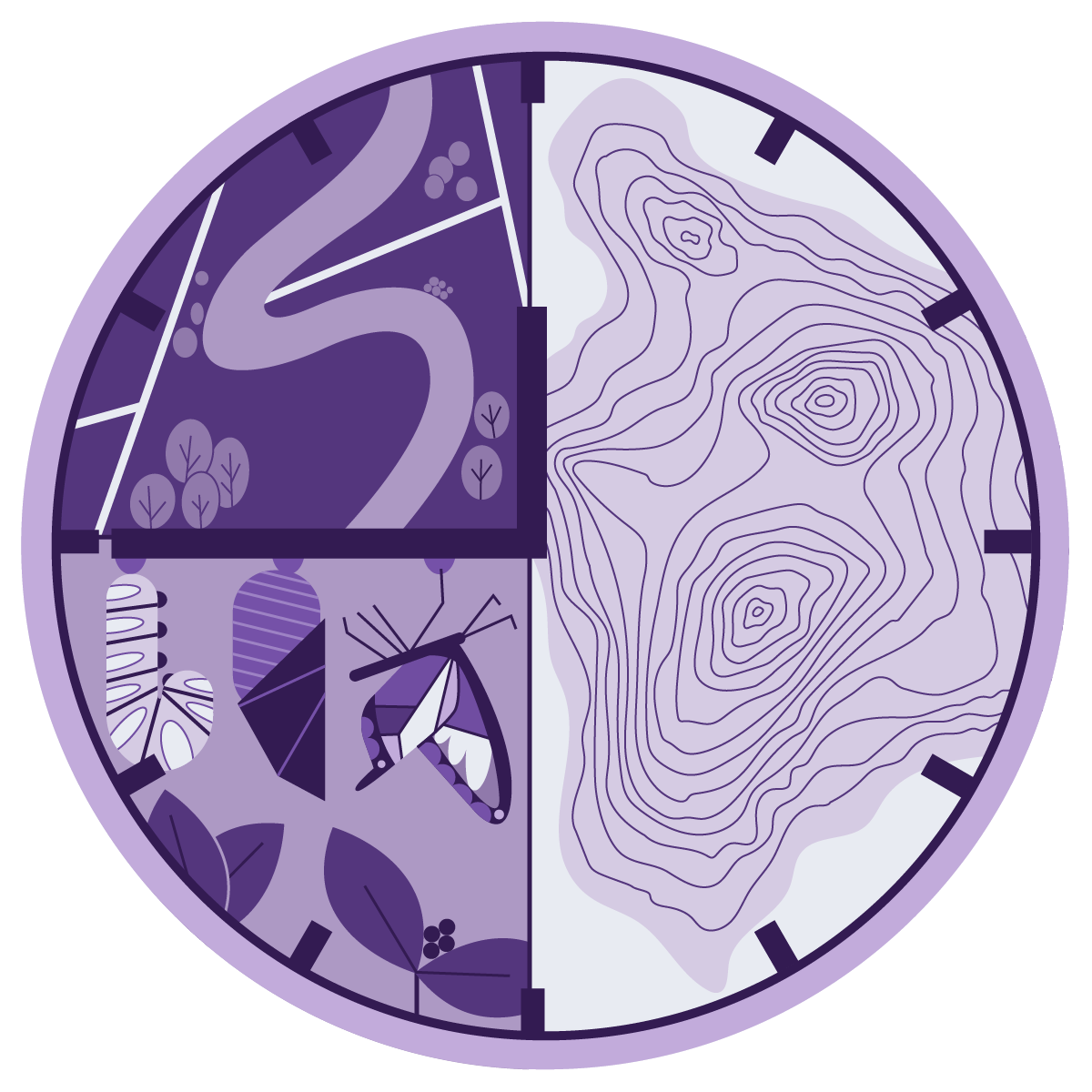
Our journal strives to understand ecological or biodiversity patterns through space and time. We encourage papers to advance the field of macroecology and biogeography through the development and testing of theory or modern methodology (remote sensing, molecular techniques, AI) or by proposing new tools for analysis or interpretation of ecological phenomena. There are no biases with regard to taxon, biome, or biogeographical area.
Thinking about publishing with us?
Ecography offers an annual E4 Award for early-career researchers
We value ethical standards in science (EDI, Open Access, waivers, accessible data and code, CRediT)
Check out Ecography’s journal metrics and see our Author Guidelines
Our journals, our society—join us!
The Nordic Society Oikos engages the global scientific community through five international journals…
…and supports the national ecological societies of the five Nordic countries. Anyone worldwide can join the Nordic Society Oikos.
NSO is a home for ecologists, a nexus for knowledge, and a guiding light for ecology worldwide. We are an active network of ecologists in the Nordic region and around the globe.
Why join NSO? Membership benefits include:
Connections across a global community of ecologists and five national societies
NSO newsletters with member-only updates about Nordic ecology and society activities
Ongoing opportunities for promotion on NSO’s digital platforms and social media channels
Discounted registration for NSO’s biennial conference
Eligibility to apply for NSO Grants
Each member receives additional benefits from one of our five national societies:
When you join NSO, you also become a member of one of our national societies. Which one? That’s up to you! Each national society provides its own benefits, including discounts to national conferences. Learn more about us at nordicsocietyoikos.org.
Danish Oikos Society
Oikos Finland
Icelandic Ecological Society
Norwegian Ecological Society
Swedish Oikos Society