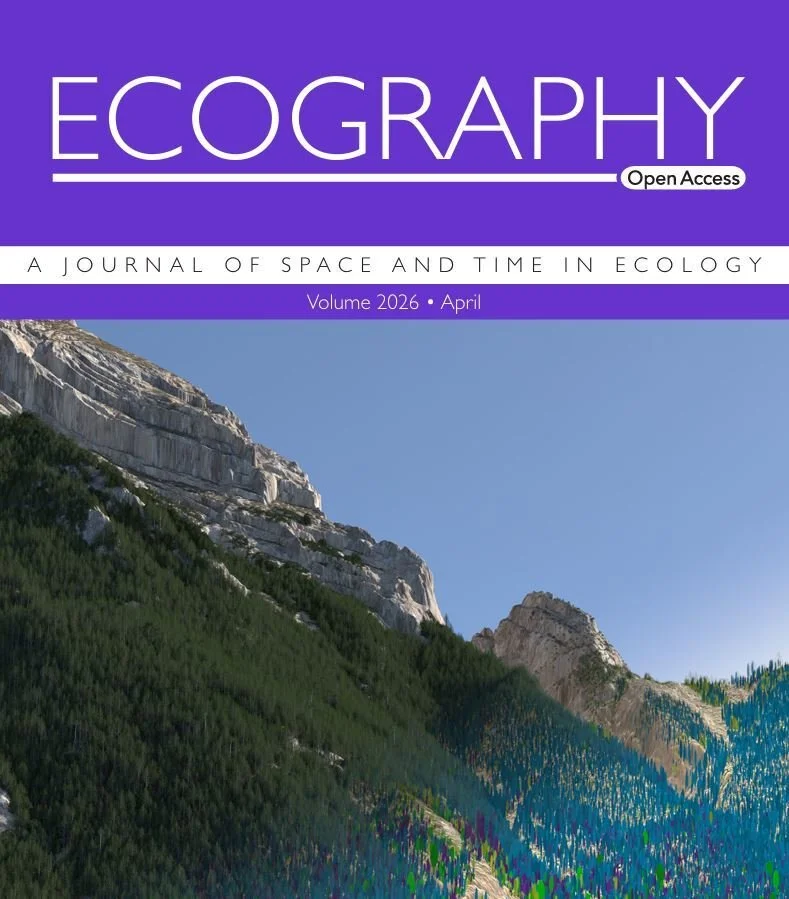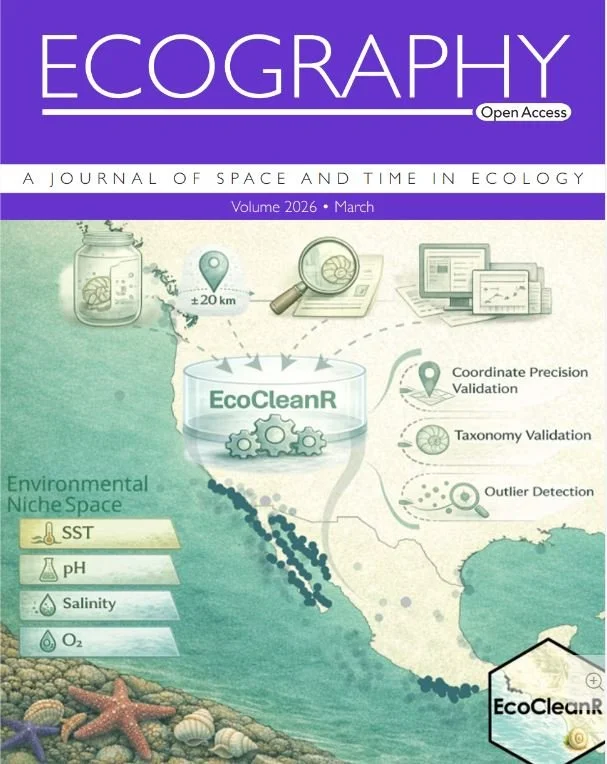

This month’s cover illustration by Priyanka Soni features the EcoCleanR workflow, showing transformation of raw biodiversity data into refined geographic and environmental representations of species distributions.
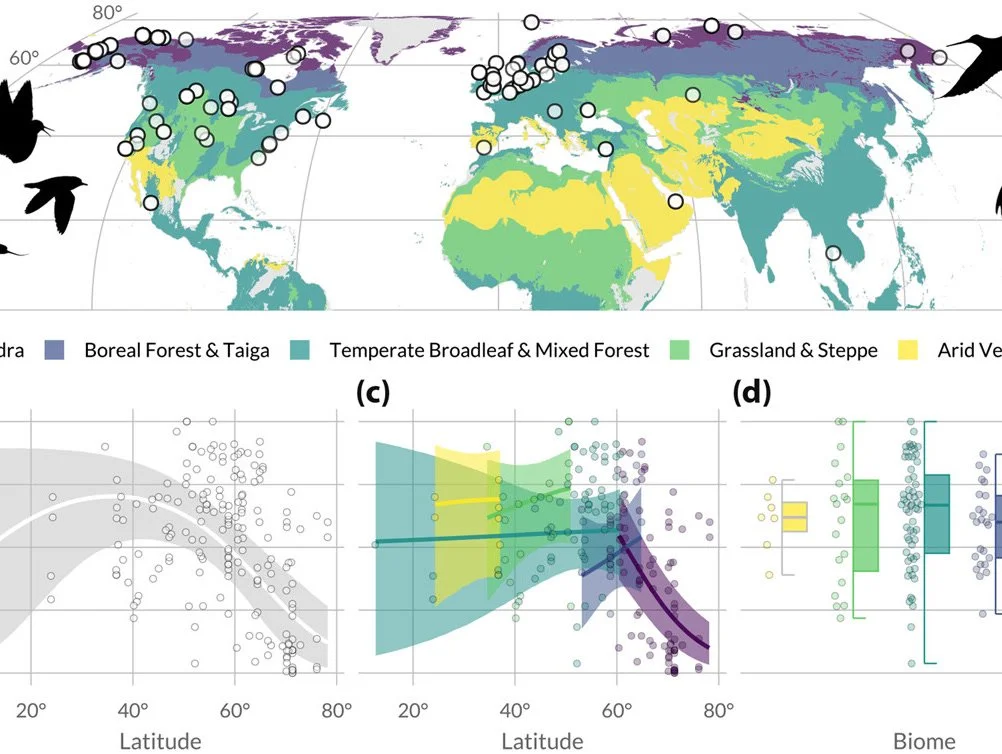
Arnost Sizling is a macroecologist who explores the drivers of species spatial patterns, with interests including how biodiversity patterns shift across the Holocene and along continental-scale gradients.
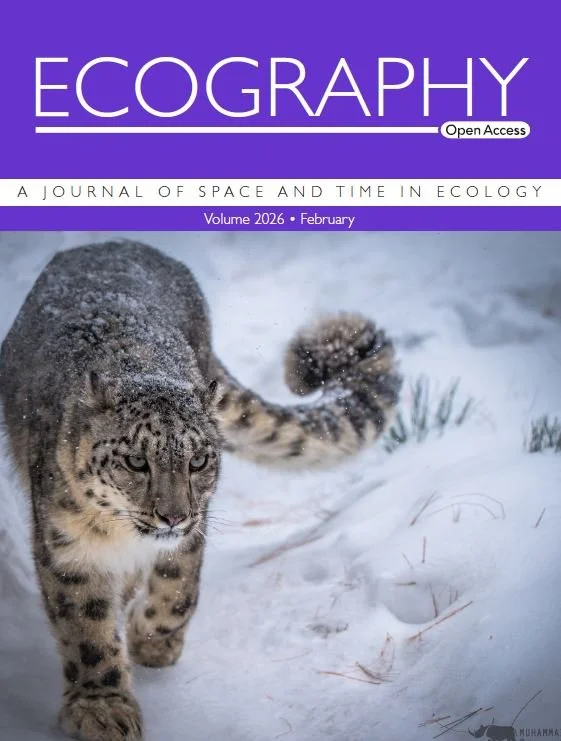
This month’s cover photo by Muhammad Osama depicts Lovely, an orphan snow leopard cub rescued in 2013, who thrives under rehabilitation in Naltar Valley of northern Pakistan.
Jamie Kass runs the Macroecology Lab at Tohoku University in Japan, investigating how biodiversity—from plankton to insects to vertebrates—is distributed across space and time.
Animal ecologist and conservation scientist Dan Liang studies diversity patterns in rapidly changing ecosystems, often involving long-distance migrants crossing national boundaries and elevational migrations in mountains.
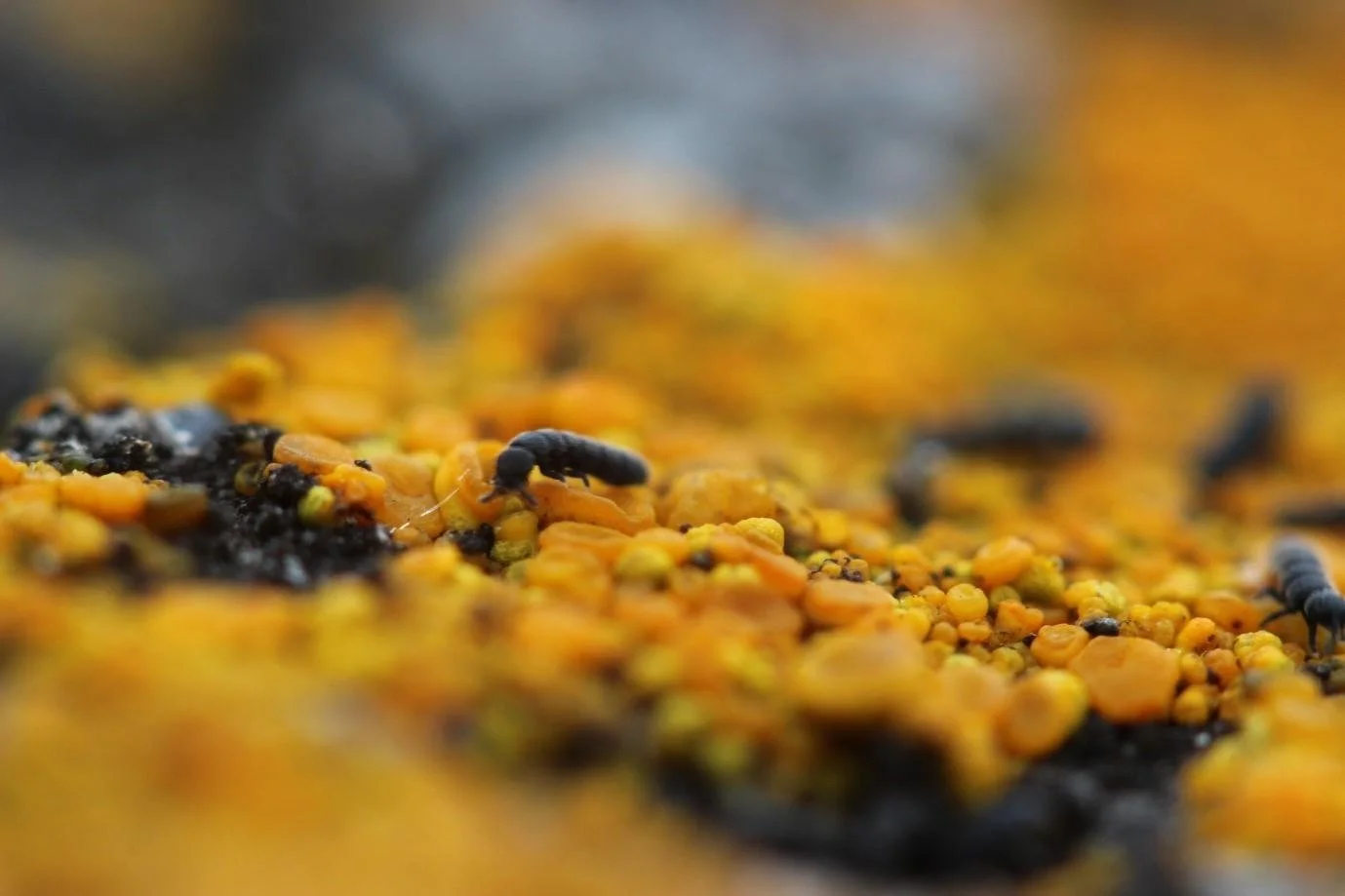
In the tiny ice-free areas of Antarctica, carpets of mosses, lichens, and algae form miniature forests. These patches host Antarctica’s terrestrial animals: billions of mites and springtails.
We welcome Babak Naimi, a senior researcher at Utrecht University who focuses on understanding biodiversity change in response to ongoing global change and anthropogenic activities.
We welcome wildlife ecologist and conservation biologist Tyler Hallman, whose recent work includes exploring the wellbeing benefits that humans derive from avian soundscapes.
We welcome Marco Túlio Pacheco Coelho, whose research asks how broad patterns of biodiversity emerge across space, time, and different parts of the tree of life.
We are happy to announce an open competition for the Ecography Award for Excellence in Ecology and Evolution, given to an early career research scientist who submits an exceptional Review manuscript.
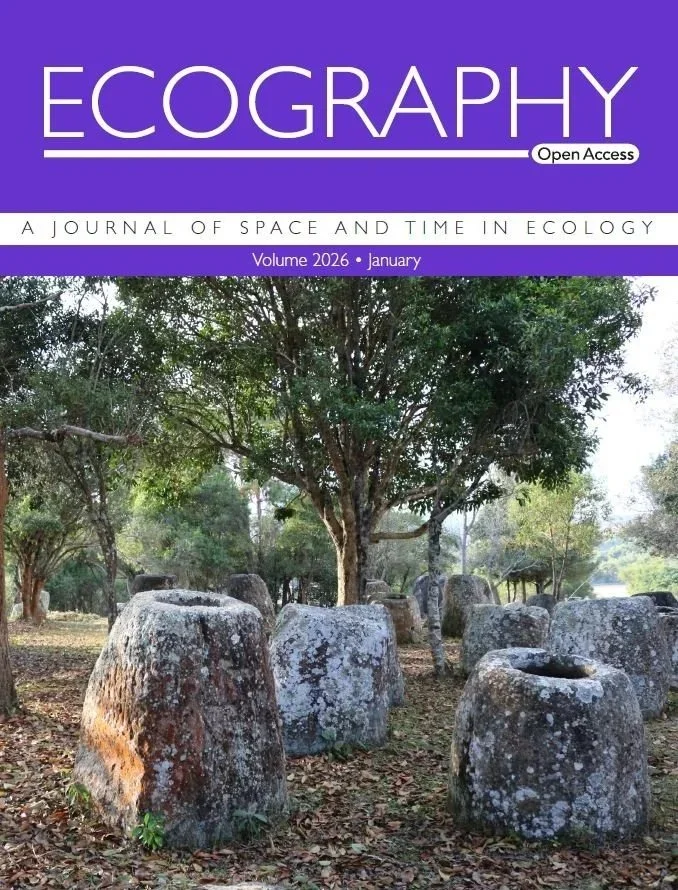
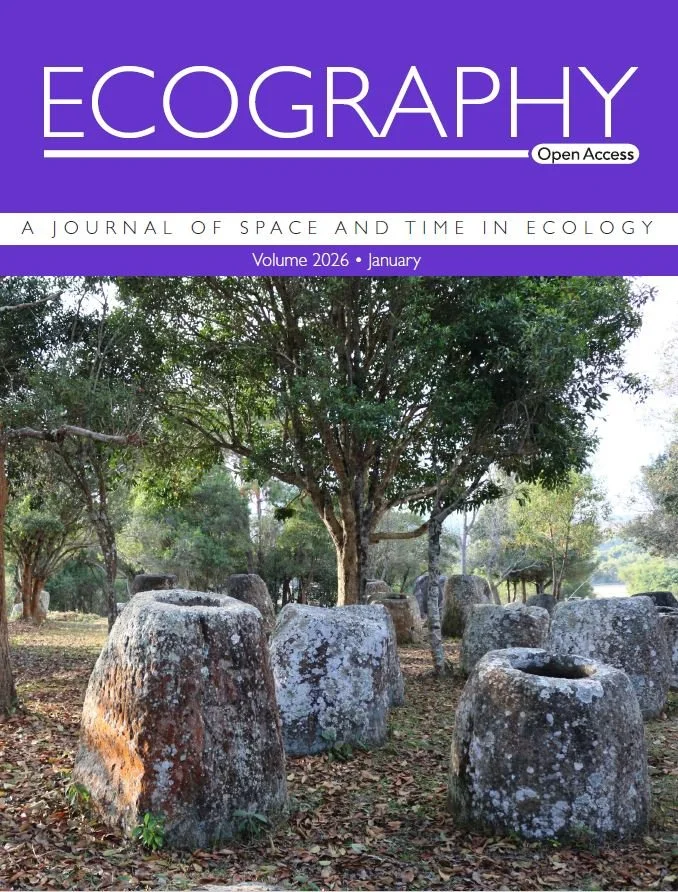
This month’s cover features a group of ancient megalithic jars at the Plain of Jars in Laos, photographed by Khamla Inkhavilay.
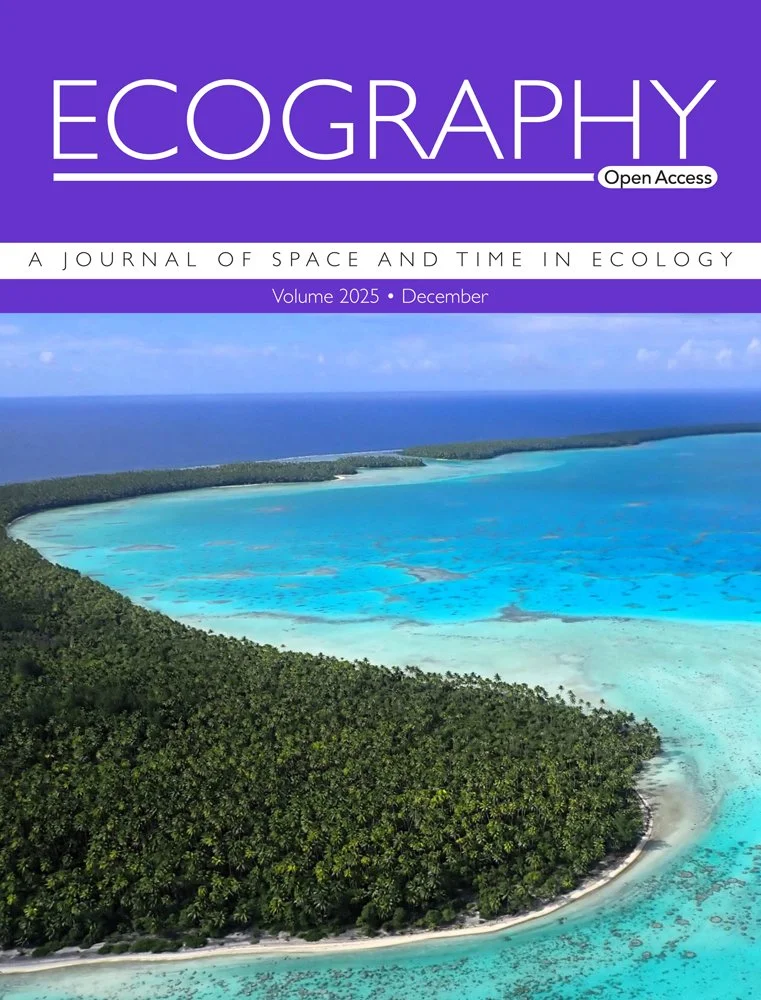
Atolls like Teti’aroa, French Polynesia, can offer unique windows into the limits and boundary conditions of biogeographic properties, which inherently cannot be examined through the study of larger islands.
The goal of Guzman’s research is to help improve insect conservation by developing statistical methods that better use all available data.
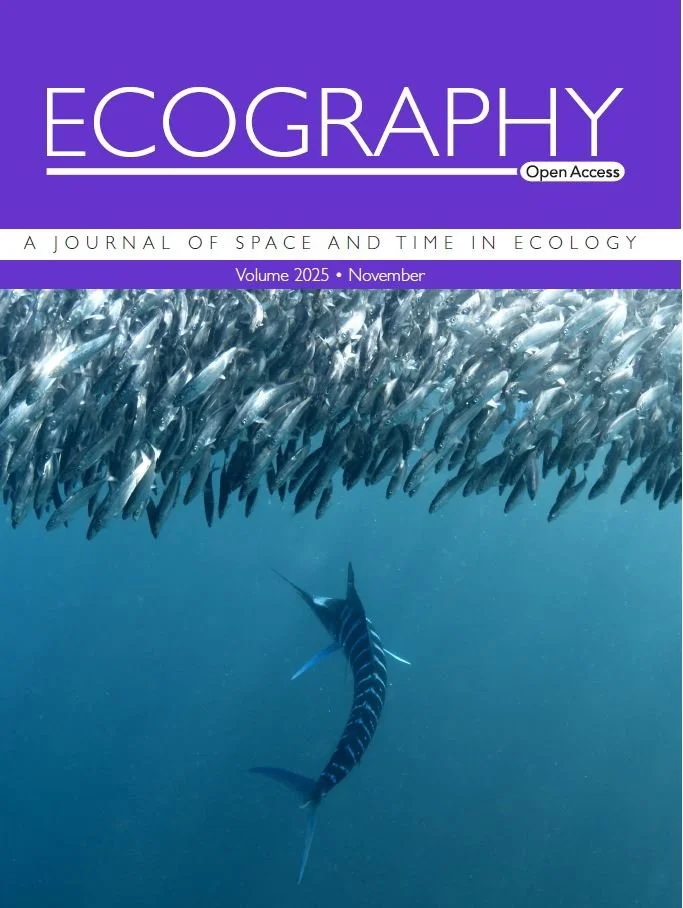
A striped marlin (Kajikia audax) closes in on a bait ball of Pacific sardine (Sardinops sagax) off the Pacific coast of Baja, Mexico.
We welcome Jon Lefchek, research scientist at the University of Maryland Center for Environmental Science, as new subject editor of Ecography.
We welcome Christine Meynard, the new Editor-in-Chief of Ecography.
L’Hoest’s monkey (Allochrocebus lhoesti) feeding at Nyungwe Forest National Park (Rwanda). Photo credit: Rafael Barrientos. Read the full open access paper.
This month’s cover photo features a red knot in flight, illustrating a paper by Ryder et al. that looks at changes in wing length in 20,000 juvenile shorebirds from 11 species over the past four decades.
Ecography is a journal of the Nordic Society Oikos, published in cooperation with Wiley. The journal is available at Wiley Online Library. Back issues are at JSTOR.