
Study | The small hosting the small in Antarctica
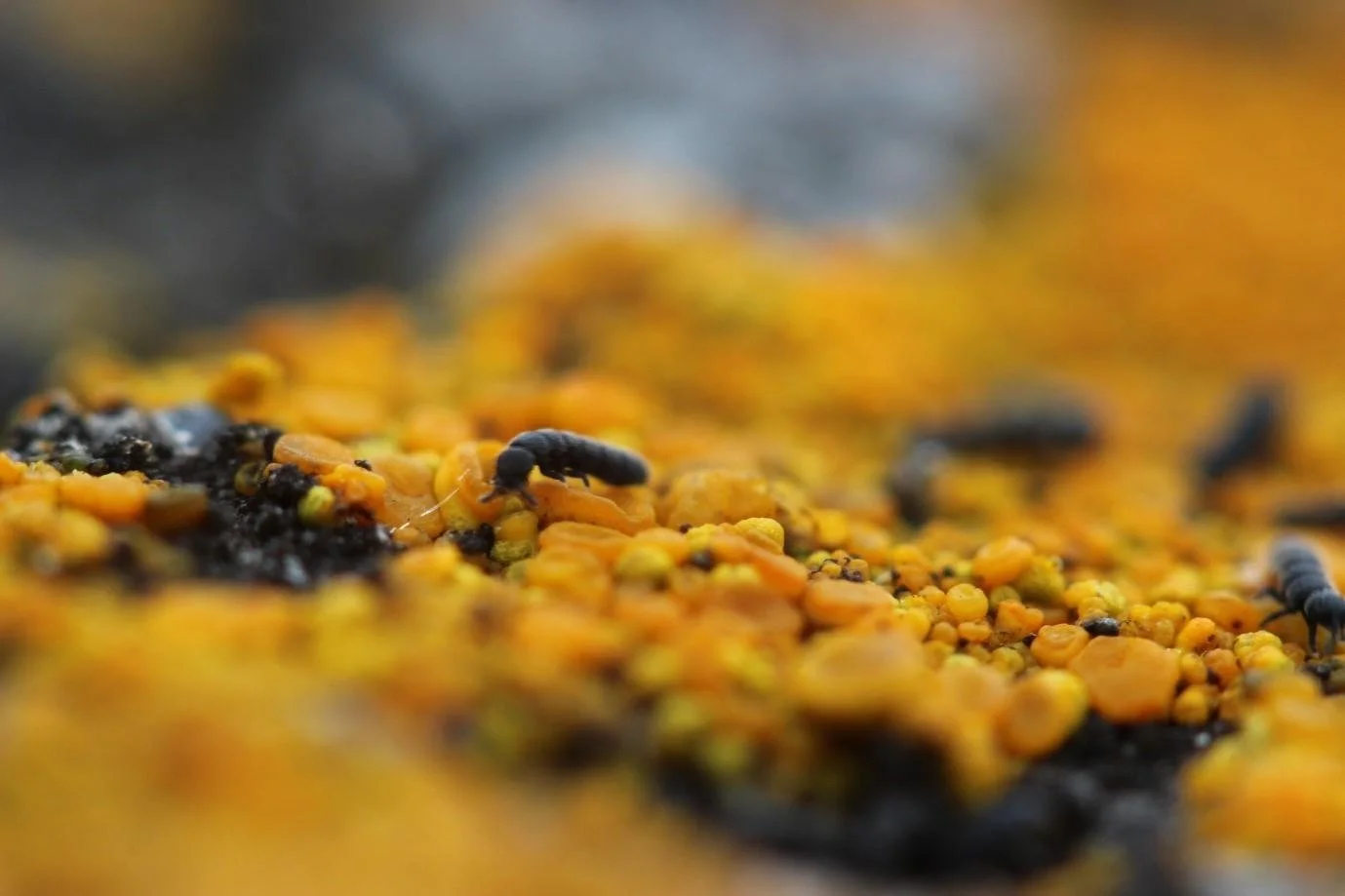
Figure 1. Springtail Cryptopygus antarcticus moving across lichen, likely Xanthoria spp. Photo: Stef Bokhorst.
When people think of Antarctica, they usually picture penguins, seals, and a lot of ice.
But in the tiny ice-free areas, carpets of mosses, lichens, and algae form miniature forests. These patches host Antarctica’s terrestrial animals: billions of mites and springtails (Fig. 1).
From earlier studies, we already knew that nitrogen plays an important role for these animals. But we didn’t know whether its effects differed between vegetation types, between mites and springtails, or how moisture content might shape their distributions, and if the effects of moisture and nitrogen change across the maritime Antarctic.
In short: we lacked a clear picture of what determines where these animals live, and why.
To find out, our team combined counts of mites and springtails from Antarctic vegetation samples collected over more than a decade (2013–2024) across the maritime Antarctic (Signy Island, Byers Peninsula and Rothera) (Fig. 2–4). In total we extracted and identified 240 000 individual microarthropods from vegetation for this study.
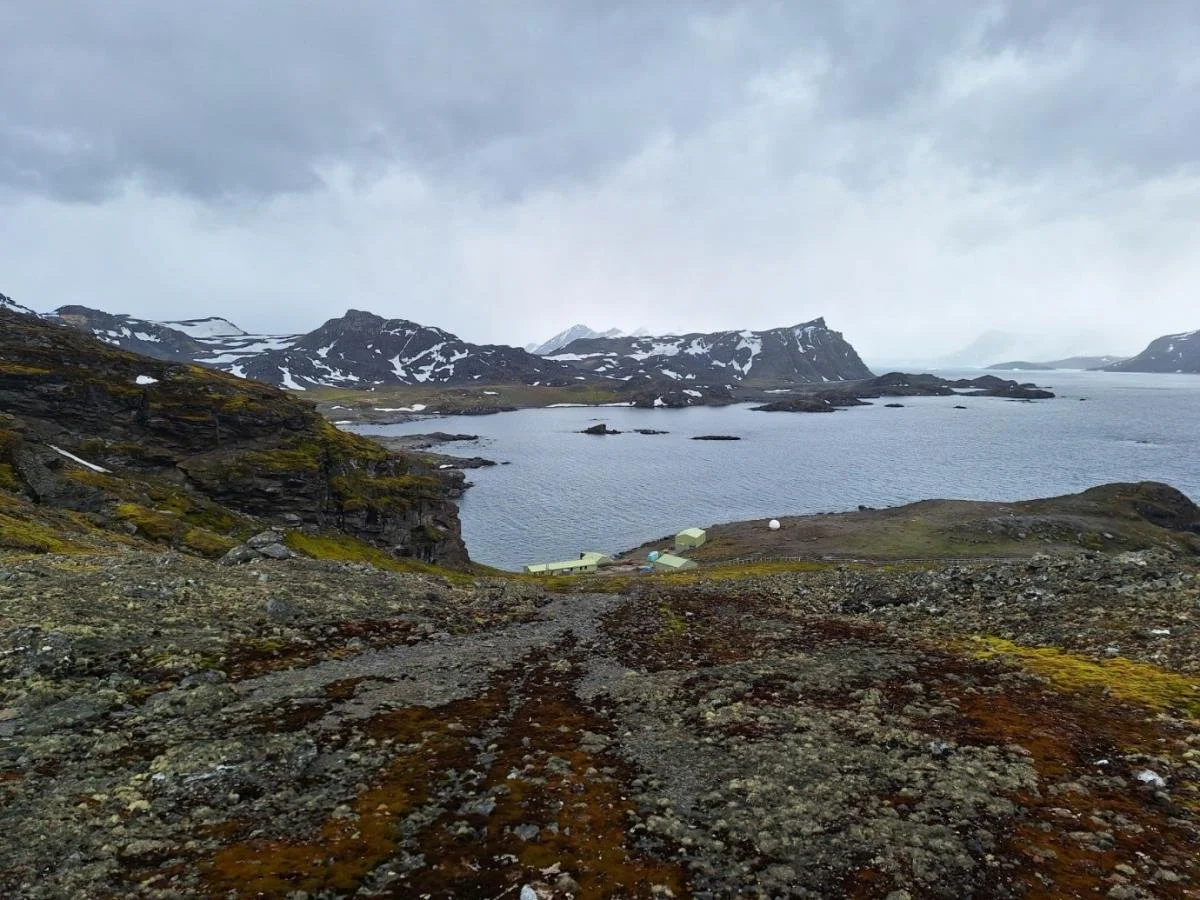
Figure 2. The ‘Backslope’ near the British Antarctic Survey’s Signy Research Station, with a mixture of moss and lichen vegetation. Photo: Peter Convey.
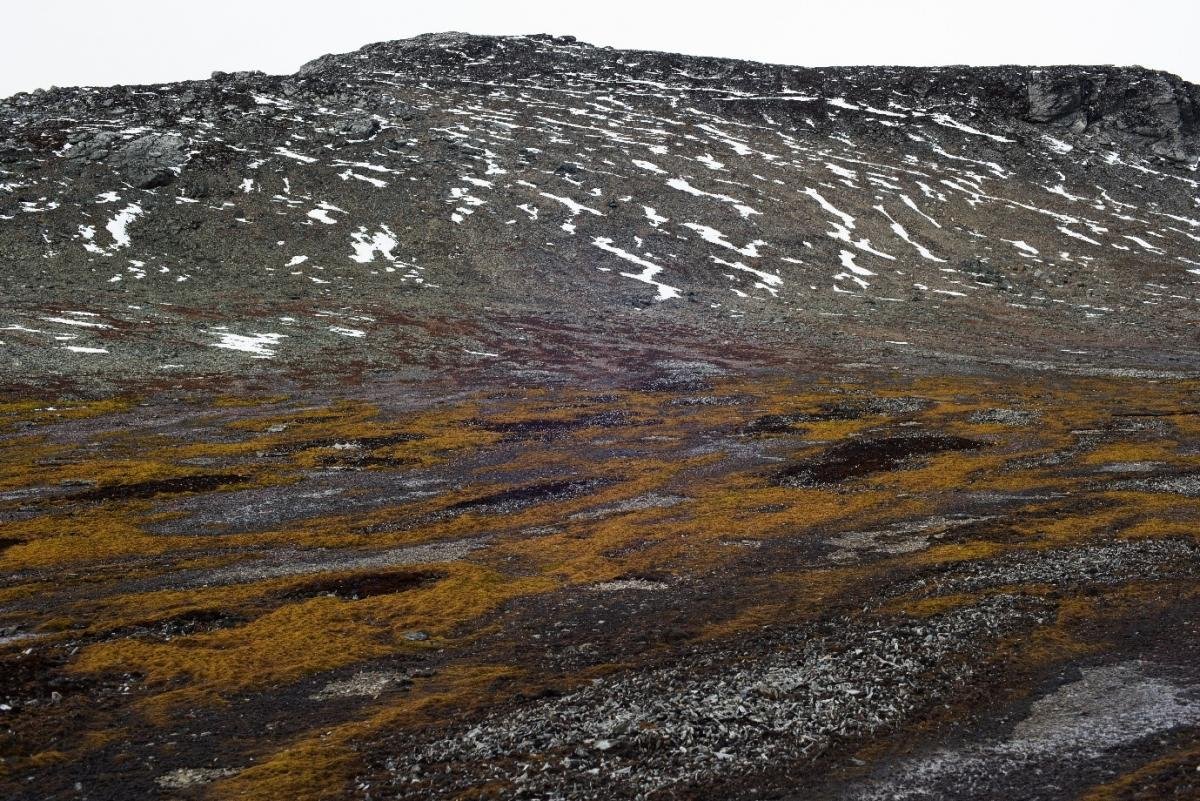
Figure 3. Mosaic of moss-dominated and lichen-dominated habitats on Signy Island.
We found that:
Not all microarthropods are found everywhere. Springtails prefer mosses and algae, while mites don’t show a clear preference.
More importantly, vegetation characteristics explained their abundance. Nitrogen content consistently increased arthropod abundance, and water content almost always increased springtail abundance, but sometimes negatively impacted mite abundance.
The relative importance of moisture and nitrogen content shifted with geographic location: moisture was most important in the harsher, drier south, while nitrogen mattered more in the milder, northern regions.
Vegetation type and traits thus together determine the small-scale habitat for microarthropods and it is not just climate that determines their distributions.
This matters because Antarctica’s terrestrial environment is changing.
With climate change, ice-free areas are expanding, but human activity is also increasing and vascular plants are expanding. Understanding which habitats support which species thus becomes increasingly important if we want to protect these species. To get a first estimate of how many mites and springtails might occur across the maritime Antarctic, we combined our data with the first satellite-based vegetation map of Antarctica.
For more precise estimates, we need to know more about the traits of specific vegetation types and work with aerial imagery that can better distinguish species within vegetation or even detect moisture status or nitrogen content (or distance to marine vertebrate colonies, as that is a strong determinant of nitrogen content in Antarctic vegetation).
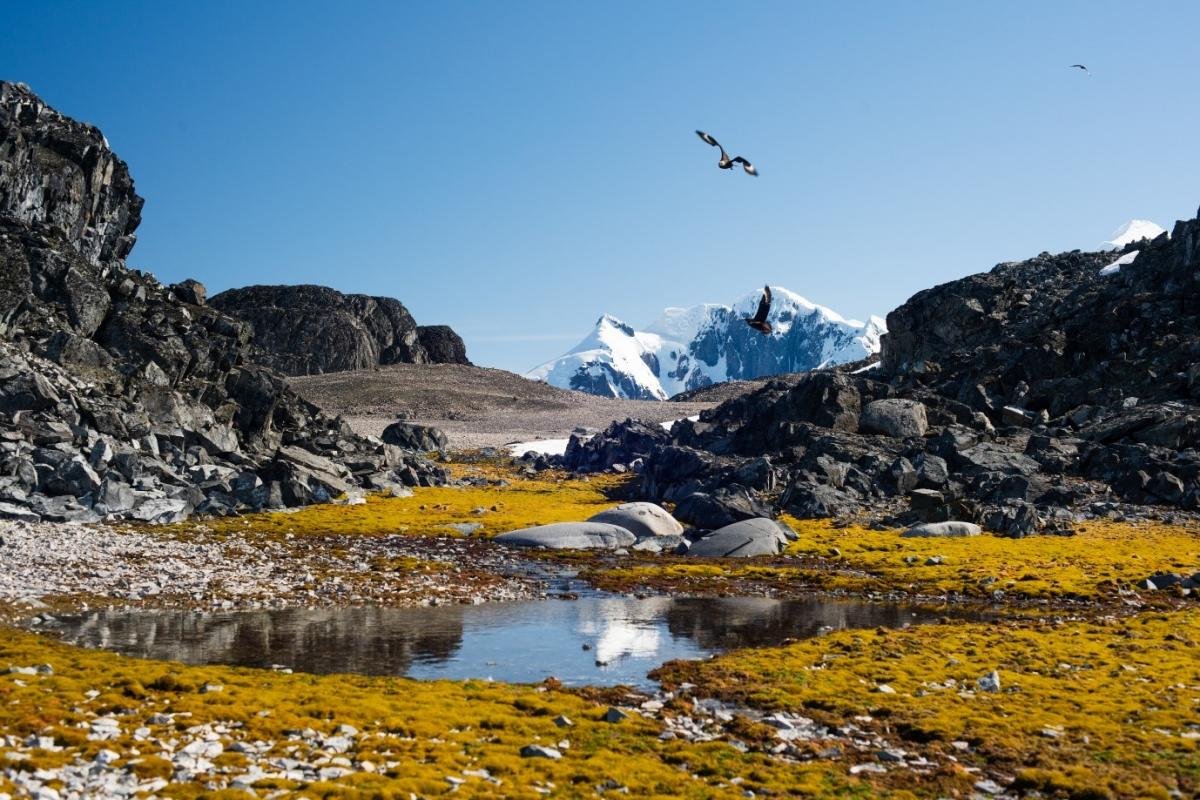
Figure 4. Wet valley with extensive moss carpets on Lagoon Island near Rothera Station (British Antarctic Survey).
This kind of study could only be written after multiple expeditions to Antarctica.
I spent about five months in total across two Antarctic field campaigns in 2023 and 2024 to add more data to the dataset we already had. On Signy Island, collecting samples meant carrying backpacks full of moss and lichen samples across the island and sometimes even over its small icecap. At the end of the day, those backpacks felt absurdly heavy for something that would yield just a few millimetres of arthropod life under the microscope.
The result is one of the most detailed datasets to date linking Antarctic vegetation traits to arthropod communities. This provides a baseline for tracking how biodiversity in ice-free areas is responding to warming and human disturbance. Knowing where these tiny animals live, and which habitats (Fig. 5) sustain them, is a first step toward better protecting Antarctica’s terrestrial biodiversity.
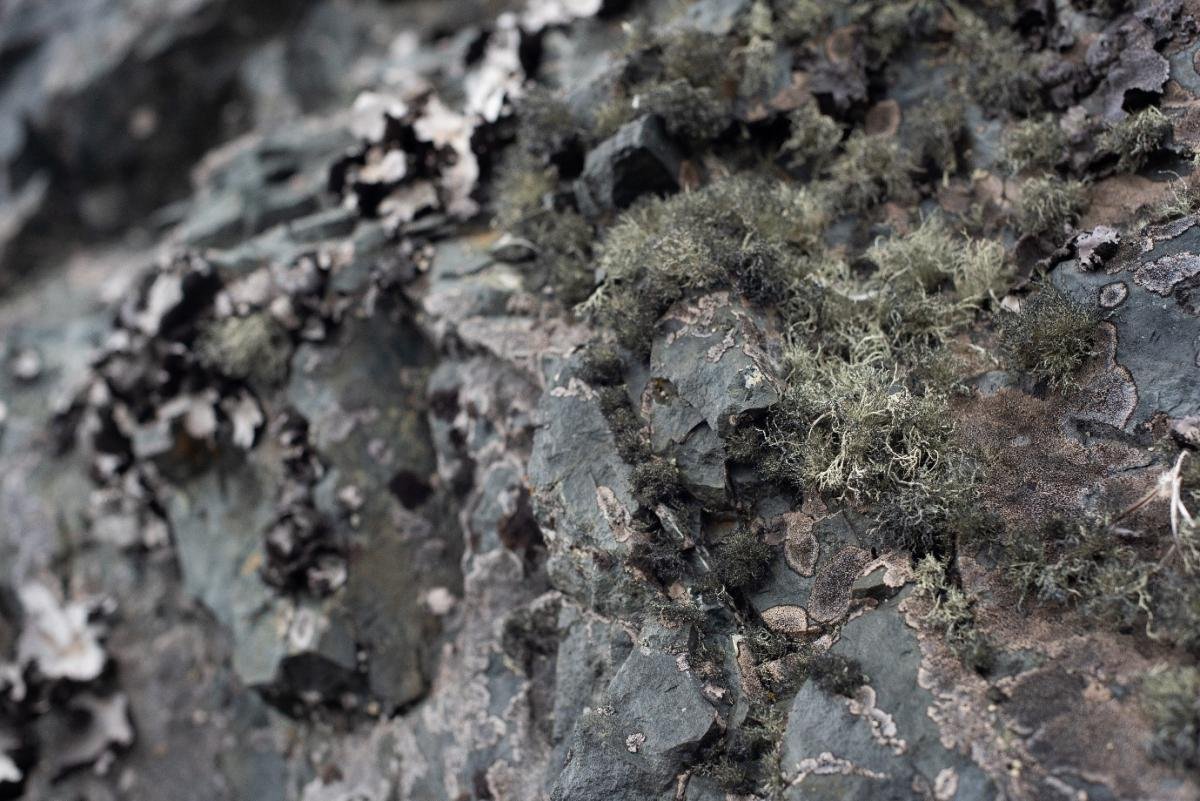
Figure 5. A variety of lichen species with Usnea antarctica in the foreground.
Ecography—who are we?
ECOGRAPHY: A Journal of Space and Time in Ecology is an Open Access journal owned by the Nordic Society Oikos.
Our journal strives to understand ecological or biodiversity patterns through space and time. We encourage papers to advance the field of macroecology and biogeography through the development and testing of theory or modern methodology (remote sensing, molecular techniques, AI) or by proposing new tools for analysis or interpretation of ecological phenomena. There are no biases with regard to taxon, biome, or biogeographical area.
Thinking about publishing with us?
Ecography offers an annual E4 Award for early-career researchers
We value ethical standards in science (EDI, Open Access, waivers, accessible data and code, CRediT)
Check out Ecography’s journal metrics and see our Author Guidelines
Our journals, our society—join us!
The Nordic Society Oikos engages the global scientific community through five international journals…
…and supports the national ecological societies of the five Nordic countries. Anyone worldwide can join the Nordic Society Oikos.
NSO is a home for ecologists, a nexus for knowledge, and a guiding light for ecology worldwide. We are an active network of ecologists in the Nordic region and around the globe.
Why join NSO? Membership benefits include:
Connections across a global community of ecologists and five national societies
NSO newsletters with member-only updates about Nordic ecology and society activities
Ongoing opportunities for promotion on NSO’s digital platforms and social media channels
Discounted registration for NSO’s biennial conference
Eligibility to apply for NSO Grants
Each member receives additional benefits from one of our five national societies:
When you join NSO, you also become a member of one of our national societies. Which one? That’s up to you! Each national society provides its own benefits, including discounts to national conferences. Learn more about us at nordicsocietyoikos.org.
Danish Oikos Society
Oikos Finland
Icelandic Ecological Society
Norwegian Ecological Society
Swedish Oikos Society