
Study | Balancing moult, migration, and breeding in a long-lived partial migrant raptor
How do Egyptian vultures balance moult, migration, and breeding?
Text by Iñigo Zuberogoitia
For birds, life is a constant balancing act. Growing new feathers, travelling thousands of kilometres, and raising chicks are all energetically expensive tasks. But what happens when a species has to do more than one of these things at once?
In our study, we explored how Egyptian vultures Neophron percnopterus manage this challenge. This long-lived raptor is particularly interesting because it is a partial migrant: some subpopulations travel long distances between Europe and Africa or within Asia, while others are completely sedentary, such as those in the Canary Islands.
By analysing 740 moult records from birds photographed across their distribution range — including standardised images from ringing programs and high-quality photographs from online repositories and photographers — we reconstructed how wing feathers (remiges) are replaced across age classes and populations.
A surprisingly complex moulting strategy
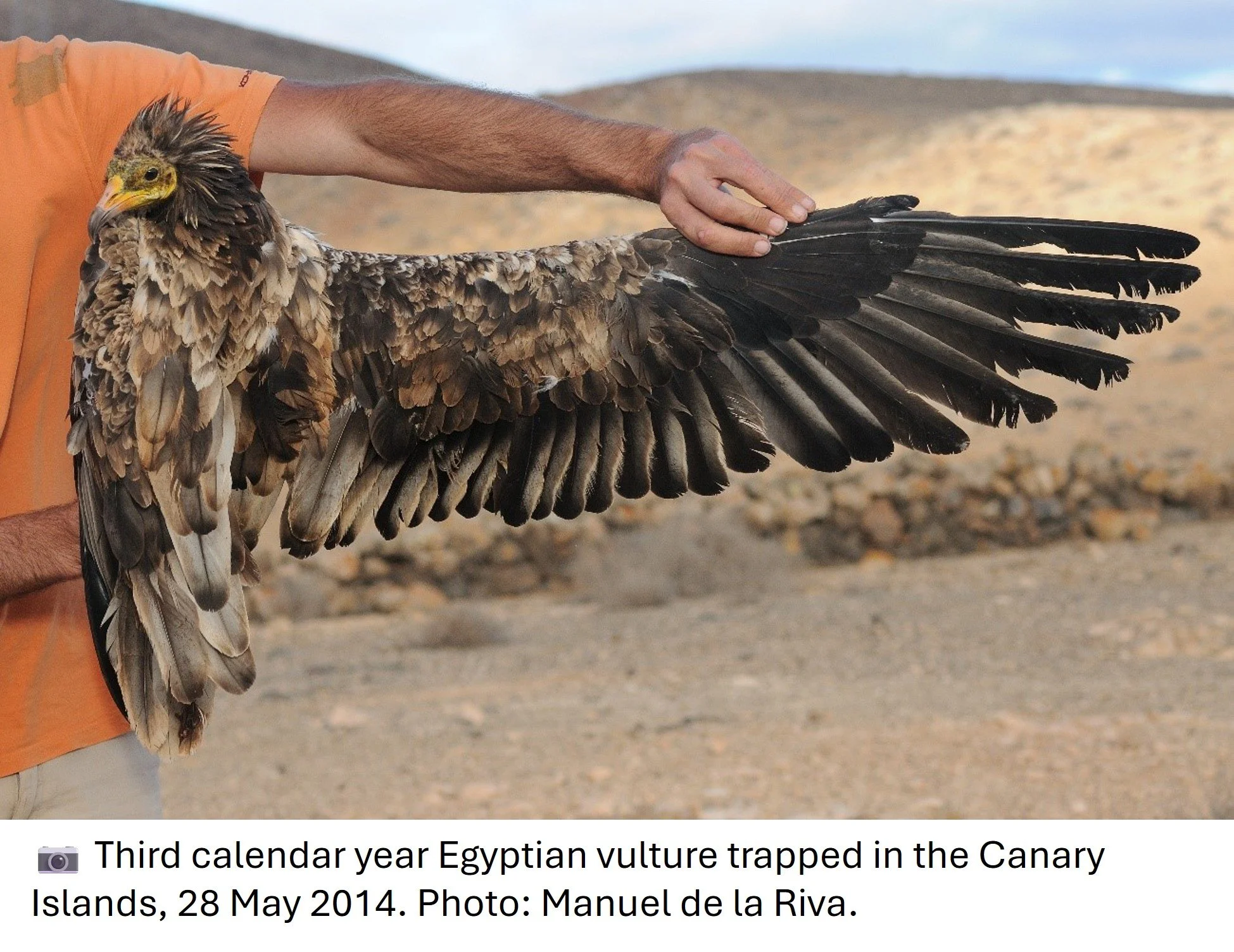
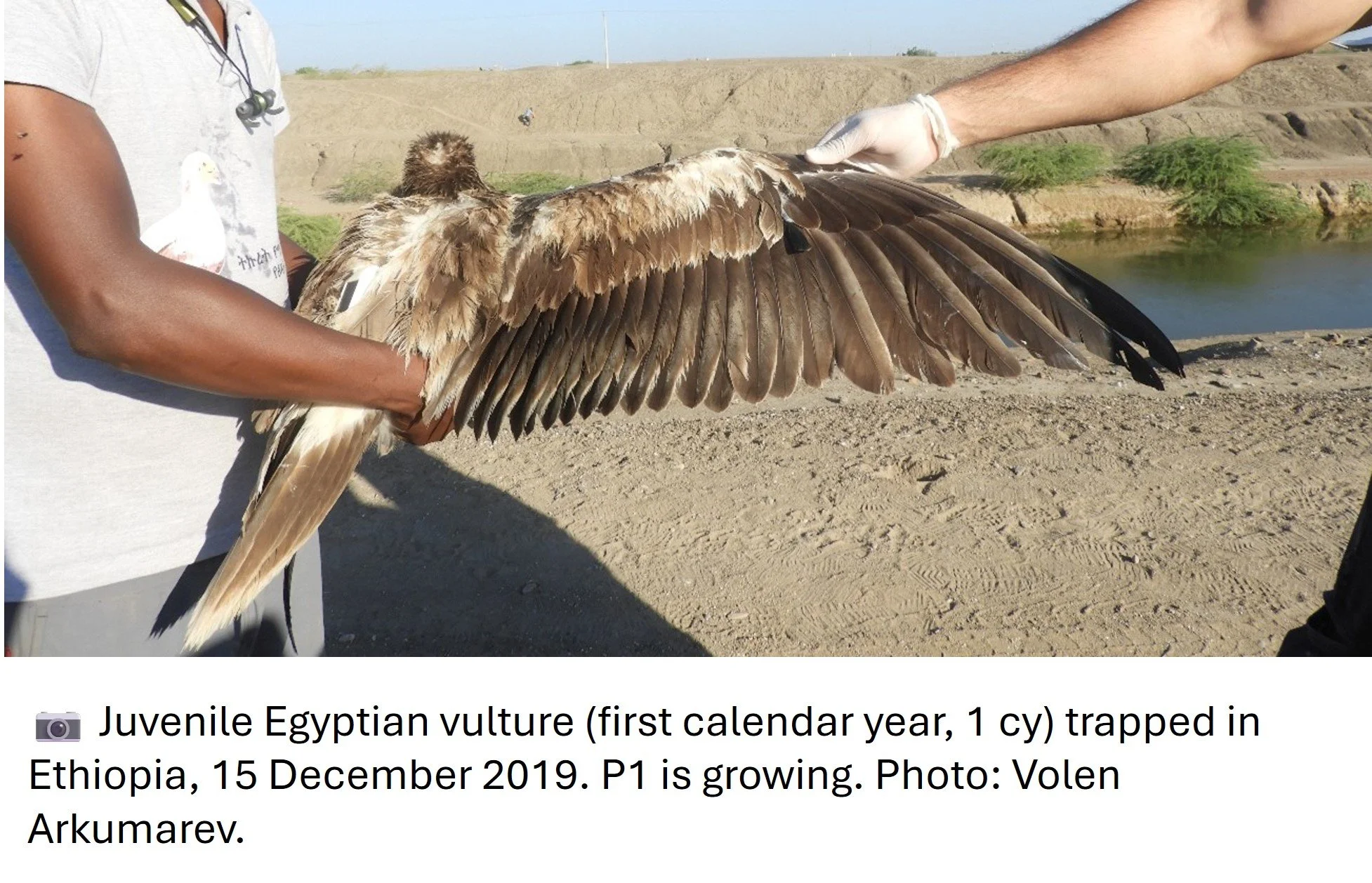
Like other large vultures, Egyptian vultures do not replace all their flight feathers in a single year. Instead, they need two or more years to complete a full renewal of their wings. But what makes this species remarkable is what happens during the first years of life. Juveniles fledge at the end of summer and, in migratory populations, soon embark on their first journey to Africa or Asia. At only seven or eight months of age, they begin replacing their first primary feather (see picture below). From then on, moult progresses very slowly.
“Even more strikingly, subadult vultures continue moulting during both autumn and spring migrations. To our knowledge, this makes them unique among raptors.”
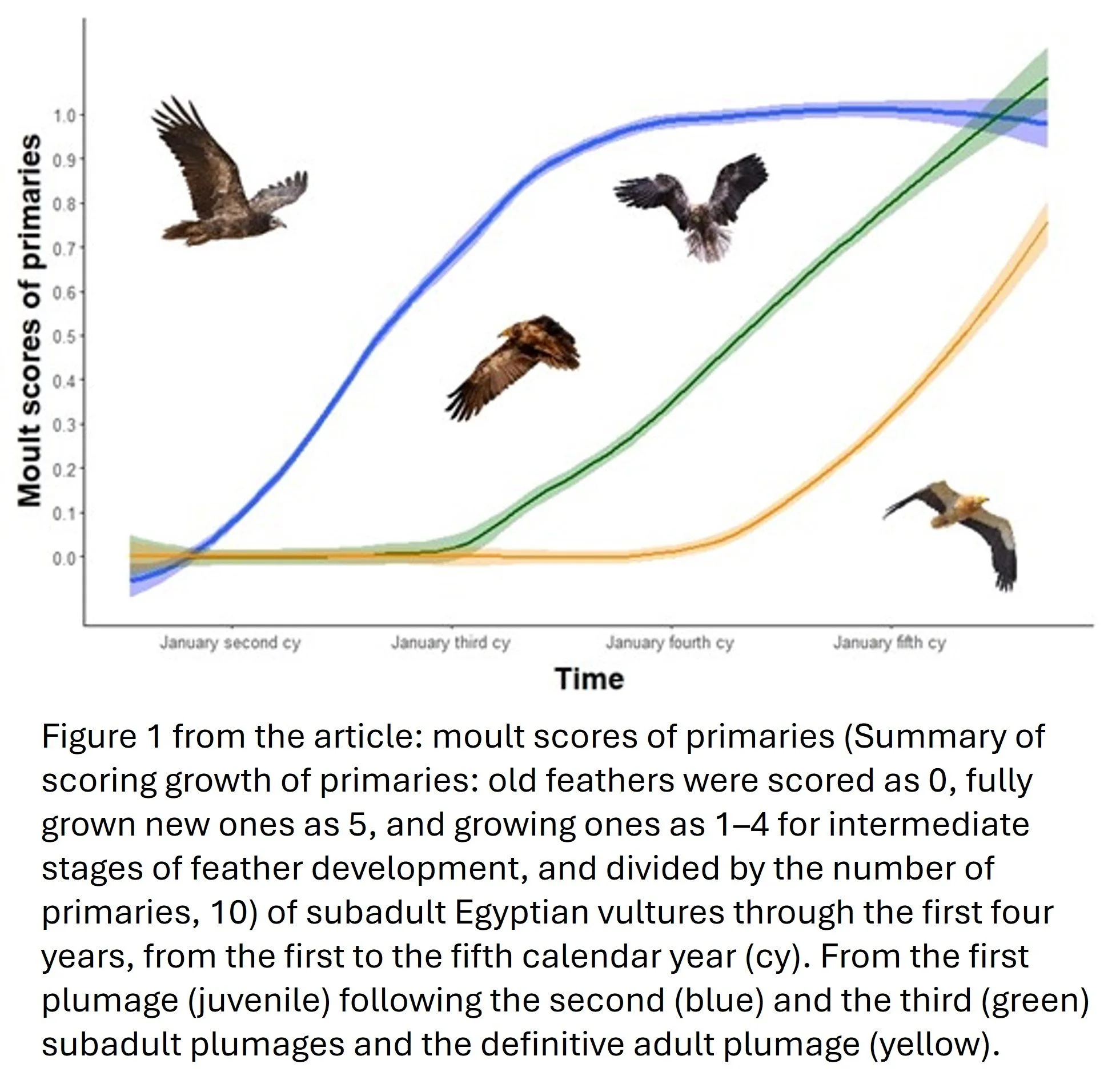
As birds transition from juvenile (first plumage) to successive subadult plumages (second, third and fourth plumages), they initiate new “waves” of feather replacement before the previous wave has even finished (see Fig. 1 from the article below). The result is a continuous moulting process.
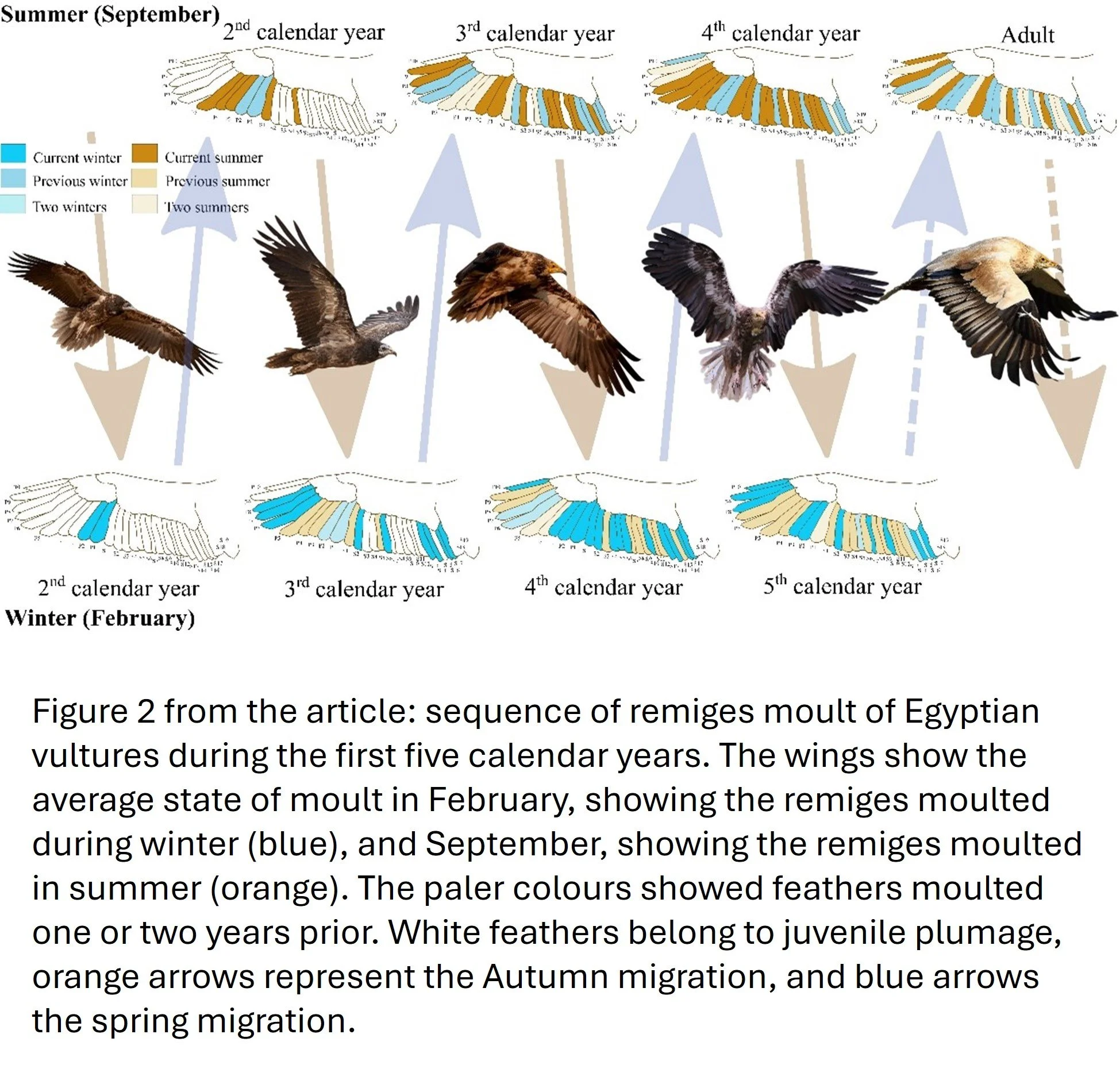
Even more strikingly, subadult Egyptian Vultures continue moulting during both autumn and spring migrations. To our knowledge, this makes them unique among raptors: they maintain an almost continuous moult during their early life, including during long migratory journeys.
Everything changes at adulthood
Once birds reach adult plumage, the strategy shifts dramatically. Breeding introduces new energetic constraints. Adults do not moult during the early stages of reproduction. Only once nestlings are sufficiently developed do adults begin replacing feathers. Moult then continues through summer, proceeds during autumn migration, and advances on the wintering grounds. However, adults stop moulting in late winter. They complete spring migration, courtship, egg-laying, and incubation without replacing a single feather.
In practice, adults can replace only about half of their flight feathers each year, requiring two years to complete a full wing renewal.
Does migration limit moult?
Because migration is energetically costly, we predicted that populations travelling longer distances would replace fewer feathers each year. Conversely, sedentary populations — free from the energetic burden of migration — were expected to moult more extensively.
Our results partly supported these predictions. Sedentary birds from the Canary Islands began moulting earlier and replaced more flight feathers per year than migratory populations. In other words, when migration costs disappear, birds can invest more in feather renewal. However, among migratory populations, migration distance itself did not explain differences in moult. Birds from the Balkans, which travel much farther than those from Western Europe, did not replace fewer feathers annually.
An even more revealing pattern emerged in birds wintering in southwestern Europe. These short-distance migrants do not face extreme migratory costs, but they endure colder and harsher winter conditions than populations wintering in Africa or southern Asia. Unlike other groups, they suspend moult during winter, and ultimately replace fewer feathers per year than any other population.
This suggests that environmental conditions and seasonal energy constraints may be more important than migration distance alone.
A delicate energetic compromise
Our findings show that Egyptian Vultures fine-tune their moult according to both life stage and environmental context.
Subadults adopt a continuous strategy, even overlapping moult with migration.
Adults restrict moult around reproduction.
Sedentary populations invest more in feather replacement.
Birds exposed to harsh winters invest the least.
Balancing moult, migration, and breeding is not simply a matter of distance travelled. It is the outcome of a complex energetic compromise shaped by climate, life stage, and reproductive demands.
Journal of Avian Biology—who are we?
JOURNAL of AVIAN BIOLOGY: Empirical and Theoretical Research in Ornithology is an Open Access journal owned by the Nordic Society Oikos.
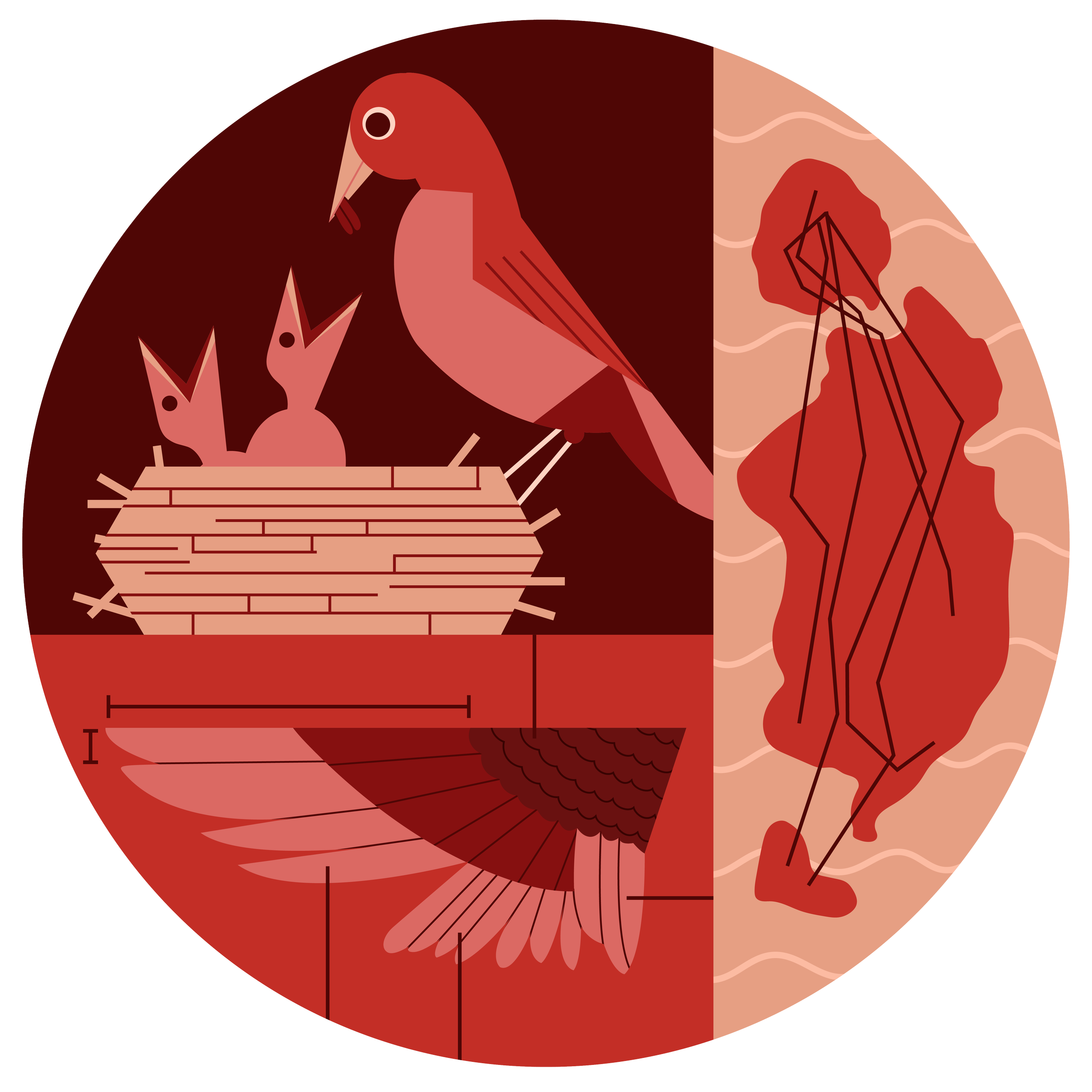
We are a journal for innovative, hypothesis-driven research on the biology of birds, with a particular emphasis on ecological, evolutionary and behavioural studies. We welcome submissions that study avian biology across all levels of ecological organization, from organisms and populations to communities and ecosystems. The journal also welcomes studies that report negative results, provided they are conducted rigorously and are scientifically informative. As a Nordic Society Oikos journal, we advocate research that is fair, openly accessible and reproducible.
Thinking about publishing with us?
Journal of Avian Biology offers a Review Award for early-career researchers.
We value ethical standards in science (EDI, Open Access, waivers, accessible data and code, CRediT)
Check out JAB’s journal metrics and see our Author Guidelines
Our journals, our society—join us!
The Nordic Society Oikos engages the global scientific community through five international journals…

…and supports the national ecological societies of the five Nordic countries. Anyone worldwide can join the Nordic Society Oikos.
NSO is a home for ecologists, a nexus for knowledge, and a guiding light for ecology worldwide. We are an active network of ecologists in the Nordic region and around the globe.
Why join NSO? Membership benefits include:
Connections across a global community of ecologists and five national societies
NSO newsletters with member-only updates about Nordic ecology and society activities
Ongoing opportunities for promotion on NSO’s digital platforms and social media channels
Discounted registration for NSO’s biennial conference
Eligibility to apply for NSO Grants
Each member receives additional benefits from one of our five national societies:
Danish Oikos Society
Oikos Finland
Icelandic Ecological Society
Norwegian Ecological Society
Swedish Oikos Society
When you join NSO, you also become a member of one of our national societies. Which one? That’s up to you! Each national society provides its own benefits, including discounts to national conferences. Learn more about us at nordicsocietyoikos.org.