
Editor’s Choice | Citizen Science Reveals Hidden Migration Timelines
Editor’s choice for our May issue:
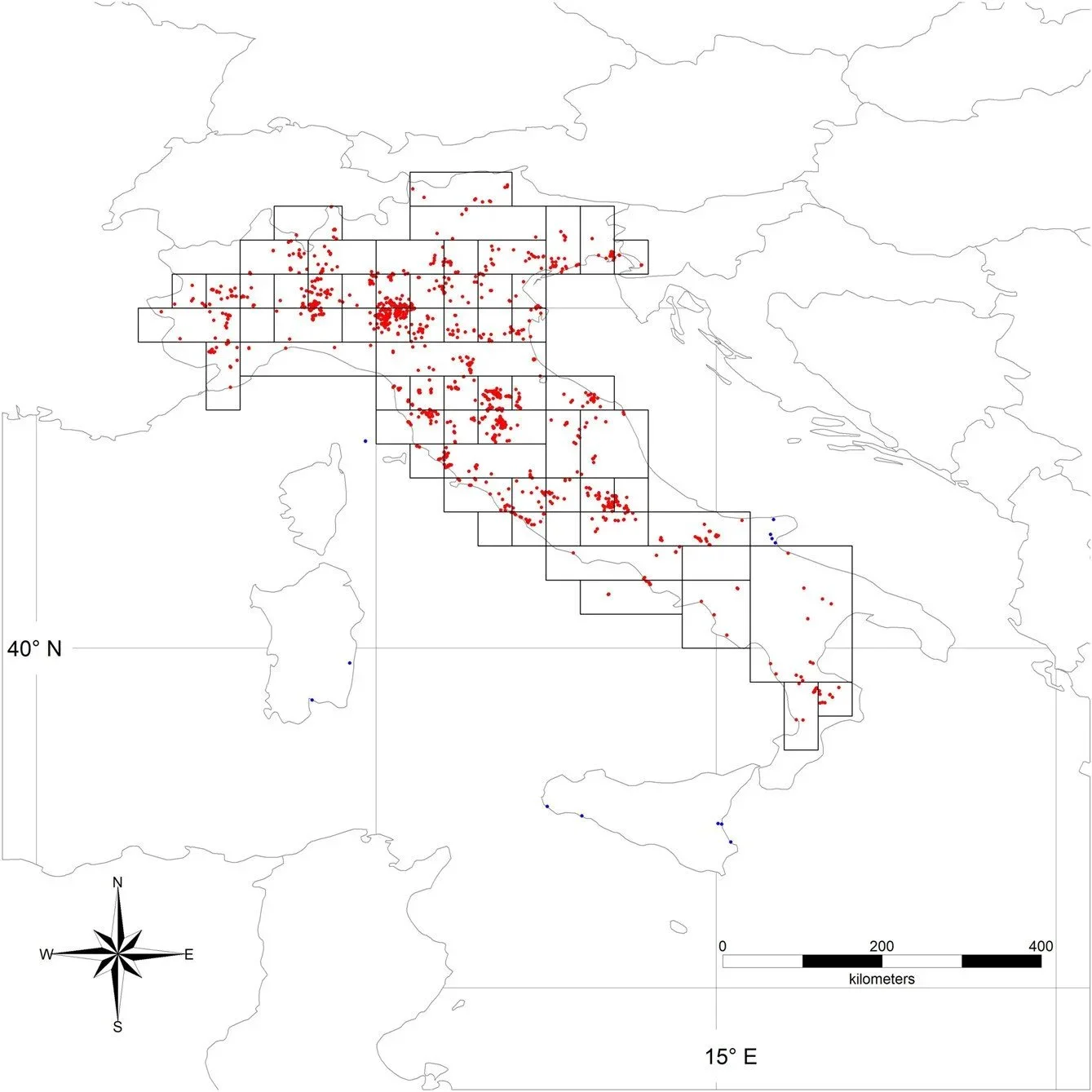
McKinlay et al. : “Phenology of migrating game birds in Italy based on citizen science data”

Knowing exactly when migratory birds move is not just an academic exercise; it directly influences how we protect them.
This paper is a compelling example of how citizen science can provide robust, policy-relevant insights on a scale that would otherwise be impossible.
By analysing data from thousands of observations made by volunteers across Italy, Susan McKinlay and co-authors present a detailed overview of the migration phenology of 23 species of game birds. Their results closely align with independent ringing data, thereby reinforcing the reliability of well-curated citizen science datasets. This alone makes the study noteworthy.
However, it also provides a convincing case for the potential of integrating citizen-science data into decision-making processes. The analysis reveals that, for most of the species examined, pre-breeding migration begins earlier than is currently recognised in official EU policy documents. This discrepancy has significant conservation implications, indicating that current hunting regulations may inadvertently coincide with critical migration periods.
This study exemplifies how citizen science can help to bridge the gap between research and policy. It is scalable and cost-effective, and can produce robust evidence to challenge and refine regulatory frameworks. In short, this paper not only advances knowledge, but also demonstrates a practical pathway for improving wildlife management.
Ilse Storch, Editor-in-Chief
Wildlife Biology—who are we?
WILDLIFE BIOLOGY: Journal for Wildlife Research, Management, and Conservation is an Open Access journal owned by the Nordic Society Oikos.
Our journal promotes a scientific basis for the conservation and management of wildlife and human-wildlife relationships. We adopt a broad concept of wildlife management to safeguard sustainable relationships between wildlife and other human interests. This includes all policies and actions with the purpose of conservation, sustainable use, or control of wildlife and its habitats. We welcome theoretical, empirical, and practical articles from all areas of wildlife science.
Thinking about publishing with us?
Wildlife Biology publishes research, review, and management Articles as well as short Communications.
We value ethical standards in science (EDI, Open Access, waivers, accessible data and code, CRediT)
Check out Wildlife Biology’s journal metrics and see our Author Guidelines
Our journals, our society—join us!
The Nordic Society Oikos engages the global scientific community through five international journals…

…and supports the national ecological societies of the five Nordic countries. Anyone worldwide can join the Nordic Society Oikos.
NSO is a home for ecologists, a nexus for knowledge, and a guiding light for ecology worldwide. We are an active network of ecologists in the Nordic region and around the globe.
Why join NSO? Membership benefits include:
Connections across a global community of ecologists and five national societies
NSO newsletters with member-only updates about Nordic ecology and society activities
Ongoing opportunities for promotion on NSO’s digital platforms and social media channels
Discounted registration for NSO’s biennial conference
Eligibility to apply for NSO Grants
Each member receives additional benefits from one of our five national societies:
Danish Oikos Society
Oikos Finland
Icelandic Ecological Society
Norwegian Ecological Society
Swedish Oikos Society
When you join NSO, you also become a member of one of our national societies. Which one? That’s up to you! Each national society provides its own benefits, including discounts to national conferences. Learn more about us at nordicsocietyoikos.org.