WILDLIFE BIOLOGY
ABOUT THE JOURNAL
WILDLIFE BIOLOGY HOME | ABOUT THE JOURNAL | FOR AUTHORS | CONTACT US

We publish research on wildlife and human-wildlife relationships.
Wildlife Biology welcomes theoretical, empirical, and practical articles from all areas of wildlife science. Our broad concept of wildlife management includes all policies and actions with the purpose of conservation, sustainable use, or control of wildlife and its habitats.
Wildlife Biology publishes research, review, management, and communications articles.
We value ethical standards in science. Check out information on EDI, Open Access, waivers, double-blind peer review, accessible data and code, and CRediT.
See journal metrics.
Editorial Policies
Wildlife Biology is a full Open Access journal published by the Nordic Society Oikos in cooperation with Wiley. Please read the NSO Publishing Policies for detailed information regarding conflict of interest, authorship, roles of editors, copyright and licensing, Open Access conditions, and more. The article publication charges associated with Open Access articles are the only fees for publishing in NSO journals. Papers submitted to NSO journals are evaluated using double-blind peer review, with implications for manuscript formatting specified in our Author Guidelines. NSO believes that accessible and transparent data and code are essential for scientific progress. To make science more just, we ask our authors to declare whether the conduct of their study considers equity, diversity and inclusion when they submit their papers.

Manuscript Referrals
Editors of the NSO sister journals Oikos and Ecography and Journal of Avian Biology have the option to suggest that the authors transfer to Wildlife Biology. If a transfer is recommended, authors can opt for automatic referral. The manuscript, along with any related reviews, will then be transferred for consideration by the editorial team. Editors of Wildlife Biology may similarly refer manuscripts to Wiley’s Transfer Desk Assistant which identifies appropriate Wiley journals. Authors can then opt to transfer their manuscript to one of the suggested journals. Transfers are offered to facilitate rapid publication of good quality research that is unable to be accepted by the original journal, and to reduce overall editor burden and reviewer fatigue.

EDITORIAL TEAM
-
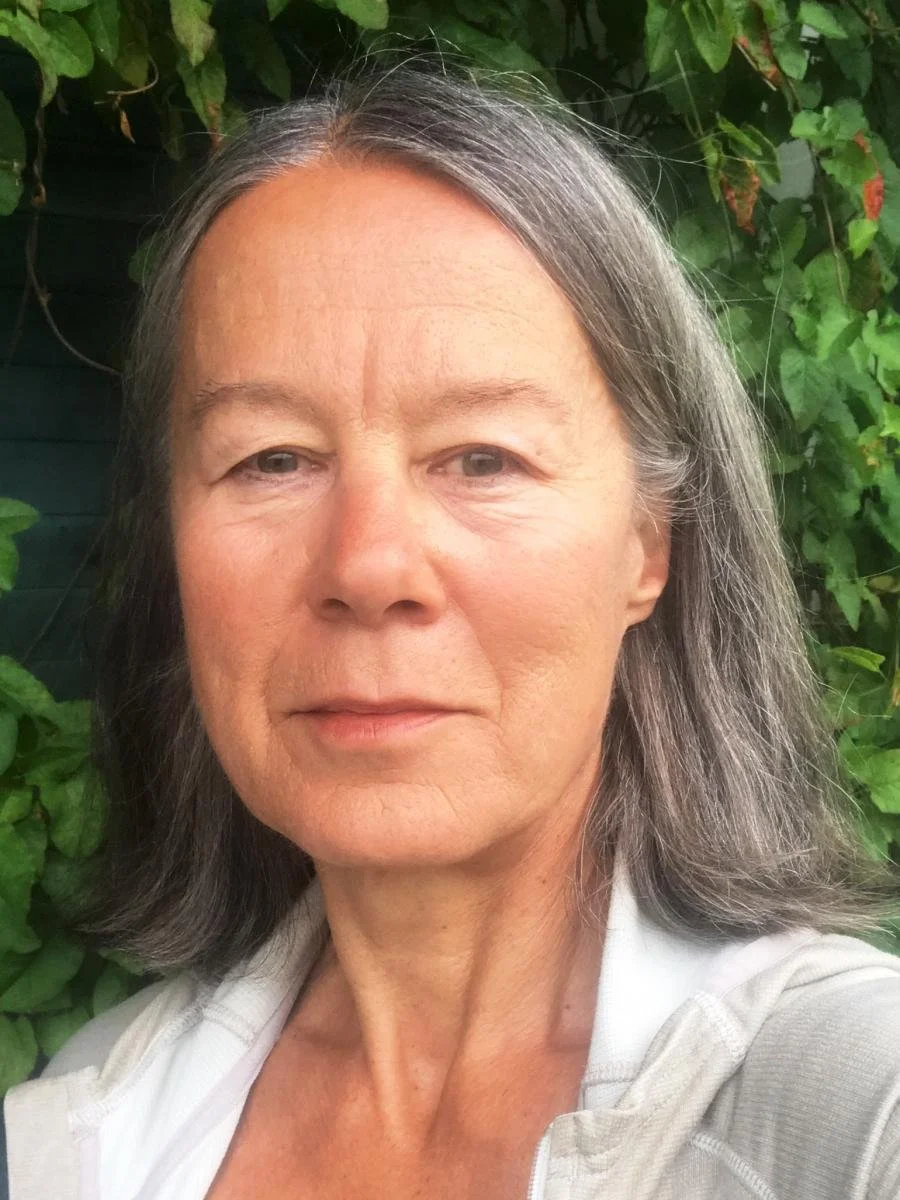
Ilse Storch
Editor-in-Chief
-
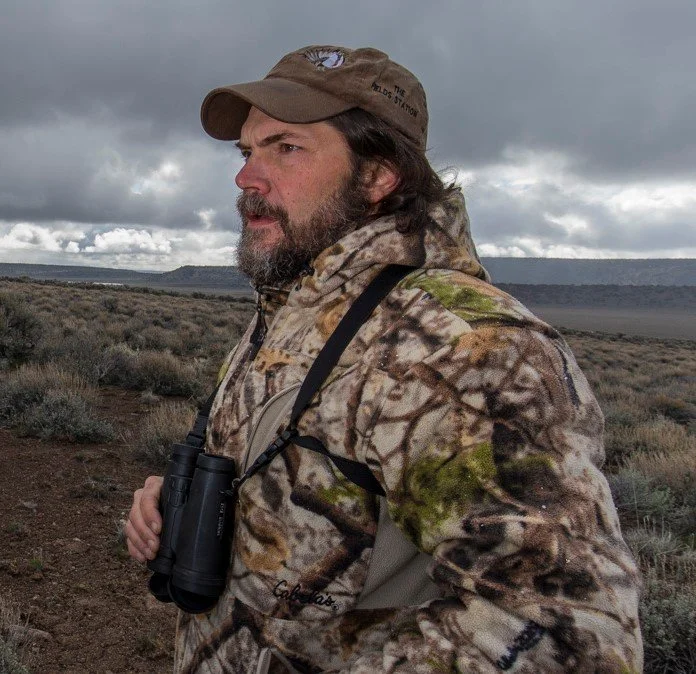
Christian Hagen
Deputy Editor-in-Chief
-

Maria Persson
Managing Editor
Lund, Sweden
me@wildlifebiology.org -
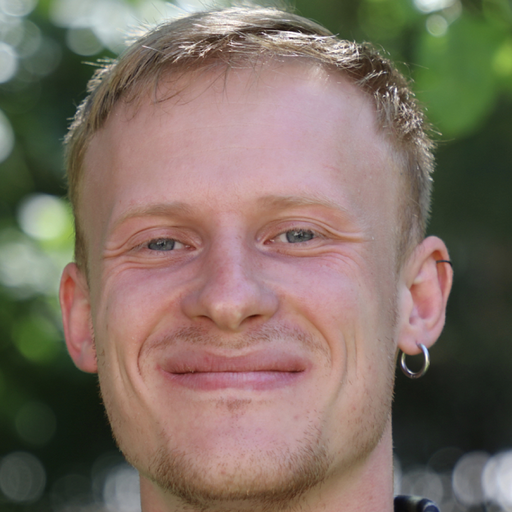
Bucur Mironescu
Editorial Assistant
Lund, Sweden bucur@nordicsocietyoikos.org

Subject Editors

Pia Anderwald, Swiss National Park, Zernez, Switzerland – interspecific interactions, habitat use, mammals
Marco Basile, Swiss Federal Research Institute, Switzerland – birds, biodiversity-oriented forest management, species distribution modelling, temperate and boreal biomes
Manisha Bhardwaj, University of Freiburg, Germany – human-wildlife Interactions, road Ecology, linear infrastructure ecology, landscape ecology, landscape connectivity, terrestrial landscapes
Jacopo Cerri, University of Sassari, Italy – wildlife ecology, time-series analysis, movement ecology, spatial statistics, large carnivores, vultures, invasive alien species
Simone Ciuti, University College Dublin, Dublin, Ireland – behaviour, evolutionary ecology, wildlife habitat modelling
Luca Corlatti, University of Freiburg, Germany – behavioural ecology, population ecology, mountain wildlife
Ramiro Crego, University College Cork, Ireland – conservation biology , wildlife conservation, population ecology, invasive species, habitat selection, birds, mammals
Cecilia Di Bernardi, Swedish University of Agricultural Sciences, Sweden – Arctic, Canidae, DNA-methods, Fitness, Ecology, Large carnivores
Sabrina Dressel, Wageningen University, the Netherlands – Human dimensions, Social science studies, Social-ecological systems, Human-wildlife-interactions, Wildlife management, Interdisciplinary research
Ezequiel Fabiano, University of Namibia, Namibia – wildlife ecology, conservation, human-wildlife interactions, population genetics
Stefano Focardi, Institute for Complex Systems, Firenze, Italy – population dynamics, movement ecology, ungulates
Jennifer Forbey, Boise State University, Boise, USA – physiology, chemical ecology, vertebrate herbivore
Matthieu Guillemain, Office Français de la Biodiversité, France – migration, population dynamics, waterbirds
Christian Hagen, Oregon State University, Bend, USA – gamebirds, grassland ecosystems, wildlife management
Jón Einar Jónsson, University of Iceland, Iceland – birds, population ecology, breeding biology
Kaya Klop-Toker, University of Newcastle, Australia – amphibians, chytridiomycosis, conservation, population modeling, reintroductions, threat mitigation, wildlife disease
Stephanie Kramer-Schadt, Leibniz Institute for Zoo and Wildlife Research, Germany – spatial modelling, population dynamic modelling, wildlife disease dynamics
Sonja Ludwig, Royal Society for the Protection of Birds, Lancaster, UK – human-wildlife conflict, conservation, wildlife ecology and management, birds
Sara Oyler-McCance, Fort Collins Science Center, Fort Collins, USA – conservation genetics, genomics, molecular ecology
Johannes Penner, University of Freiburg, Germany – biodiversity, herpetology, conservation
Wibke Peters, Bayerische Landesanstalt für Wald und Forstwirtschaft, Freising, Germany – movement ecology, resource selection, ungulates
Shyamala Ratnayeke, Sunway University, Malaysia – non-invasive sampling, population genetics, human wildlife conflict, habitat selection, species distributions, mammals, carnivores
Shin-Jae Rhim, Chung-Ang University, Ansung, South Korea – behaviour, habitat, population ecology
Cecile Richard-Hansen, Office Français de la Biodiversité and UMR Joint Research Unit Ecology of Guianan Forests – neotropical forest, medium-to-large terrestrial species, ecology and management, conservation
Jean-François Robitaille, Laurentian University, Sudbury, Canada – mesocarnivores, community ecology, trophic relationships
Nuria Selva, Polish Academy of Sciences, Poland – large carnivores, brown bear, mammals, scavengers, carrion ecology, trophic ecology, road ecology, artificial feeding of wildlife, species management plans, human-wildlife conflicts, conservation policies, Eastern Europe, temperate forests
Christian Sonne, Aarhus University, Roskilde, Denmark – diseases, contaminants, climate change
Peter Sunde, Aarhus University, Rönde, Denmark – resource selection, behavioural ecology, evidence based management, carnivorous birds and mammals
Maciej Szewczyk, University of Gdańsk, Poland – conservation biology, population genetics, molecular ecology, ecology and evolution, large carnivores, wolves
Hideharu Tsukada, School of Veterinary Medicine, Azabu University, Japan – Medium-sized carnivores, damage control, conservation, deer, behavior, foraging ecology, agroecosystem, parasitology, grassland.
Luc Wauters, Insubria University, Varese, Italy – invasive alien species, small mammals, population dynamics
Pat White, Edinburgh Napier University – wildlife ecology and management, birds, mammals, habitat selection, breeding biology, monitoring technologies, predator control, farming and wildlife
Nigel G. Yoccoz, University of Tromsø, Norway – quantitative ecology; modelling, trophic interactions, climate change
Lu Zhang, Sun Yat-sen University, China – wildlife conservation, riparian zone, food web, otter, environmental DNA, local ecological knowledge, protected area


Wildlife Biology is a journal of the Nordic Society Oikos, supported by the Nordic Board for Wildlife Research (NKV) and published in cooperation with Wiley. The journal is available at Wiley Online Library.
FOLLOW THE JOURNAL