
Call for Papers | Special issue “From chirps to insights”
Calling for submissions for a new special issue, “From chirps to insights: passive acoustic monitoring for applied ornithology”
NEW Manuscript Submission Deadline: 30 September 2026.
The Journal of Avian Biology is inviting contributions that use passive acoustic monitoring technology to study ecology, evolution and behavior of birds and which showcase its potential for applied ecology, conservation, and impact assessments.
The rise of Passive Acoustic Monitoring (PAM) offers a new toolbox to study, conserve and manage birds. At the same time, it is hard to assess for anyone new to this matter what this toolbox is currently capable of and where it's headed. This dynamic, fast-evolving field demands a status report in the form of a special issue, showcasing the current state of the field! We invite scientists and conservation practitioners to submit original research papers and review articles for our upcoming Special Issue in Journal of Avian Biology.
This Special Issue aims to:
Summarize the state-of-the-art in PAM techniques.
Showcase its potential for applied ecology, conservation, and impact assessments.
Bridge the gap between cutting-edge tools and practical applications for field ecologists, conservationists, and practitioners.
We welcome contributions exploring:
AI-driven acoustic analysis and best practices in data processing.
Comparisons of PAM with traditional survey methods.
Novel applications and PAM-driven insights in avian ecology, behavior, and conservation.
Advances in hardware and software for PAM.
Revisiting Acoustic Niche Theory and its implications.
Be part of a globally diverse collection of studies that will define where PAM stands and where it’s headed. Submissions should appeal to both applied ecologists and technical experts, offering actionable insights for conservation and robust science for researchers.
We encourage submissions coming from underrepresented geographic areas. If your institution does not currently have an Open Access agreement with Wiley to cover publication costs and if you are not covered through the research4life partnership, Journal of Avian Biology (JAB) is able to provide a limited number of waivers to cover publication costs. Read more about JAB waivers.
As soon as an article is accepted, it will be curated and typeset so that it can be published on the journal webpage. All accepted articles will be published together in a JAB Special Issue, accompanied by an editorial. Special issue content will be widely promoted on the social media channels of the Nordic Society Oikos journals and the platform of our publisher Wiley.
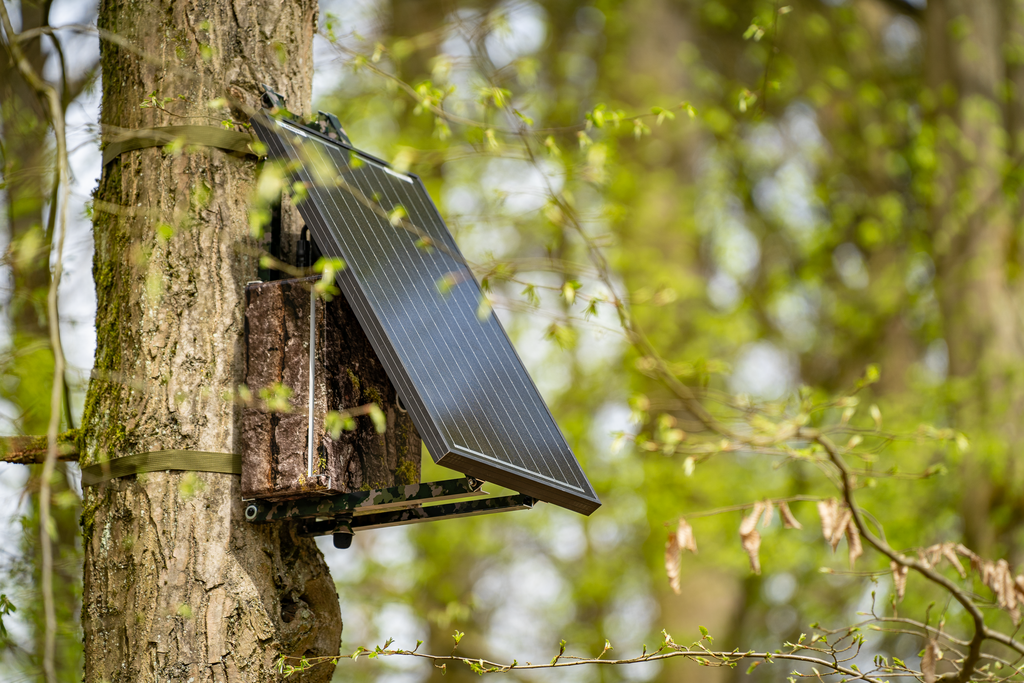
Photo by Jan O. Engler
How to submit a manuscript:
If you intend to submit a manuscript for our special issue, please send a short email to any of the guest editors (see contact information below) including a tentative title, the type of article, a brief summary of the research questions and methodology, and name of the corresponding author. Please note that we do not expect any results to be included in this short description nor that the content is definitive for the resulting manuscript. The short description is merely used to assess whether your research fits the topic of the special issue. If you have any questions, please do not hesitate to contact any of the four guest editors.
The manuscript will undergo the regular peer-review process. Please submit your manuscript through the JAB online submission system (indicate in the system and the cover letter that your manuscript is a contribution to the special issue). Please, check out the author guidelines of the journal about how to prepare your manuscript before submission.
Editors of the special issue:
Jan O. Engler, Independent Researcher, AviCon Research Planning (avicon.engler@gmail.com)
Interests: working at the intersection of science and environmental management using spatial modeling, genetics, and PAM.
Jenn Foote, Algoma University, Canada (jennifer.foote@algomau.ca)
Interests: nocturnal and dawn vocal behaviour in temperate North American forest communities with a particular focus on ovenbirds and white-throated sparrows but with frequent diversions into studying questions that fascinate me in our autonomous recording dataset.
Dominique Potvin, University of the Sunshine Coast, Australia (dpotvin@usc.edu.au)
Interests: bioacoustics and behaviour. Specifically, I look at evolutionary pressures on acoustic signals like birdsong, especially those associated with habitats (including urban or noisy areas).
Simon Thorn, Marburg University and Hessian Agency for Nature Conservation, Environment and Geology, Germany (Simon.Thorn@hlnug.hessen.de)
Interests: bioacoustics in ecology and monitoring, including all types of habitats. Currently, I am working on how PAM techniques can potentially complement volunteer-based surveys.
Journal of Avian Biology—who are we?
JOURNAL of AVIAN BIOLOGY: Empirical and Theoretical Research in Ornithology is an Open Access journal owned by the Nordic Society Oikos.
We are a journal for innovative, hypothesis-driven research on the biology of birds, with a particular emphasis on ecological, evolutionary and behavioural studies. We welcome submissions that study avian biology across all levels of ecological organization, from organisms and populations to communities and ecosystems. The journal also welcomes studies that report negative results, provided they are conducted rigorously and are scientifically informative. As a Nordic Society Oikos journal, we advocate research that is fair, openly accessible and reproducible.
Thinking about publishing with us?
Journal of Avian Biology offers a Review Award for early-career researchers.
We value ethical standards in science (EDI, Open Access, waivers, accessible data and code, CRediT)
Check out JAB’s journal metrics and see our Author Guidelines
Our journals, our society—join us!
The Nordic Society Oikos engages the global scientific community through five international journals…

…and supports the national ecological societies of the five Nordic countries. Anyone worldwide can join the Nordic Society Oikos.
NSO is a home for ecologists, a nexus for knowledge, and a guiding light for ecology worldwide. We are an active network of ecologists in the Nordic region and around the globe.
Why join NSO? Membership benefits include:
Connections across a global community of ecologists and five national societies
NSO newsletters with member-only updates about Nordic ecology and society activities
Ongoing opportunities for promotion on NSO’s digital platforms and social media channels
Discounted registration for NSO’s biennial conference
Eligibility to apply for NSO Grants
Each member receives additional benefits from one of our five national societies:
Danish Oikos Society
Oikos Finland
Icelandic Ecological Society
Norwegian Ecological Society
Swedish Oikos Society
When you join NSO, you also become a member of one of our national societies. Which one? That’s up to you! Each national society provides its own benefits, including discounts to national conferences. Learn more about us at nordicsocietyoikos.org.