

News from Our Journals
Browse News by Journal
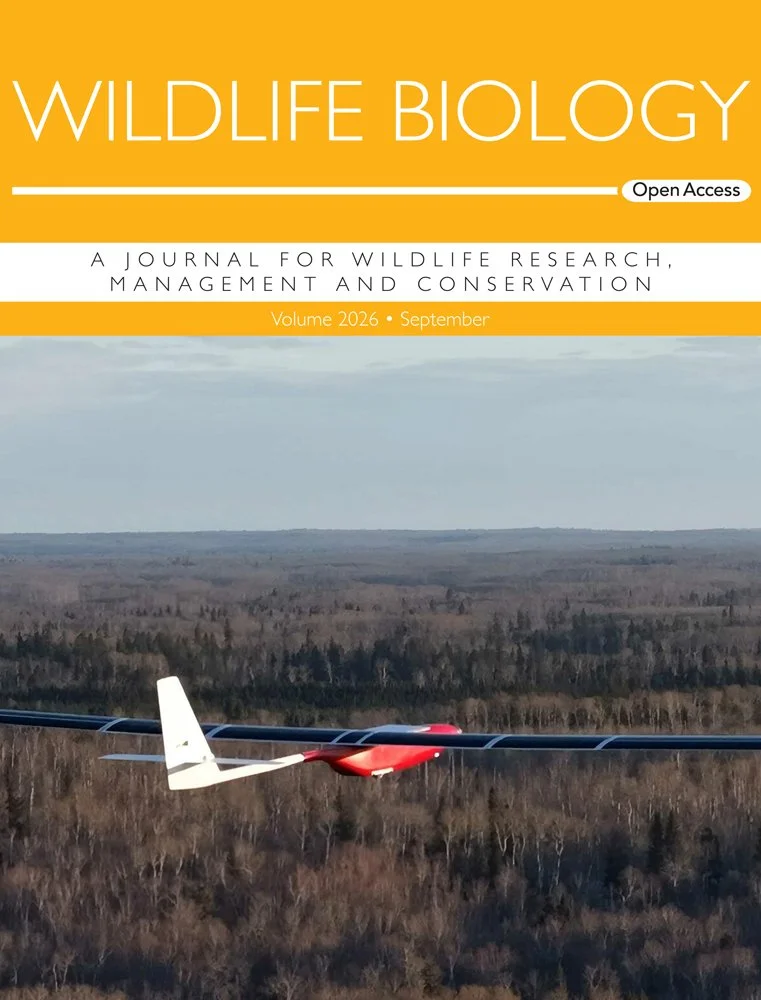
Cover | 450 Hours Above the Wild
In this cover, a fixed-wing, solar-electric small uncrewed aerial vehicle (UAV) is showcased, which was used to monitor wildlife.
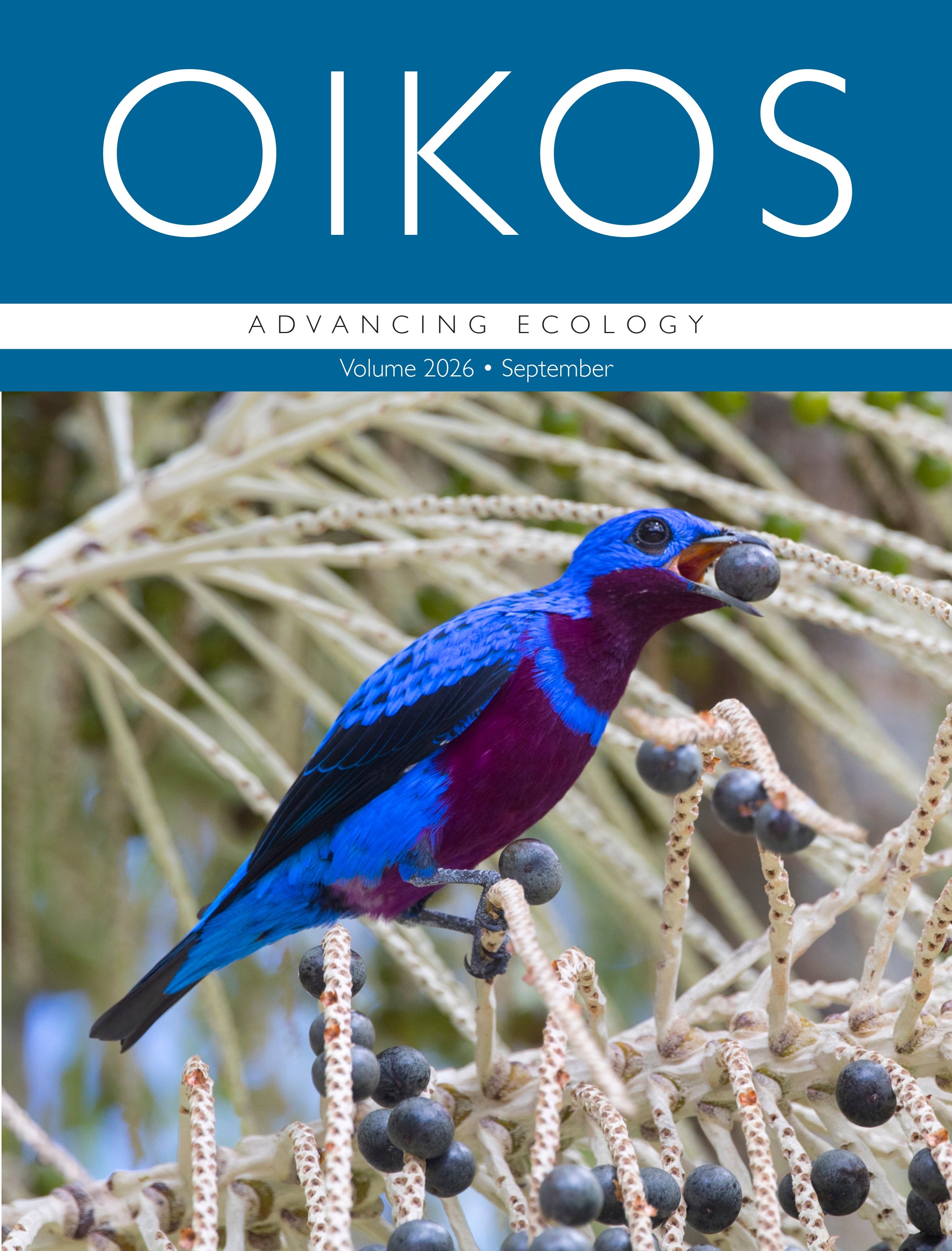
Cover | Frugivory and Seed Dispersal Issue
A crejoá (Cotinga maculata, Cotingidae), an endemic and endangered frugivorous bird of the Brazilian Atlantic Forest, feeding on the fruits of açaí (Euterpe oleracea, Arecaceae) in an açaí plantation in Porto Seguro, Bahia, Brazil. Photo by Ciro Albano
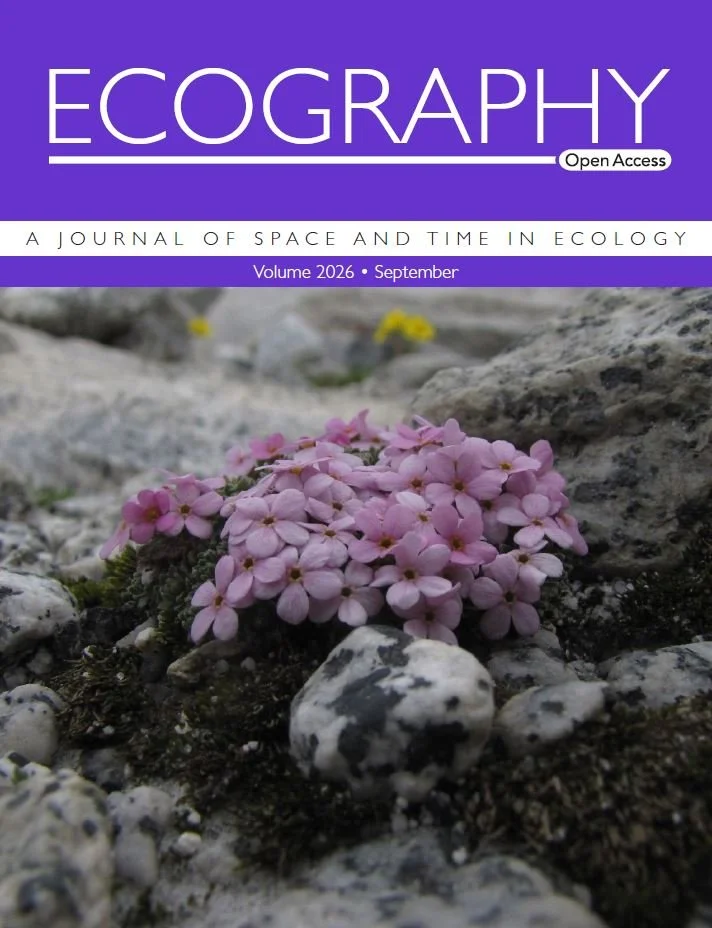
Cover | Ice Patches as Lifelines for Alpine Species
The cover shows Androsace alpina from the Amola Glacier in the Italian Alps. Global warming is threatening the survival of cold-adapted Alpine species like one. Ice-related landforms like debris-covered glaciers may buffer such negative effects on species able to grow on them. Photo credit: Marco Caccianiga.

Cover | Do warm roads help nightjars fuel for migration?
Our 2026 issue 4 cover depicts a red-necked nightjar, photographed by Pedro Gamaza.
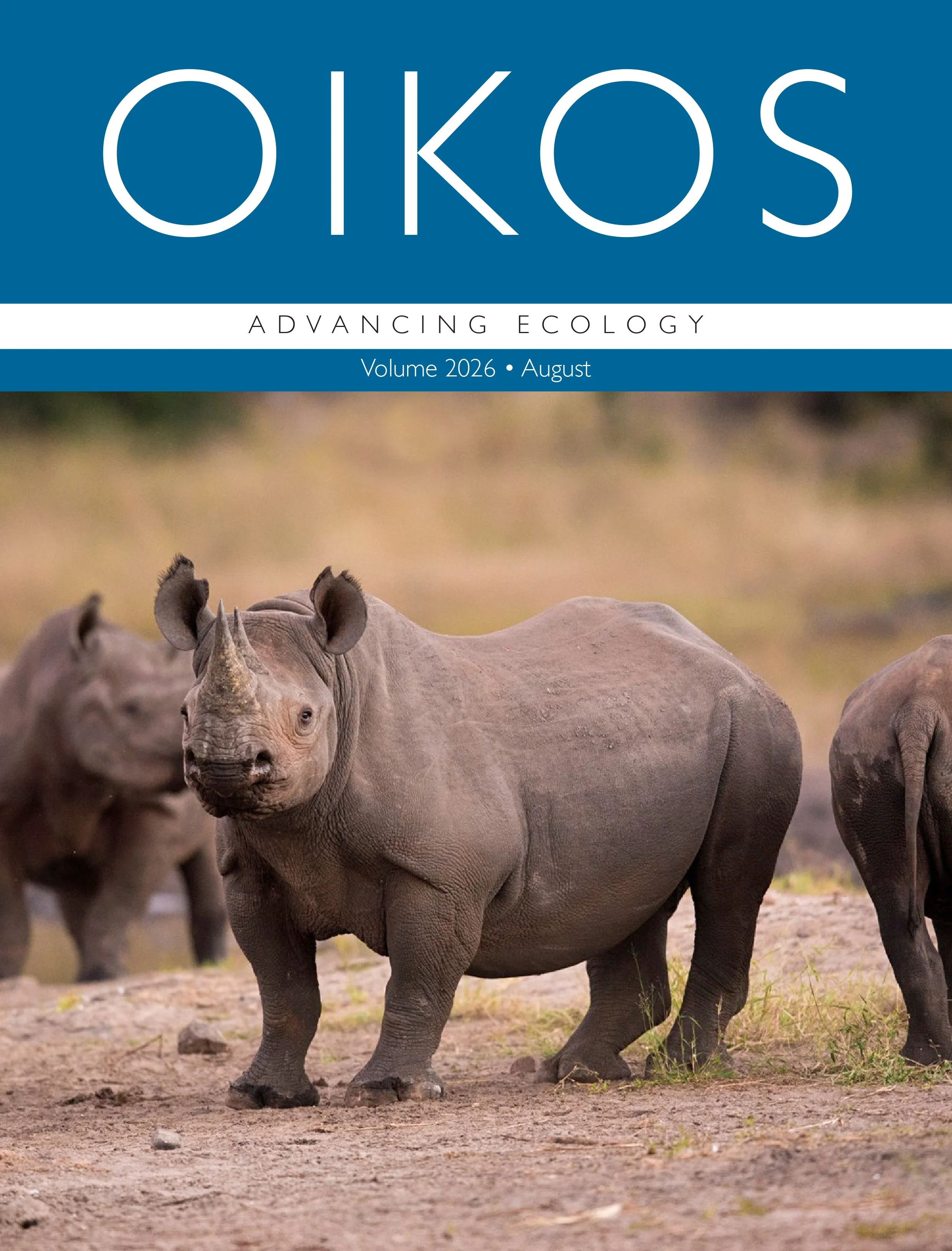
Cover | Social Lives of Solitary Rhinos
Periodic social interactions are important to animal fitness, even in solitary species. For solitary species, these interactions can be unexpected and shaped by previous encounters. Photo by Jenny Hishin
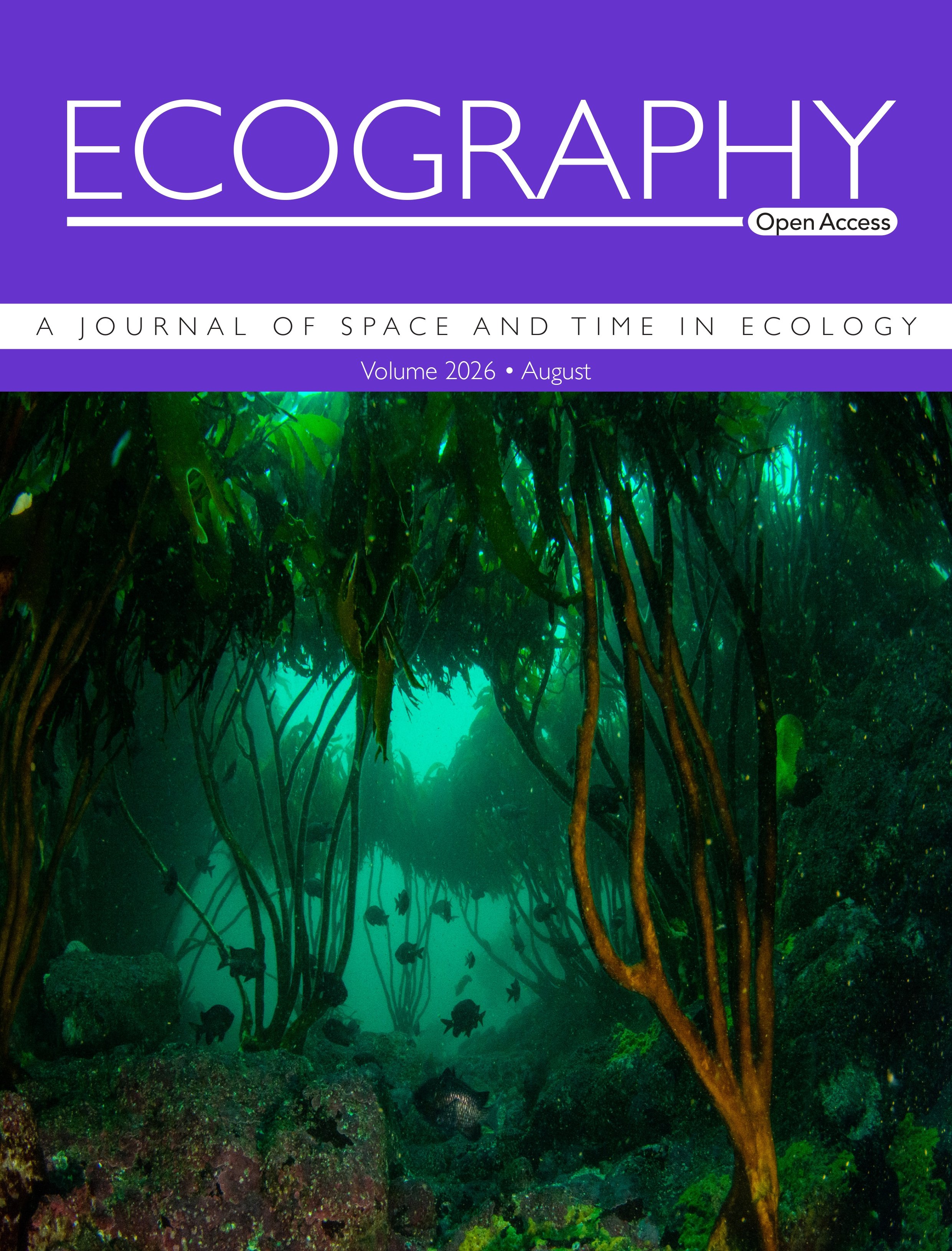
Cover | The Complex Menu of Coastal Chile
The photo features a Subtidal kelp forest of Lessonia trabeculata with fish assemblage, representative of the rocky reefs from the Chilean coast, where the study was conducted.. Photo credit: Alejandro Perez-Matus.
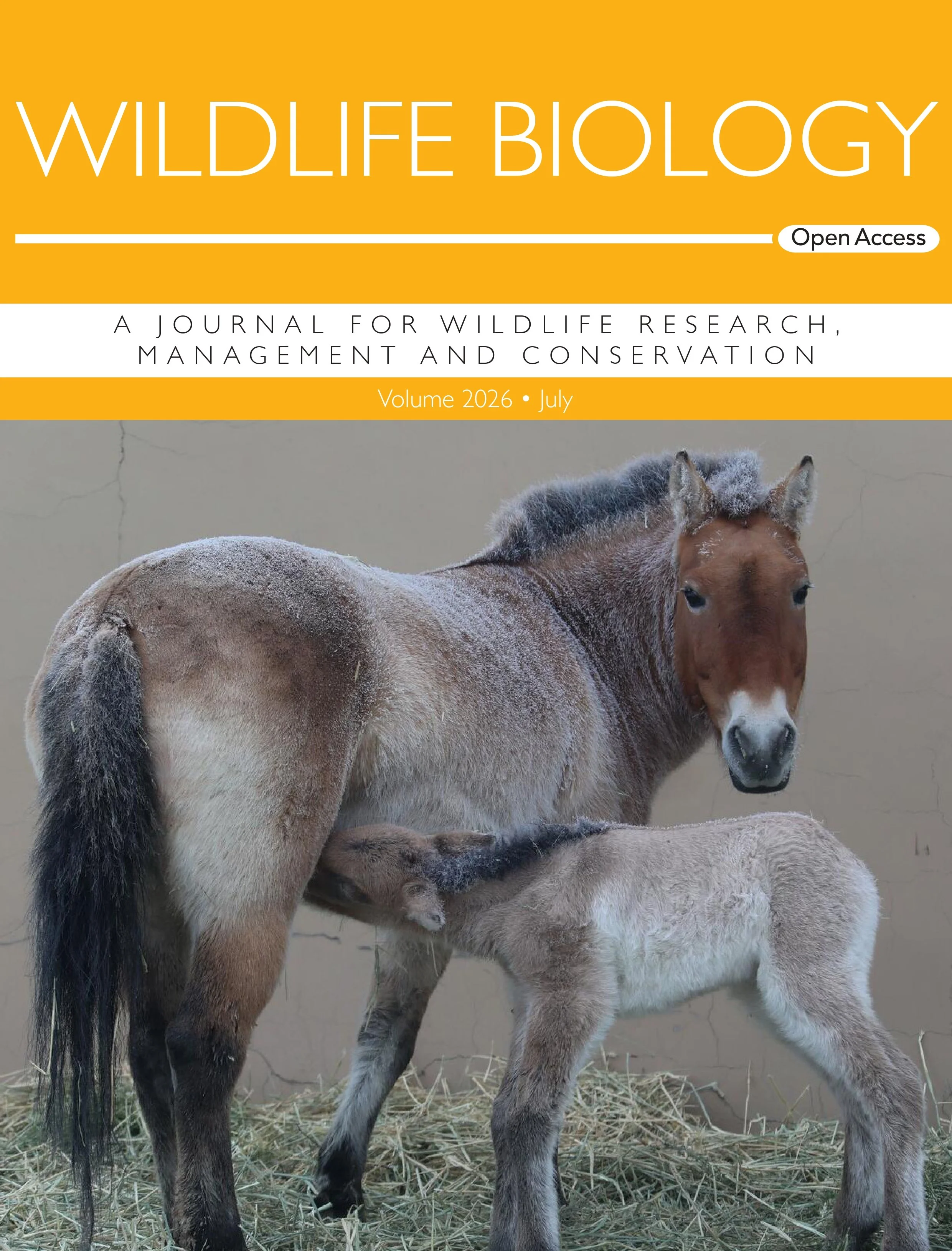
Cover | Przewalski's Horse: A Conservation Success with a Genetic Cost
The newborn foal Snowflake Princess, born on January 30, 2021, was the first foal born in winter in the breeding center’s 40-year history. Unlike foals born during the normal breeding season, she required intensive care and veterinary assistance. Photo by Qing Cao

Cover | What does the white-tipped sicklebill tell us about connectivity and gene flow across the Andes?
Our 2026 issue 3 cover depicts a white-tipped sicklebill, photographed by Paula Carrera Levy.
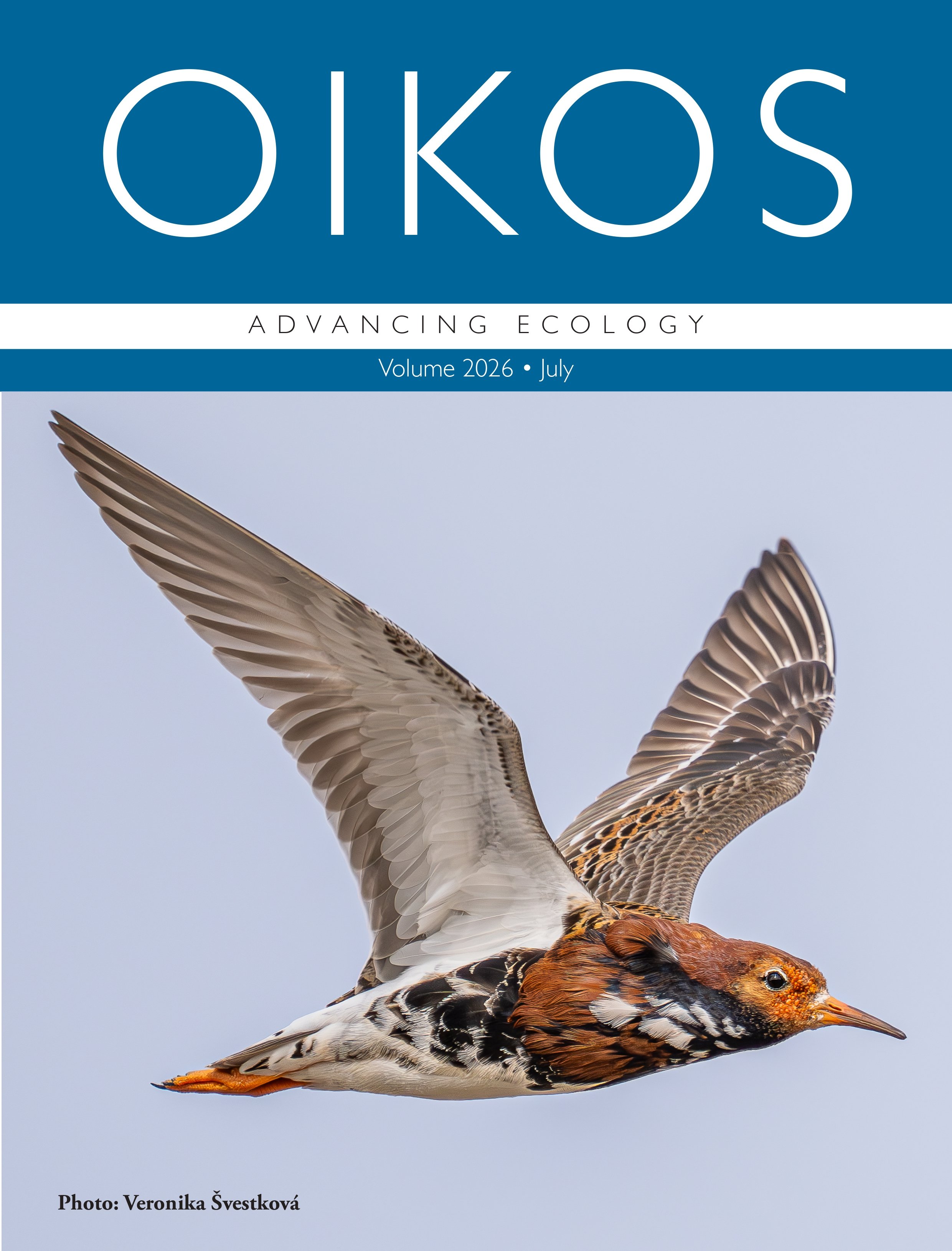
Cover | A Century of Declining Survival in Shorebirds
A global review of more than 100 shorebird species reveals that annual survival has declined significantly since 1980, particularly among adults, highlighting growing conservation concerns and the need for long-term monitoring. Photo by Veronika Švestková.
Cover | Climate in the Hills, People in the Plains
The photo features an endemic damselfly (Archineura incarnata) of eastern China, and the largest species within its family in Odonata, perching at the water's edge and waiting for a mate. Photo credit: Haomiao Zhang and Ruibin Song.
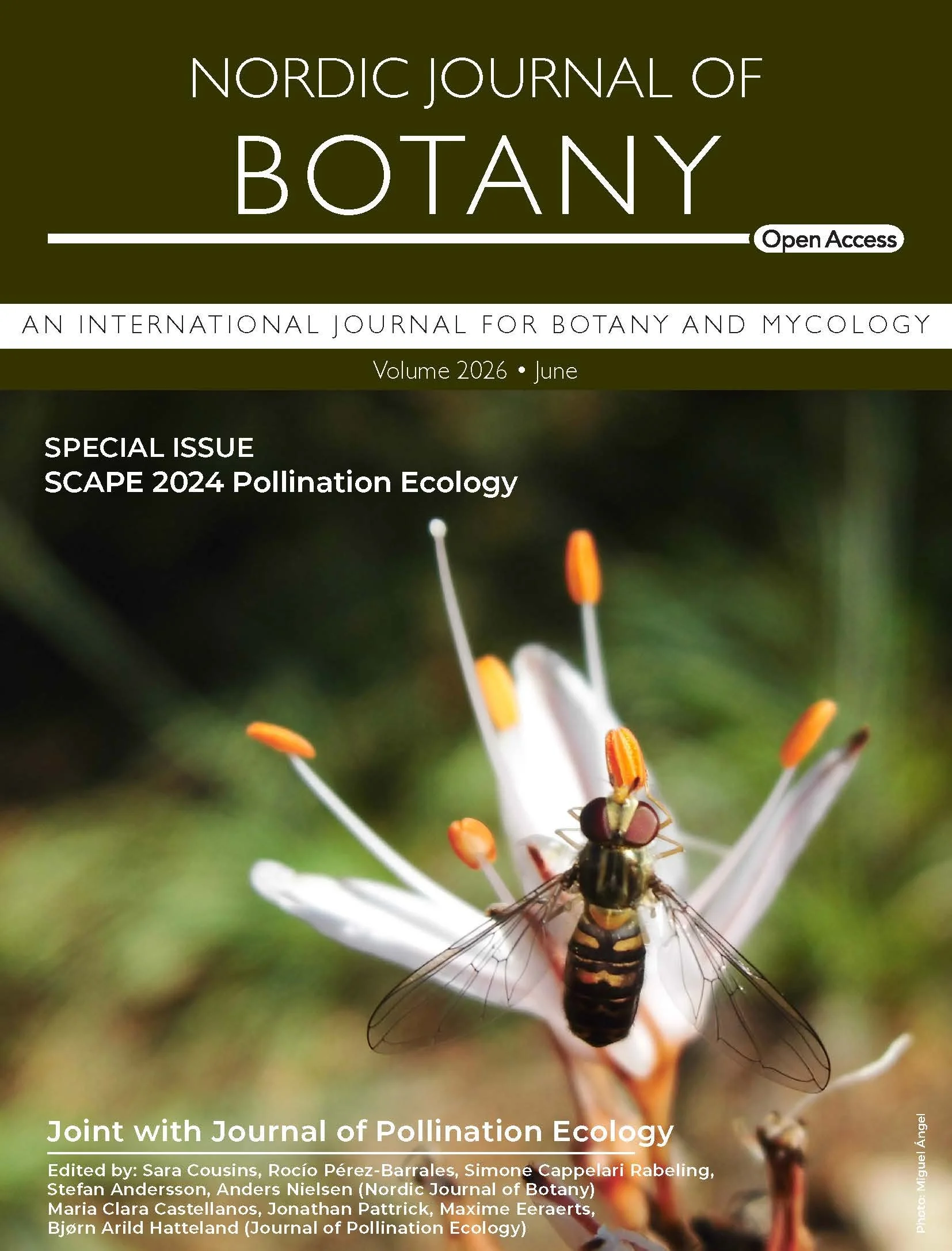
Cover | SCAPE 2024 Pollination Ecology
Joint special issue with Journal of Pollination Ecology: SCAPE 2024 Pollination Ecology
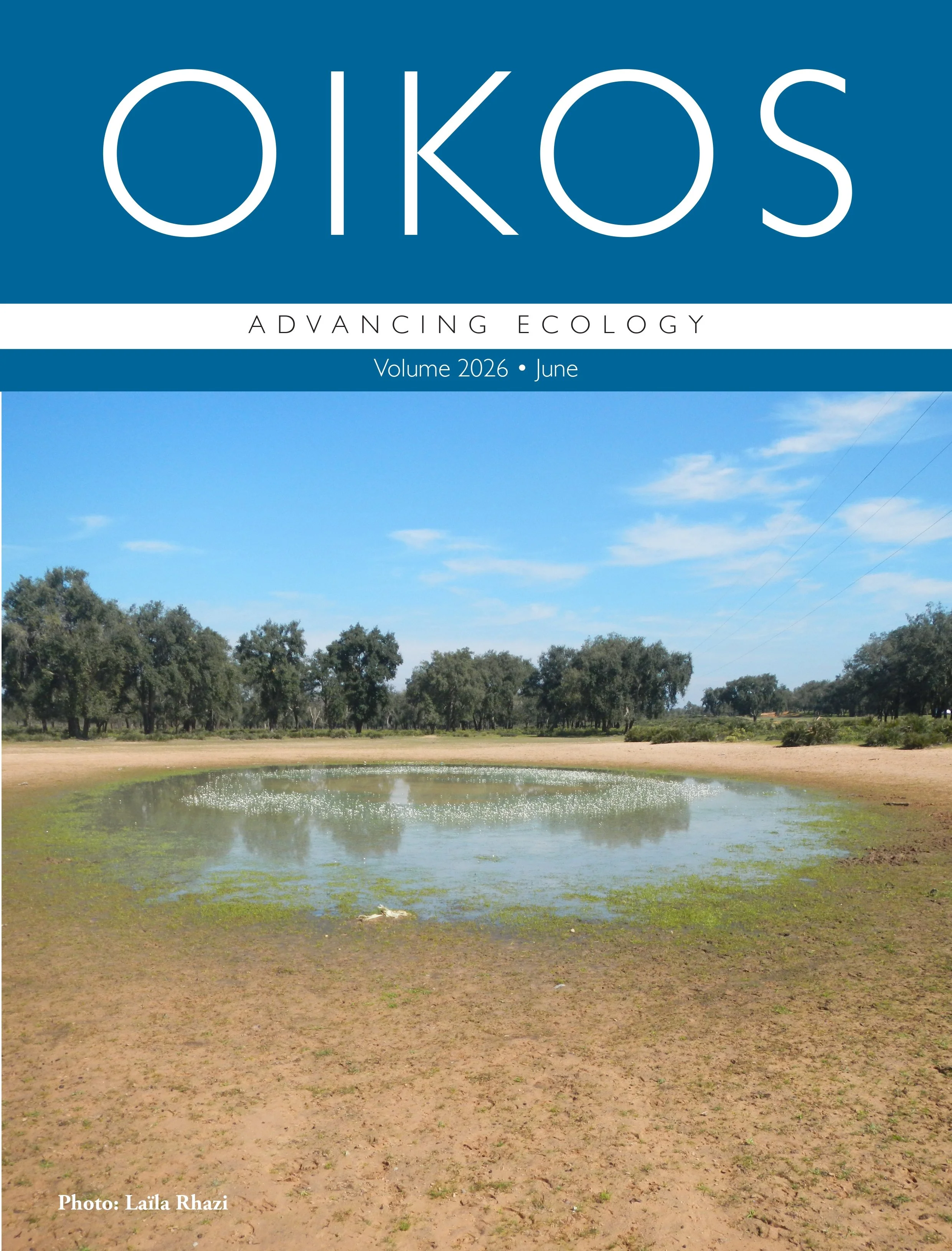
Cover | The Shape-Shifting Plants of Temporary Ponds
A study across Morocco found that differences in growth and reproduction along a climate gradient are driven largely by phenotypic plasticity rather than local adaptation. Photo by Laïla Rhazi.
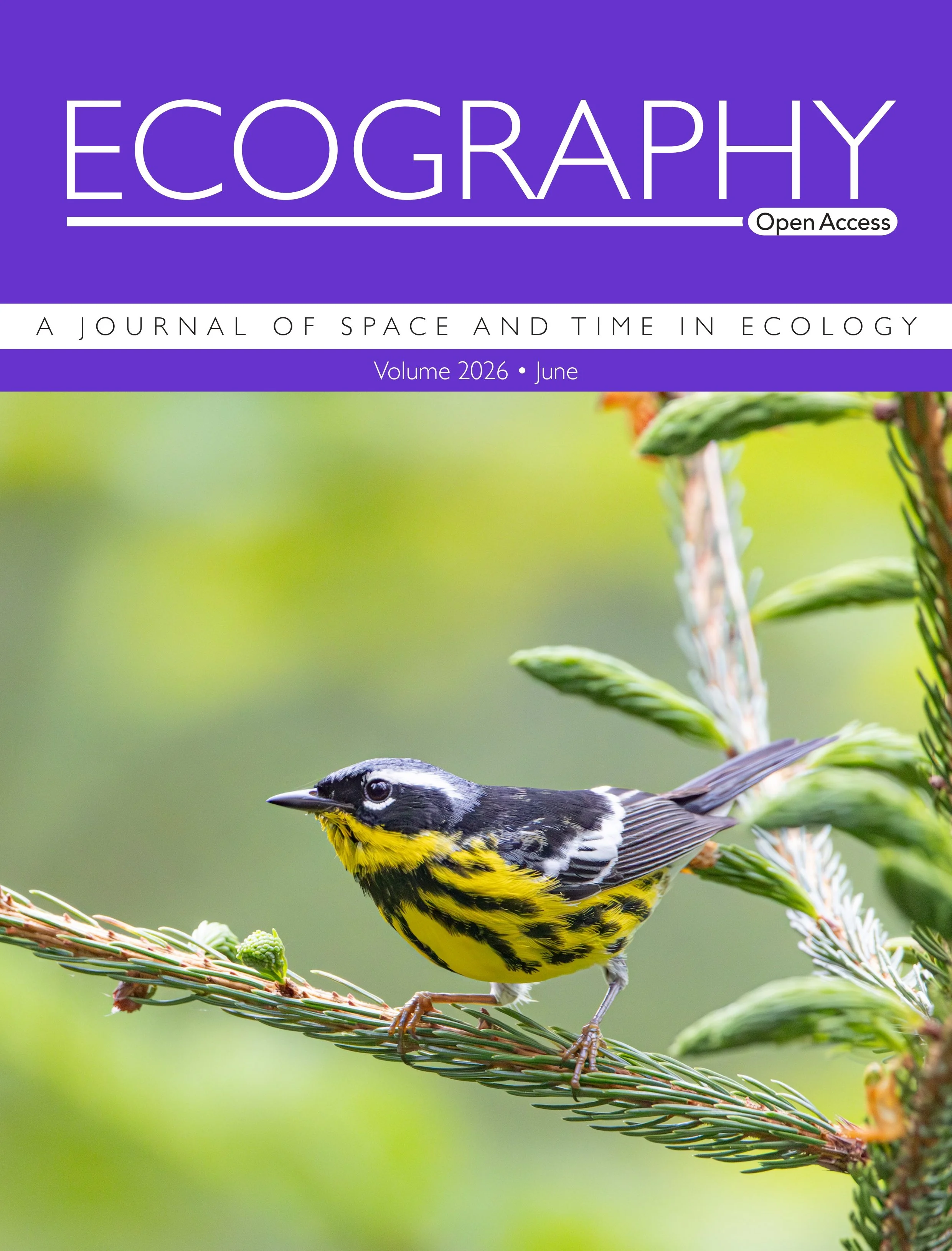
Cover | Shifting Ages, Shifting Skies
The cover photo features a Magnolia Warbler in migration in Maine. The photo complements the manuscript, which explores how age- and species-specific differences in migration speed and phenology drive spatiotemporal shifts in the age structure of migrant communities during fall migration. Photo credit: Dylan Osterhaus.
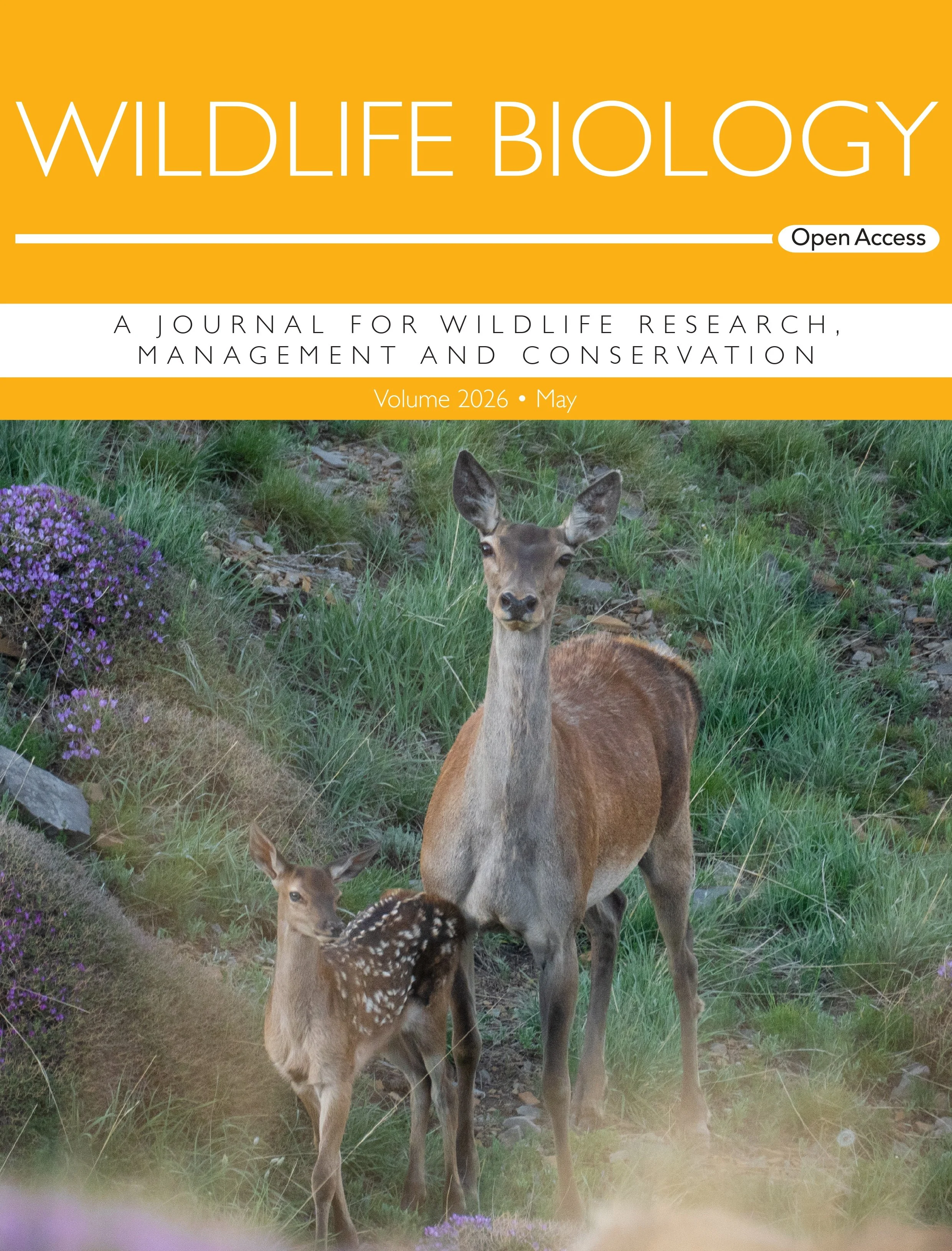
Cover | Red Deer in a Warming Caspian
As an endangered subspecies in Iran, the Caspian red deer faces increasing pressure from poaching, climate change, habitat fragmentation, and restricted access to suitable refuges, underscoring the urgent need for effective conservation.

Cover | How do disease outbreaks reshape the cost of migration?
Our 2026 issue 2 cover depicts a rough-legged buzzard/hawk, photographed by Neil Paprocki.
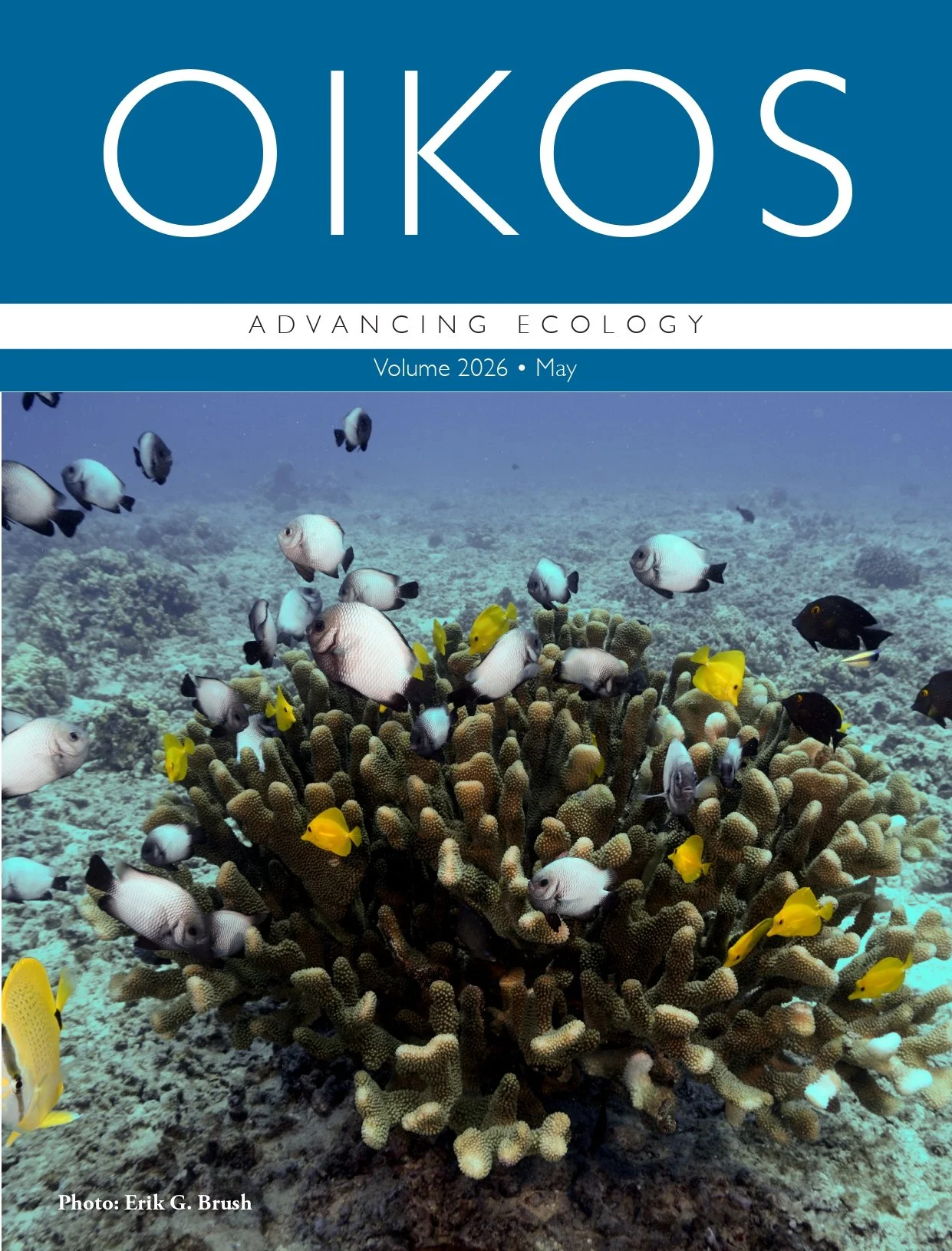
Cover | First Come, First Served on Hawaiʻi’s Coral
On Hawaiian reefs, a field experiment shows that early-arriving competitors and predators can strongly shape who gets to live on coral colonies. Photo by Erik Brush.
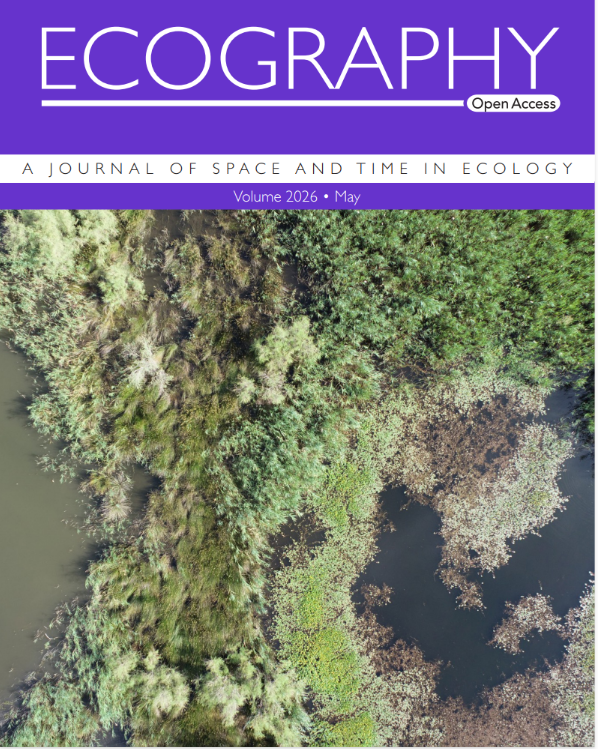
Cover | Modelling LULC effects on biodiversity: a review of practices and risks
This month’s cover photo features a marsh, which is one of the last visible signs of a palaeochannel of the Rhone river, now dedicated to host the Eurasian bittern (Botaurus stellaris) among other conservation targets. Photo by Arnaud-Willm-Tour du Valat.

Cover | EcoViz: a visualization tool for forest landscape model simulations
This month’s cover photo features the a scene in the Berchtesgaden National Park in Germany and depicts the hypothetical forest state in the year 2150, blending "symbolic rendering" with a photo-realistic rendering.
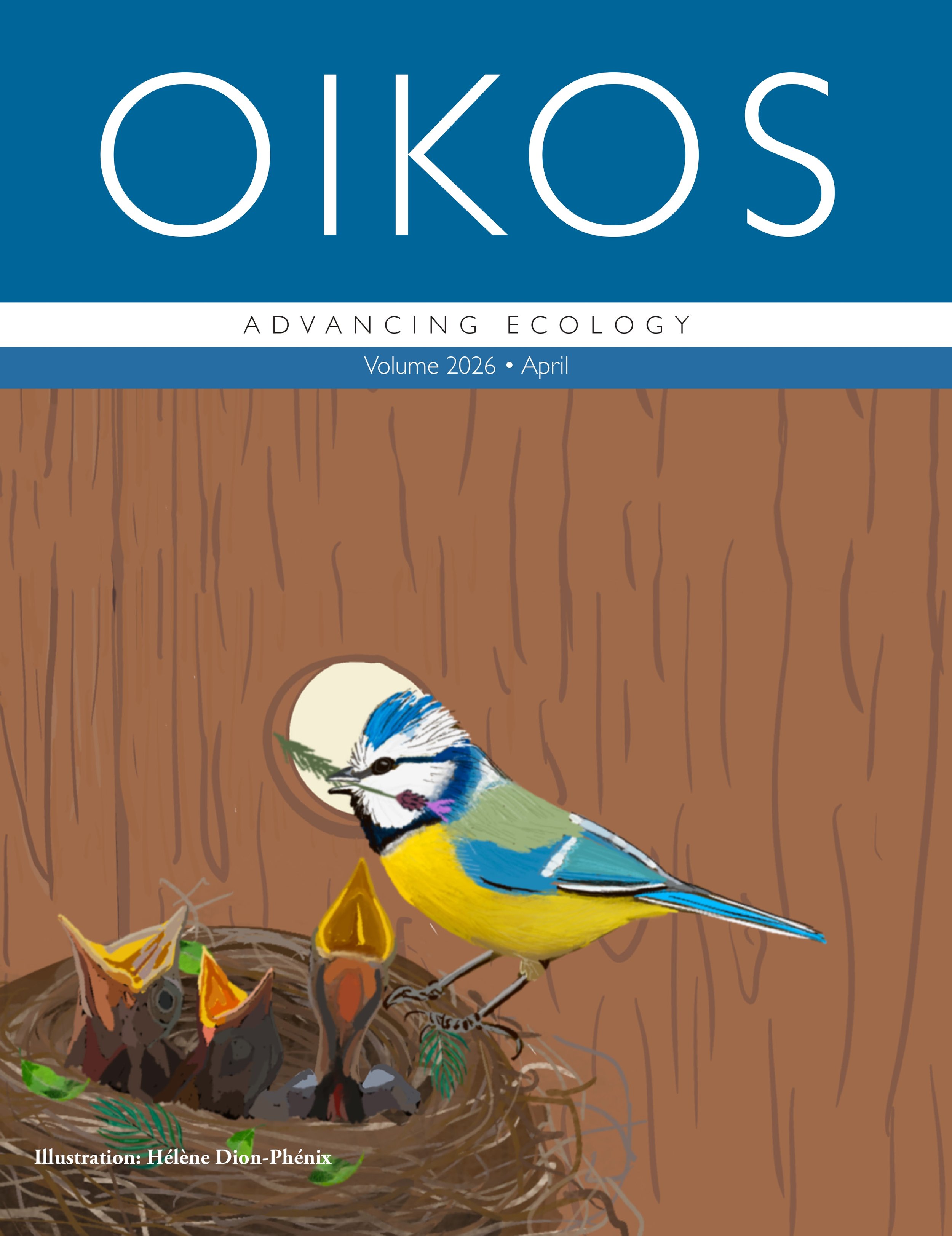
Cover | The Herbal Nest Sanitizer
A study of Corsican blue tits shows that adding aromatic plants to nests can reduce bacterial diversity supporting that birds use these plants to protect their offspring from harmful microbes. Illustration by Hélène Dion-Phénix.
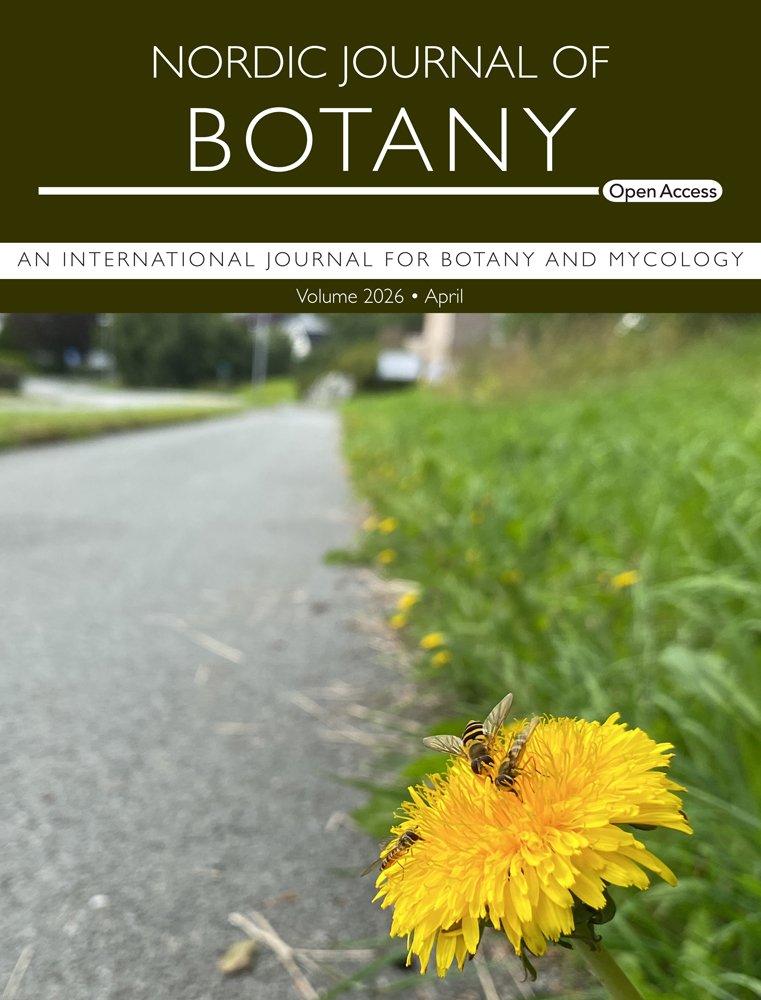
Cover | Plant performance and diversity in roadside and railway habitats
Special issue section on plant performance and diversity in roadside and railway habitats