
Cover | Przewalski's Horse: A Conservation Success with a Genetic Cost
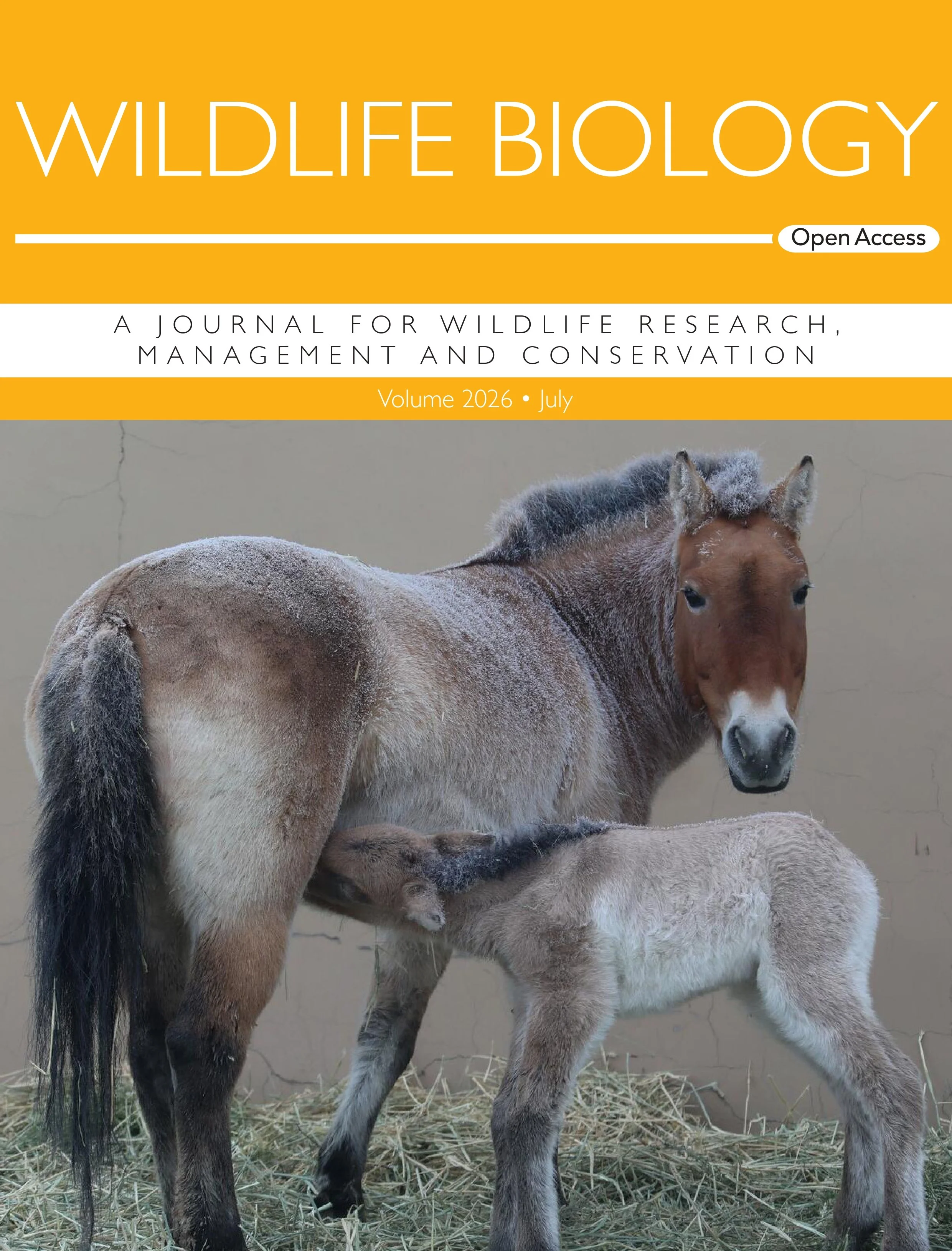
July/August Cover
Photo by Qing Cao
Download the high-resolution image
The newborn foal Snowflake Princess, born on January 30, 2021, was the first foal born in winter in the breeding center’s 40-year history.
Unlike foals born during the normal breeding season, she required intensive care and veterinary assistance. Today, Snowflake Princess is healthy and active at the center.
Her unusual birth also highlights the consequences of an aging breeding population, suggesting that such atypical breeding events may become more frequent and underscoring the importance of introducing new genetic lineages.
Read the full open access paper by Cao et al. (2026): Forty years of captive breeding in Przewalski's horse: pedigree-based insights into population growth, sex ratio, and inbreeding.
From the Abstract:
Long-term captive breeding programs play a critical role in the conservation and reintroduction of endangered species, yet they face persistent challenges related to demographic structure and genetic management. The Przewalski's horse Equus przewalskii, once extinct in the wild, represents a global model for conservation breeding supported by pedigree-based management.
Here, we analyzed pedigree records from the Xinjiang Wild Horse Breeding Center (WHBC), the world's largest captive breeding facility for the species, covering the period from 1985 to 2023. Using demographic analyses and generalized linear models, we examined long-term trends in foaling output, first-year foal survival, sex ratio, maternal age at reproduction, founder contribution, and inbreeding. A total of 428 foals were born during the study period, of which 372 survived to at least one year of age.
Foal survival was positively associated with maternal parity. In contrast, foal survival probability declined over time and was negatively associated with individual inbreeding coefficient, suggesting cumulative genetic and demographic constraints in this semi-closed population. Reproductive output was highly skewed among founders, with four males accounting for more than 90% of surviving descendants sired by founding males. Maternal reproductive age increased significantly over time, reflecting progressive aging of the breeding population. Offspring sex ratio was associated with maternal age, with mares in their prime reproductive years (5–14 years) producing a higher proportion of male offspring. Management-driven removal of older and younger females through release and transfer further influenced demographic structure and sex-ratio dynamics.
Our results demonstrate that while pedigree-informed management has supported population persistence and large-scale reintroduction, emerging challenges – including demographic aging, skewed founder representation, and increasing inbreeding – pose risks to long-term sustainability. These findings highlight the need for introducing new genetic lineages and integrating pedigree data with molecular genetic tools to optimize future conservation breeding and reintroduction strategies for Przewalski's horse and other endangered ungulates.
Wildlife Biology—who are we?
WILDLIFE BIOLOGY: Journal for Wildlife Research, Management, and Conservation is an Open Access journal owned by the Nordic Society Oikos.
Our journal promotes a scientific basis for the conservation and management of wildlife and human-wildlife relationships. We adopt a broad concept of wildlife management to safeguard sustainable relationships between wildlife and other human interests. This includes all policies and actions with the purpose of conservation, sustainable use, or control of wildlife and its habitats. We welcome theoretical, empirical, and practical articles from all areas of wildlife science.
Thinking about publishing with us?
Wildlife Biology publishes research, review, and management Articles as well as short Communications.
We value ethical standards in science (EDI, Open Access, waivers, accessible data and code, CRediT)
Check out Wildlife Biology’s journal metrics and see our Author Guidelines
Our journals, our society—join us!
The Nordic Society Oikos engages the global scientific community through five international journals…
…and supports the national ecological societies of the five Nordic countries. Anyone worldwide can join the Nordic Society Oikos.
NSO is a home for ecologists, a nexus for knowledge, and a guiding light for ecology worldwide. We are an active network of ecologists in the Nordic region and around the globe.
Why join NSO? Membership benefits include:
Connections across a global community of ecologists and five national societies
NSO newsletters with member-only updates about Nordic ecology and society activities
Ongoing opportunities for promotion on NSO’s digital platforms and social media channels
Discounted registration for NSO’s biennial conference
Eligibility to apply for NSO Grants
Each member receives additional benefits from one of our five national societies:
Danish Oikos Society
Oikos Finland
Icelandic Ecological Society
Norwegian Ecological Society
Swedish Oikos Society
When you join NSO, you also become a member of one of our national societies. Which one? That’s up to you! Each national society provides its own benefits, including discounts to national conferences. Learn more about us at nordicsocietyoikos.org.