
Study | Migratory nightjars roost on asphalt to reduce thermoregulatory costs and increase fuel accumulation
Roads as a thermal resource for migratory nightjars
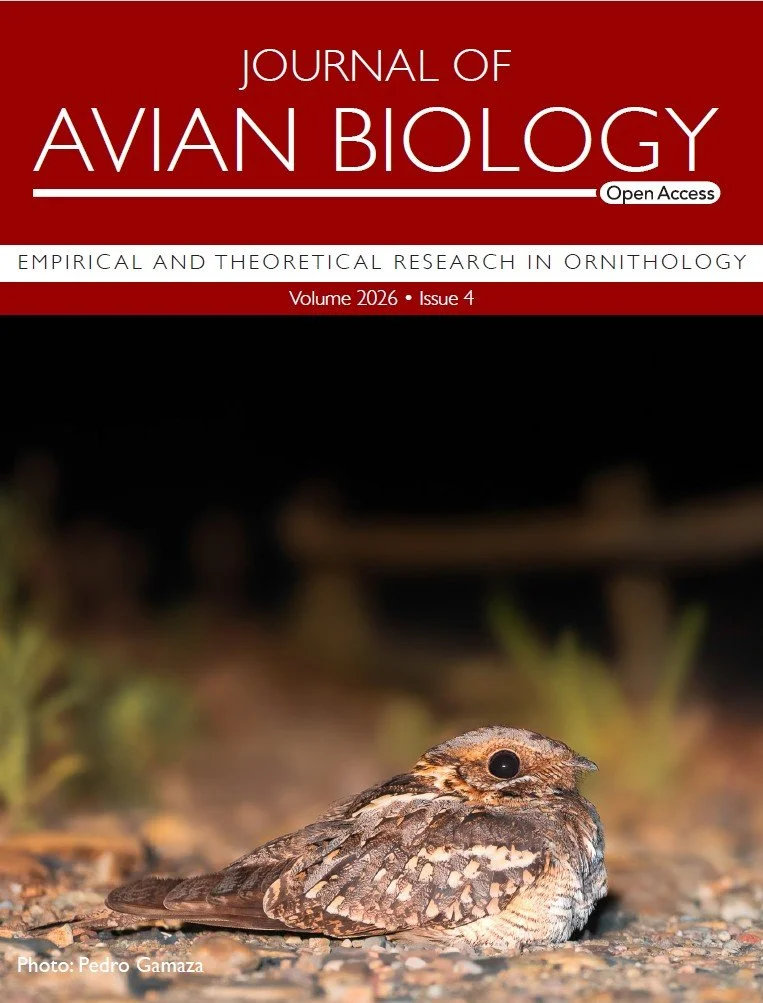
2026 Issue 4 JAB cover with a red-necked nightjar. Photo: Pedro Gamaza.
Text and photos by Carlos Camacho
How a trapping method sparked a research question
Nightjars are unconventional birds, and the methods used to find and catch them are no less unusual. Many nightjar species are attracted to tracks and roads at night because they use the open airspace above them for detecting and catching flying insects during short flights from the ground, and the surface for resting and digesting between bouts of activity. This strong preference for tracks and roads makes them relatively easy to detect and catch at night, and has made our lives easier since we began studying red-necked nightjars (Caprimulgus ruficollis) in Doñana, southern Spain, 18 years ago.
To trap nightjars, we first approach them by car and then on foot. By shining a flashlight directly into their eyes, we can hide behind the beam and prevent them from detecting us before we get close enough to gently drop a large butterfly net over them. To do this, we need to get within about 1 metre of the bird; and that requires being as quiet as a ninja! There is a good reason for all that stealth. Tracks and roads are also used by many carnivores as movement corridors, so road-sitting nightjars face considerable risk of predation. They are remarkably good at detecting even the slightest sound made by an approaching predator. Unfortunately, that includes the sound of an approaching researcher.
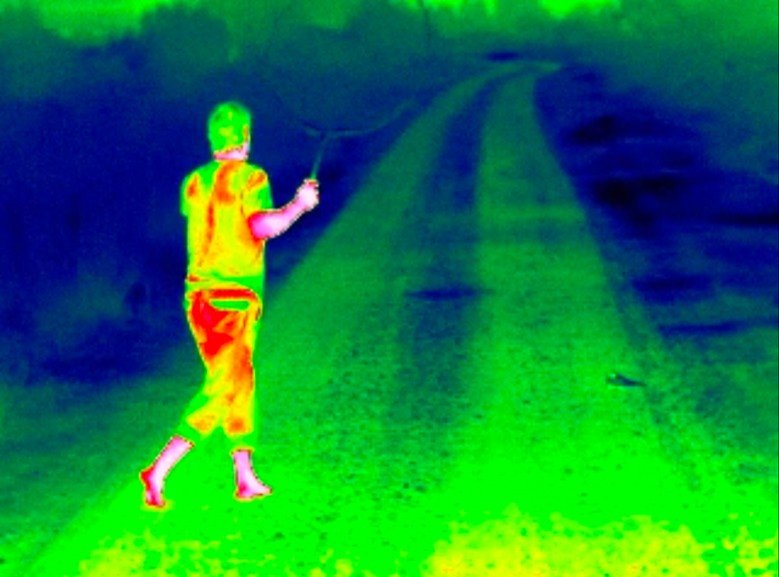
Capture of a red-necked nightjar, as recorded using a thermal camera. The bird appears as a colder (blue) body in a flattened posture at the right edge of the gravel road (green). Note the researchers’ bare feet, in pink.
“ It suddenly occurred to him that perhaps this was not a coincidence: maybe nightjars, like him, preferred asphalt during cold conditions to reduce thermoregulatory costs.”
To avoid being detected early and ruining the capture attempt, we therefore approach them barefoot. Fortunately, temperatures in southern Spain are generally warm, so going barefoot is not usually much of a thermal challenge. But during September and October, when nightjars are preparing for migration, nights can become surprisingly cold, and you really feel it in your feet. Our study area contains a network of sandy, gravel and asphalt roads. One of us (Carlos) remembers one particularly cold autumn night. His feet were freezing cold, but he told a friend that he was still lucky that most of the nightjars were concentrated on the asphalt. He had been feeling less cold because his bare feet were taking advantage of the heat stored by the road. Eureka moment! It suddenly occurred to him that perhaps this was not a coincidence: maybe nightjars, like him, preferred asphalt during cold conditions to reduce thermoregulatory costs.
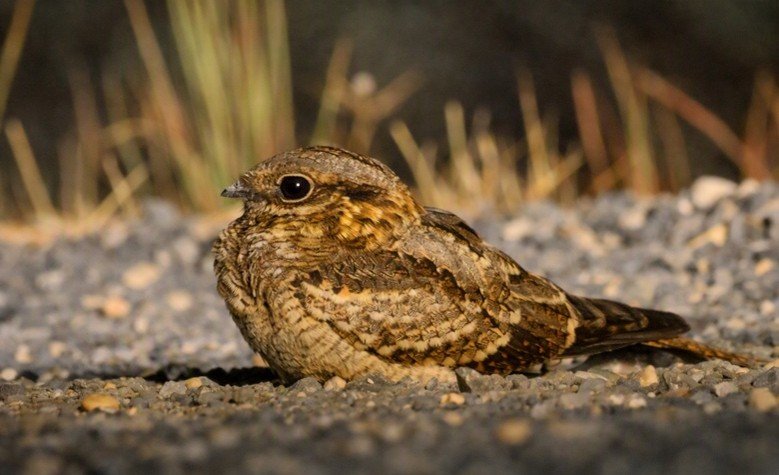
Red-necked nightjar roosting on asphalt.
Digging into the data
At the time, our project was only three years old, but we already had enough data to investigate this coincidence. That same night, Carlos got home in the early hours, switched on his computer and used nightjar counts from different road surfaces to explore the relationship between surface use and nighttime temperature. Indeed, nightjars used asphalt more frequently on colder nights, particularly during September and October. That observation led to our first nightjar paper, and eventually to a research focus on road microhabitat selection. But many questions remained unanswered. Was surface choice consistent throughout the year? Did it differ between sexes or age classes? And, most importantly, what exactly did nightjars gain from selecting asphalt to roost on at night over other surfaces? The magnitude of the benefit also remained to be quantified.
Nightjars rest in a flattened posture, with much of their abdomen in direct contact with the ground, making the thermal properties of the roosting surface particularly important. Asphalt might provide a thermal advantage during roosting, but insects might also be more abundant over warm asphalt, providing better feeding opportunities. In addition, the availability of protective roadside vegetation could influence surface choice by altering predation risk.
The story of our recent paper in Journal of Avian Biology
Our most recent study, part of Paula Hidalgo-Rodríguez’s PhD thesis, addresses these questions by combining eight years (2011-2018) of capture-recapture data from more than 500 individuals, nocturnal insect and predator sampling, measurements of substrate temperature, and an experiment designed to mimic heat loss from a nightjar resting on different surfaces.
Temperature sensors revealed that asphalt retains solar heat for much longer than gravel or sand, effectively creating a nocturnal “heat island”. In addition, conductive heat loss from the birds was 5-7% lower on asphalt than on gravel. In practical terms, this means that a nightjar resting on asphalt should need to spend less energy maintaining its body temperature. Furthermore, the thermal properties of asphalt could potentially aid digestion as well, making this substrate particularly valuable after a large meal. Neither aerial insect abundance over the roads nor the availability of protective cover along the roadside differed between substrates. Overall, then, our results suggested that asphalt was thermally more favourable than the other surfaces in our study area, and nightjars responded accordingly.
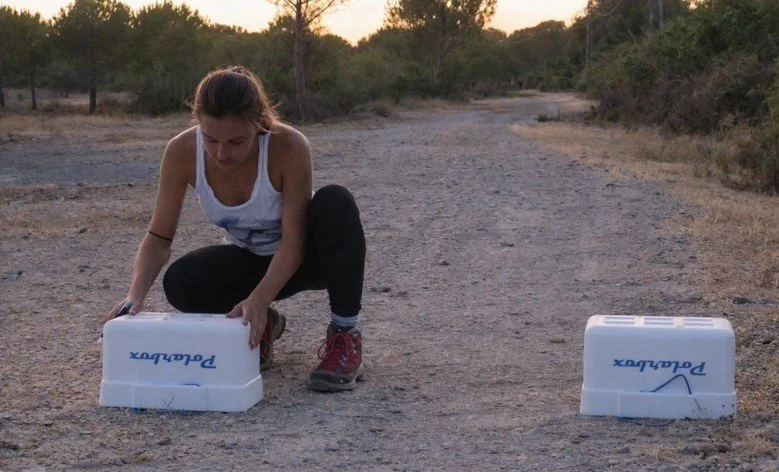
Field experiment examining the thermal properties of surfaces present in the study area. The cool boxes contain nightjar-mimicking models used to estimate heat exchange rates.
The clearest pattern emerged when we took into account the lunar cycle. During the fuel-deposition period prior to migration, the probability of using asphalt increased from 35% on new-moon nights to 65% on full-moon nights. Lunar phase was the only factor with strong statistical support; age, sex, body mass, stomach size, ambient temperature and time since sunset showed no comparable effects.
This makes ecological sense when we consider the unusual constraints imposed by the nightjar’s digestive system. Moonlight improves their ability to detect flying insects and extends the time available for feeding. But, as revealed by another study of the same population, daily food intake is strongly constrained by a digestive bottleneck. These birds’ unusually large gizzards increase food storage capacity, enabling them to exploit the brief feeding opportunities available around dusk and thus partly compensate for the foraging constraints on dark nights. But such a big organ also leaves relatively little room for the intestine, and this likely explains the remarkably slow food processing rates documented in this species, up to 100 times slower than those of other birds.
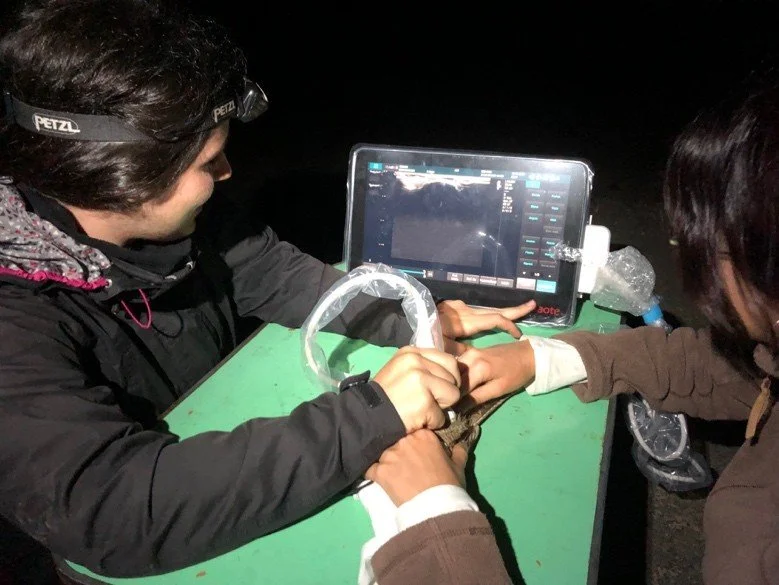
Ultrasound scanning of a nightjar stomach in the field.
Given they can only eat as fast as the gizzard empties and food passes through their intestine, increasing daily food intake is difficult, even on moonlit nights. During migration preparation, when their energetic demands are particularly high, this constraint appears to become a major limitation.
If food intake is constrained, energy balance can be improved by reducing expenditure. This is where asphalt comes in. We found that when feeding conditions are most favourable, coinciding with bright moonlight, nightjars preferentially use asphalt, where body heat loss is minimised. The combination of greater food intake and lower energetic expenditure on thermoregulation – and potentially also on digestion – should leave more energy available for fat deposition and thus accelerate the preparation for migration.
Our data do not directly allow us to demonstrate that resting on asphalt increases fuel deposition rates in free-ranging nightjars. However, a comparison of individuals recorded during both the breeding and fuel-deposition periods provides further support for the idea: the tendency to prefer asphalt over gravel as moonlight increased was apparent during migration preparation, but not during breeding. This suggests that the behaviour is linked to the demands of migration.
Both a resource and a threat
If asphalt provides such a clear thermal benefit, why do nightjars not use it all the time? Predation may provide part of the answer. Red foxes, the main nocturnal predators of nightjars in our study area, are more active on moonless nights, as revealed by radiotracking data from the same area. During the study period, fox sightings were also disproportionately frequent on asphalt roads. Not only is the likelihood of encountering a predator higher there, but predators may also move more quietly on asphalt than on dirt surfaces, making them a greater threat to the birds. Nightjars may therefore trade thermal benefits for safety, switching to gravel roads when moonlight is scarce, feeding opportunities are poor, and predation risk is higher.
There is, of course, another important cost: asphalt roads also increase the risk of being killed by vehicles. Our study was conducted on roads with exceptionally low traffic levels, so the results should not be interpreted as evidence that asphalt roads constitute purely beneficial habitat. Rather, they reveal how finely nightjars can adjust their behaviour – not just their physiology –to balance feeding opportunities, temperature and predation risk during one of the most demanding stages of their annual cycle. More broadly, our findings raise the possibility that other species may also exploit artificial thermal resources to improve their energy balance.
Next steps
Our results highlight a relatively overlooked aspect of migration ecology: birds may accelerate fuel accumulation not only by eating more, but also by spending less energy while foraging. This idea is intriguing, but it remains to be tested directly. Our next step is to track surface choice decisions, energy balance and fuel deposition rates in free-ranging nightjars using skin-temperature monitoring, GPS tracking data and repeated trapping to determine how much energy nightjars actually save by selecting asphalt and whether this behavioural strategy ultimately translates into faster accumulation of migratory fuel.
Journal of Avian Biology—who are we?

JOURNAL of AVIAN BIOLOGY: Empirical and Theoretical Research in Ornithology is an Open Access journal owned by the Nordic Society Oikos.
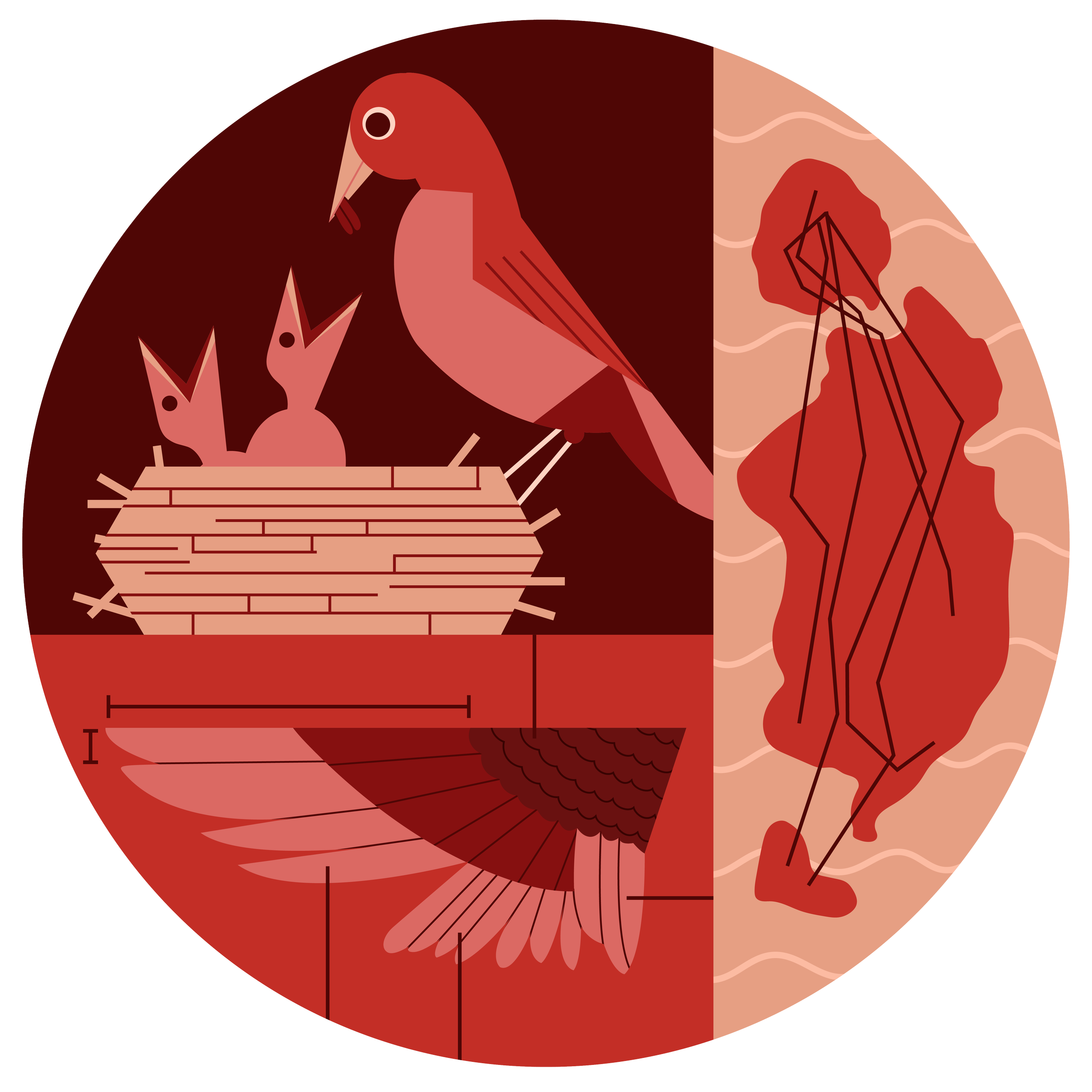
We are a journal for innovative, hypothesis-driven research on the biology of birds, with a particular emphasis on ecological, evolutionary and behavioural studies. We welcome submissions that study avian biology across all levels of ecological organization, from organisms and populations to communities and ecosystems. The journal also welcomes studies that report negative results, provided they are conducted rigorously and are scientifically informative. As a Nordic Society Oikos journal, we advocate research that is fair, openly accessible and reproducible.
Thinking about publishing with us?
Journal of Avian Biology offers a Review Award for early-career researchers.
We value ethical standards in science (EDI, Open Access, waivers, accessible data and code, CRediT)
Check out JAB’s journal metrics and see our Author Guidelines
Our journals, our society—join us!
The Nordic Society Oikos engages the global scientific community through five international journals…

…and supports the national ecological societies of the five Nordic countries. Anyone worldwide can join the Nordic Society Oikos.
NSO is a home for ecologists, a nexus for knowledge, and a guiding light for ecology worldwide. We are an active network of ecologists in the Nordic region and around the globe.
Why join NSO? Membership benefits include:
Connections across a global community of ecologists and five national societies
NSO newsletters with member-only updates about Nordic ecology and society activities
Ongoing opportunities for promotion on NSO’s digital platforms and social media channels
Discounted registration for NSO’s biennial conference
Eligibility to apply for NSO Grants
Each member receives additional benefits from one of our five national societies:
Danish Oikos Society
Oikos Finland
Icelandic Ecological Society
Norwegian Ecological Society
Swedish Oikos Society
When you join NSO, you also become a member of one of our national societies. Which one? That’s up to you! Each national society provides its own benefits, including discounts to national conferences. Learn more about us at nordicsocietyoikos.org.