
Cover | Snowmelt time has a strong impact on tundra plant communities
February 2025 Cover
Photograph by Saana Mattanen
Download the high-resolution image
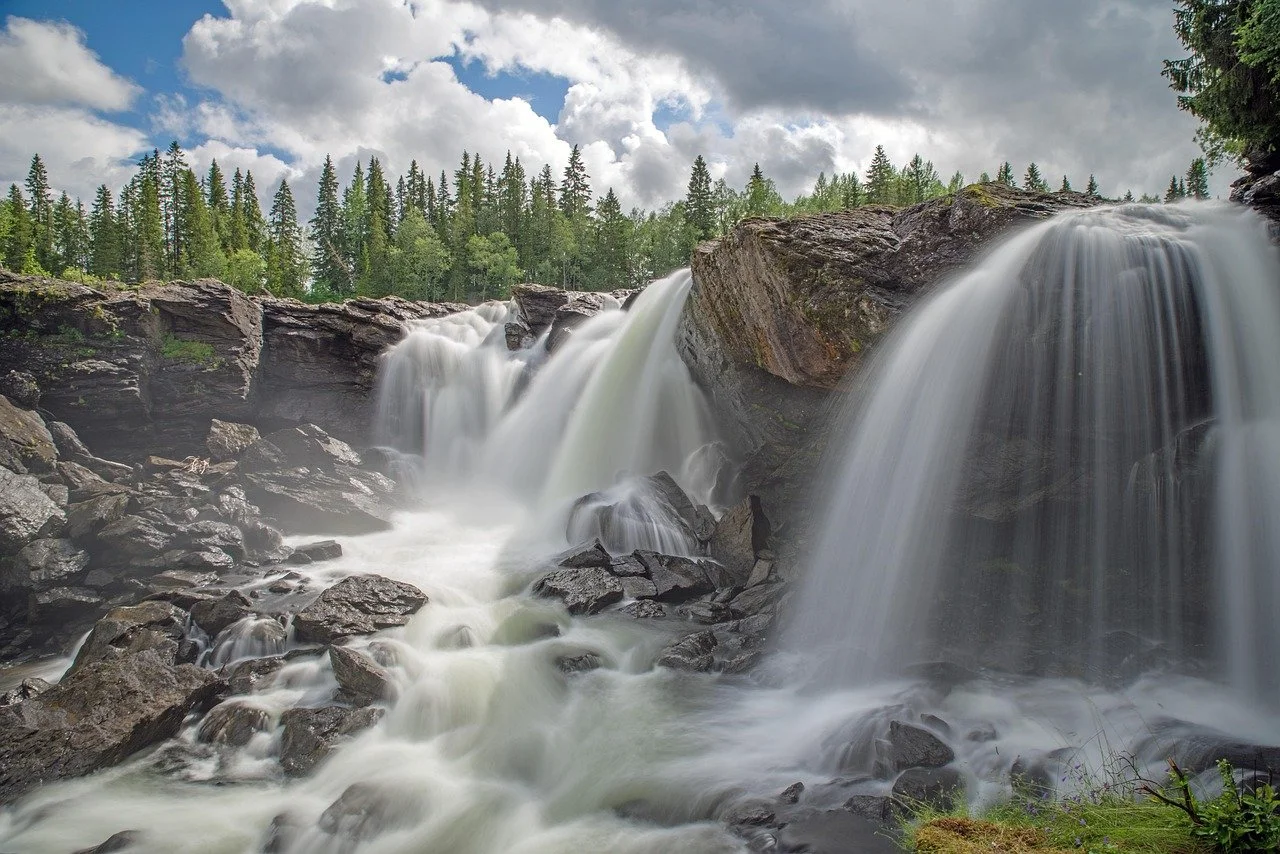
The cover image shows a snow depth gradient from Gaskabeaičohkka mountain Utsjoki, Finland. The study by Kuusisto et al. explored the differentiation of plant communities in relation to mesotopography and microclimate. Snowmelt timing had the strongest influence on plant community composition and seven plant communities could be identified along the gradient.
Read the open access paper in Nordic Journal of Botany, by Kuusisto et al. (2024): Tundra plant communities along the mesotopographic gradient in NE Finland.
Abstract:
In this study, we describe plant communities along the mesotopographic gradient in the low-elevation subcontinental mountains of NE Finland (Utsjoki region). We sampled vascular plants, bryophytes and lichens along 18 mesotopographic ridge-snowbed transects comprising a total of 180 plots. We used non-metric multidimensional scaling (NMDS) ordination with envfit to explore the differentiation of plant communities in relation to mesotopography, elevation, rock cover, cover of bare ground, snowbed size and snowmelt time.
The classification of communities was performed using DIANA clustering. Plant communities were differentiated along the mesotopographic gradient, snowmelt time, elevation and rock cover. The DIANA analysis distinguished seven clusters corresponding to the following communities: Betula nana–Lichenes heath, Empetrum–Myrtillus–Stereocaulon heath, Empetrum–Pleurozium–Lichenes heath, graminoid-rich snow-protected heath, Oreojuncus trifidus–Avenella flexuosa snow-protected heath, Polytrichastrum sexangulare–liverwort snowbed, and Salix herbacea–Kiaeria starkei snowbed. Because of the strong impact of snowmelt time on plant community structure and distribution of communities, it is likely that climate change-induced changes in snow conditions are affecting tundra vegetation and especially snowbeds are threatened. Snowbed communities in the Utsjoki region roughly align with previously described vegetation associations of mountain areas in NW Europe. The assignment of the graminoid-rich snow-protected heath community remains uncertain.
Nordic Journal of Botany—who are we?
NORDIC JOURNAL OF BOTANY: An International Journal for Botany and Mycology is an Open Access journal owned by the Nordic Society Oikos.
We are an international journal publishing research on all aspects of plant and fungal ecology, evolution, conservation, biogeography, and taxonomy. We welcome cross-disciplinary research such as plant-pollinator interactions, human-plant relations, and plant-ecosystem connections. Our scope includes algae and bryophytes and all groups of fungi. We explore trending topics in plant sciences and publish research from both established experts and early-career researchers.
Thinking about publishing with us?
NJB publishes Research Articles, Short Communications, and Review Papers
We value ethical standards in science (EDI, Open Access, waivers, accessible data and code, CRediT)
Check out NJB’s journal metrics and see our Author Guidelines
Our journals, our society—join us!
The Nordic Society Oikos engages the global scientific community through five international journals…
…and supports the national ecological societies of the five Nordic countries. Anyone worldwide can join the Nordic Society Oikos.
NSO is a home for ecologists, a nexus for knowledge, and a guiding light for ecology worldwide. We are an active network of ecologists in the Nordic region and around the globe.
Why join NSO? Membership benefits include:
Connections across a global community of ecologists and five national societies
NSO newsletters with member-only updates about Nordic ecology and society activities
Ongoing opportunities for promotion on NSO’s digital platforms and social media channels
Discounted registration for NSO’s biennial conference
Eligibility to apply for NSO Grants
Each member receives additional benefits from one of our five national societies:
Danish Oikos Society
Oikos Finland
Icelandic Ecological Society
Norwegian Ecological Society
Swedish Oikos Society
When you join NSO, you also become a member of one of our national societies. Which one? That’s up to you! Each national society provides its own benefits, including discounts to national conferences. Learn more about us at nordicsocietyoikos.org.