
Cover | Mutual dependency of both Neottia cordata and its pollinators on pine forests
March 2025 Cover
Photograph by Jean Claessens
Download the high-resolution image
The cover shows Braconidae pollinating Neottia cordata. Hoorn (NL), 8 May 2013. A bunch of pollinia, collected by the insect, sticks to the stigma and prevents the parasitoid wasp from getting away.
Read the open access paper in Nordic Journal of Botany, by Claessens et al. (2024): Identification of pollinators of lesser twayblade Neottia cordata with DNA barcoding reveals strong links with pine forest-related fauna.
Abstract:
Many European terrestrial orchids are in decline. To curb this negative trend and preserve remaining populations, more ecological knowledge is needed. Surprisingly little is known yet about the identity and efficiency of pollinators of lesser twayblade Neottia cordata, a small terrestrial orchid species associated with pine trees through joint mycorrhizae.
We identified its small and inconspicuous pollinators with DNA barcoding and assessed its fruit set with the help of observations submitted to various nature platforms. We caught pollinators on Terschelling in the Netherlands during the flowering season of 2013 and 2014. Insects were identified with 28S and COI sequences obtained from both fresh and museum-preserved material identified by specialists. Several pollinators were detected, belonging to either parasitoid wasps (Braconidae) and spider wasps (Pompilidae), active during sunny periods, or fungus gnats (Mycetophilidae and Sciaridae), active during overcast conditions.
Combined pollinator efforts resulted in a continuous average fruit set above 70% in Europe over the past 135 years. The parasitoid wasps were identified as Bracon pineti and Blacus sp., which strongly depend on pine trees for their prey. The fungus gnats were identified as Austrosciara hyalipennis, Trichosia lengersdorfi, Allodia lugens and Phronia forcipata. All four species are known to deposit their eggs in the vicinity of fruiting bodies of cone caps Strobilurus stephanocystis, mushrooms growing on pine cones, as their larvae feed on the fungi. Priocnemis pertubator and Anoplius viaticus (Pompilidae) are also important pollinators.
Results obtained show that lesser twayblade is even more intricately linked to pine forest ecosystems than previously thought. Management of growth sites of N. cordata should be tailored towards preserving pine tree forests with plots that are constantly being rejuvenated to generate young pine trees and prevent succession towards birch–oak forests. Such forests not only provide mycorrhizal fungi and layers of needle litter needed for germination and development of the seeds of this orchid but also pinewood-decaying fungi that provide egg deposition sites and food for its pollinators.
Nordic Journal of Botany—who are we?
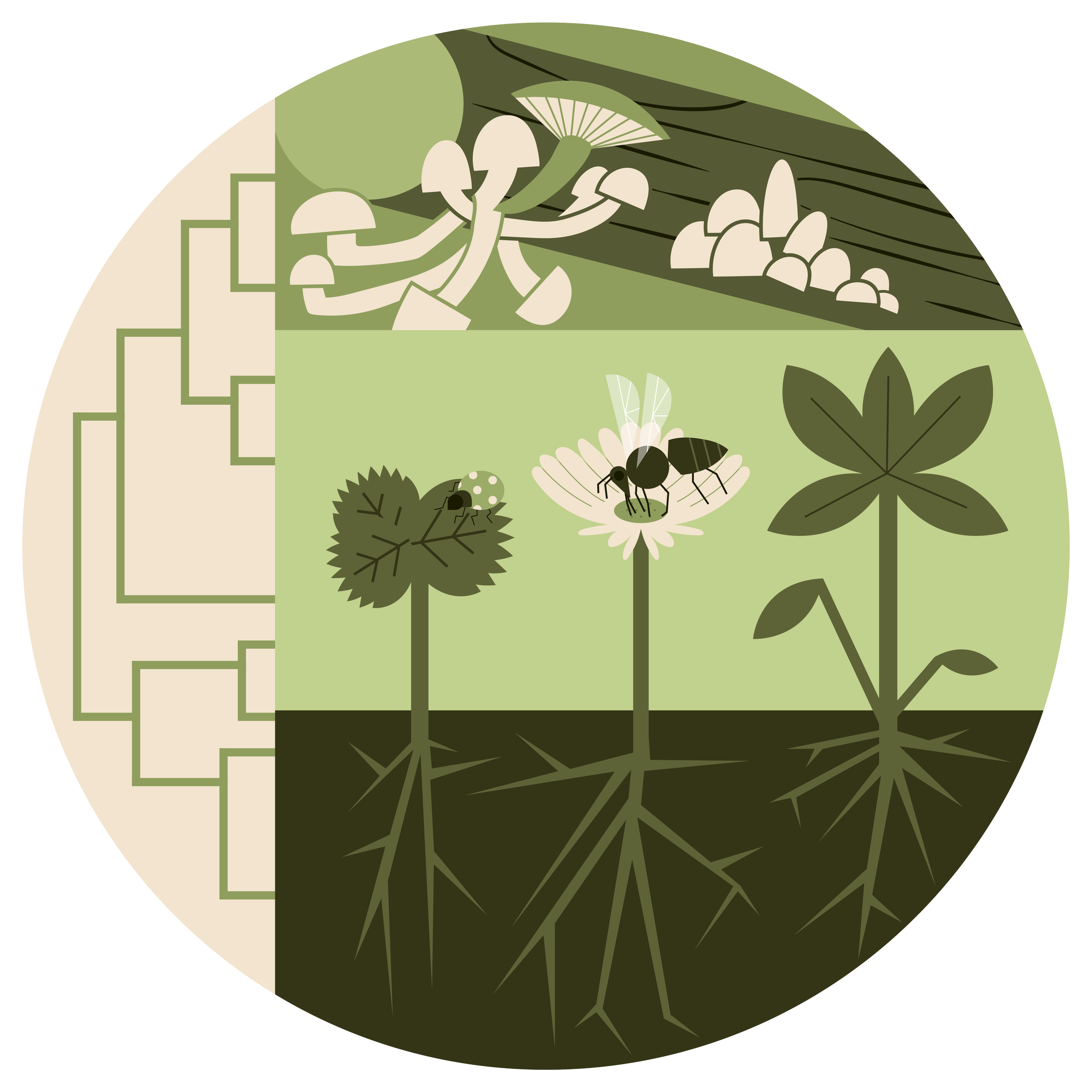
NORDIC JOURNAL OF BOTANY: An International Journal for Botany and Mycology is an Open Access journal owned by the Nordic Society Oikos.
We are an international journal publishing research on all aspects of plant and fungal ecology, evolution, conservation, biogeography, and taxonomy. We welcome cross-disciplinary research such as plant-pollinator interactions, human-plant relations, and plant-ecosystem connections. Our scope includes algae and bryophytes and all groups of fungi. We explore trending topics in plant sciences and publish research from both established experts and early-career researchers.
Thinking about publishing with us?
NJB publishes Research Articles, Short Communications, and Review Papers
We value ethical standards in science (EDI, Open Access, waivers, accessible data and code, CRediT)
Check out NJB’s journal metrics and see our Author Guidelines
Our journals, our society—join us!
The Nordic Society Oikos engages the global scientific community through five international journals…
…and supports the national ecological societies of the five Nordic countries. Anyone worldwide can join the Nordic Society Oikos.
NSO is a home for ecologists, a nexus for knowledge, and a guiding light for ecology worldwide. We are an active network of ecologists in the Nordic region and around the globe.
Why join NSO? Membership benefits include:
Connections across a global community of ecologists and five national societies
NSO newsletters with member-only updates about Nordic ecology and society activities
Ongoing opportunities for promotion on NSO’s digital platforms and social media channels
Discounted registration for NSO’s biennial conference
Eligibility to apply for NSO Grants
Each member receives additional benefits from one of our five national societies:
Danish Oikos Society
Oikos Finland
Icelandic Ecological Society
Norwegian Ecological Society
Swedish Oikos Society
When you join NSO, you also become a member of one of our national societies. Which one? That’s up to you! Each national society provides its own benefits, including discounts to national conferences. Learn more about us at nordicsocietyoikos.org.