
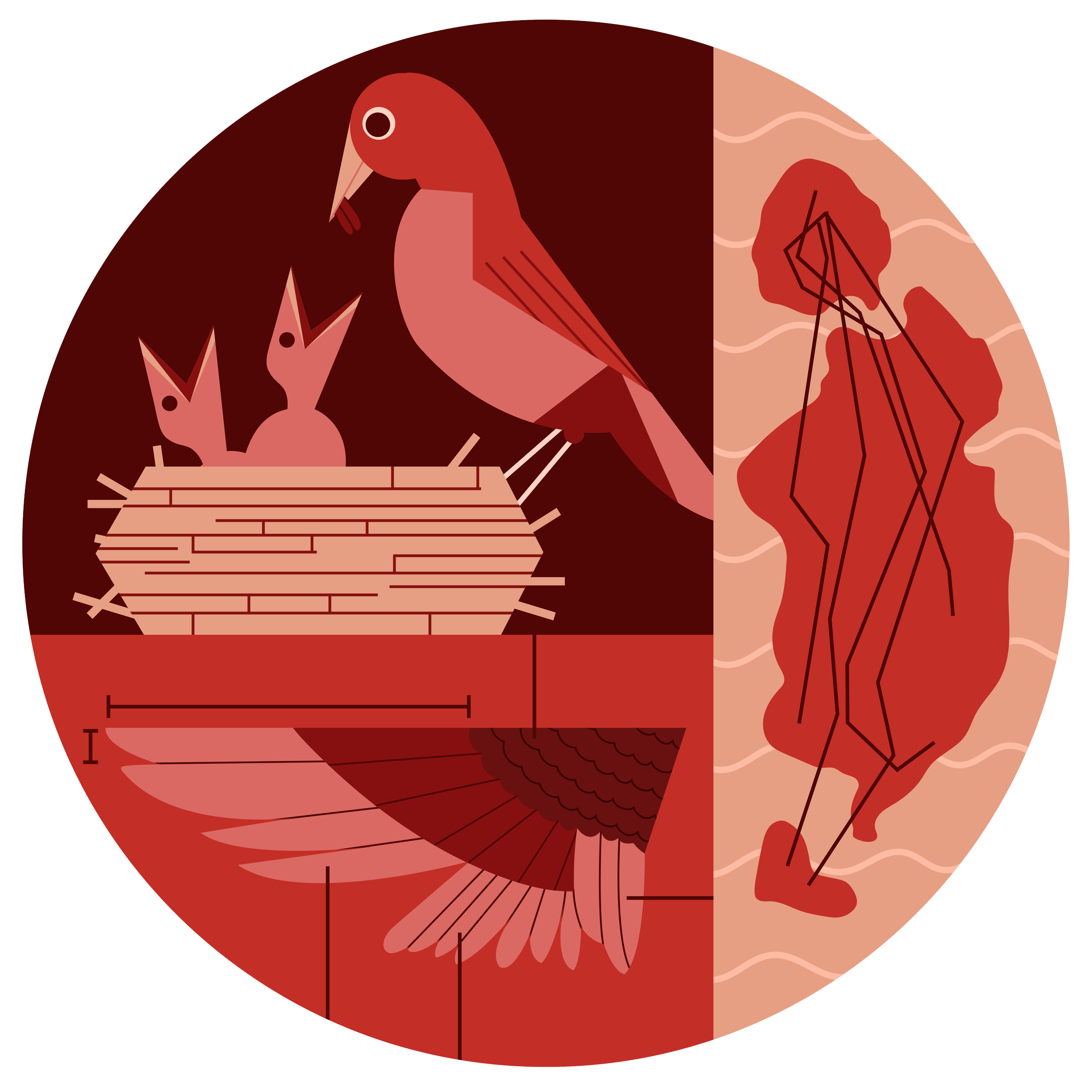
Black-tailed gulls at the bustling breeding colony on Kabushima Island, Japan, with Kabushima Shrine and members of the research team. Photo: Serina Suzuki
2026 Issue 5 Cover
Photo by Serina Suzuki
Download the high-resolution image
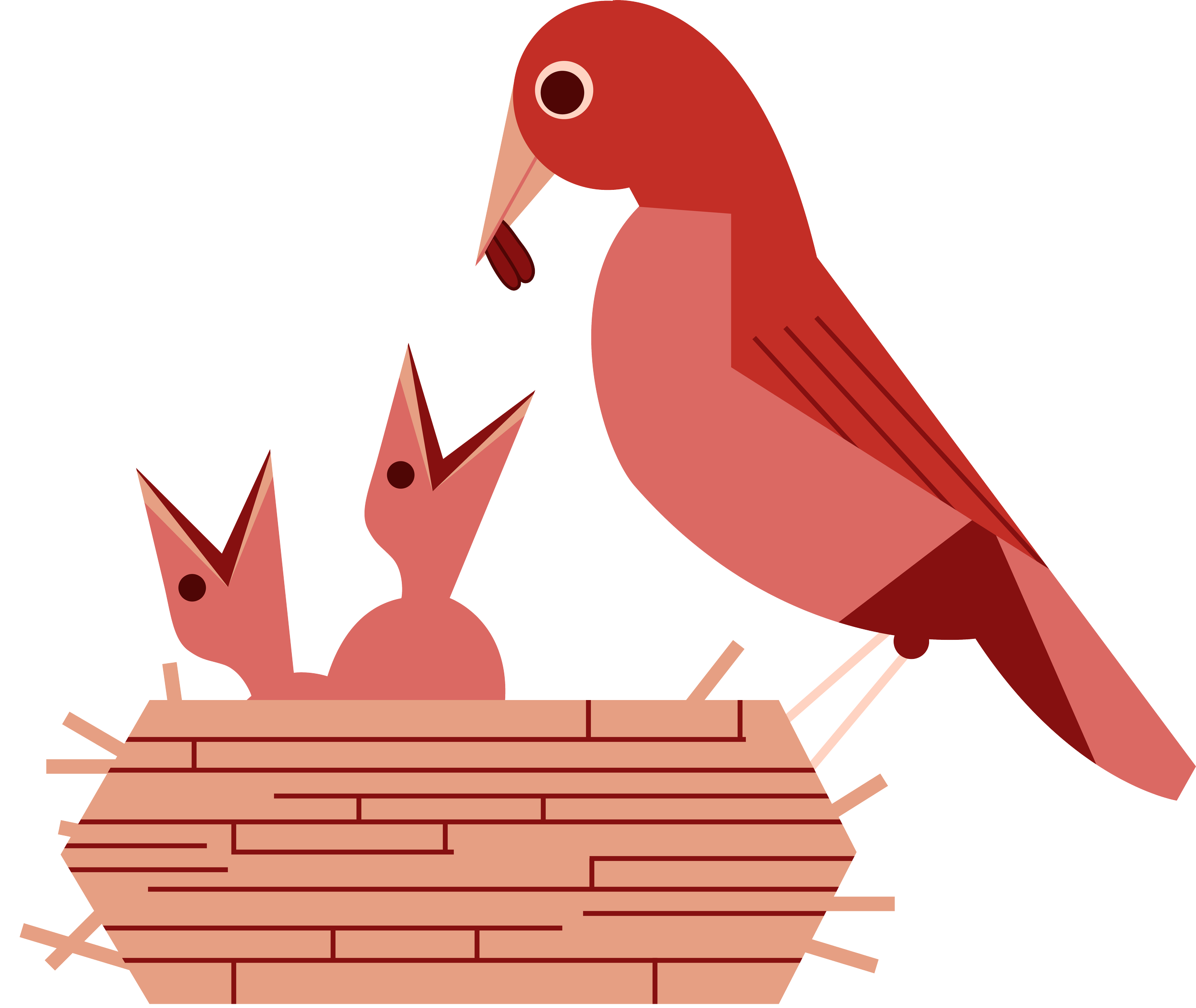
Our 2026 issue 5 cover depicts black-tailed gulls at the breeding colony on Kabushima Island.
Read the open access paper in Journal of Avian Biology, by Serina Suzuki et al. (2026): Older gulls adopt more diverse wind drift compensation strategies
Abstract:
Wind drift compensation is crucial for flying birds to reach their destinations efficiently. Although this behaviour is thought to improve with experience, it remains unclear whether wind drift compensation differs among age classes. We investigated wind drift compensation during foraging trips in black-tailed gulls Larus crassirostris breeding at Kabushima Island, Japan. We used hierarchical Bayesian models to analyse 10 years of GPS tracking data from 95 individuals aged 6–27 years, comprising 1077 trips, and partitioned age-related patterns in wind drift compensation into population-level mean, among-individual variation, and within-individual variation. Population-mean drift and among-individual variation remained stable across ages. In contrast, within-individual variation showed a clear age-related pattern, increasing from approximately ages 10–16 and remaining elevated at older ages. This indicates that older birds varied their compensation strategies more across trips rather than improving their average performance. Simulations under a spatially heterogeneous wind field resembling conditions around Kabushima Island showed that optimal routing can generate greater within-individual variation than perfect compensation, thereby providing a potential explanation for the empirical pattern. Our results suggest that older long-lived birds may exhibit greater behavioural flexibility across environmental contexts, and highlight the importance of partitioning behavioural variation across multiple levels.
Journal of Avian Biology—who are we?
JOURNAL of AVIAN BIOLOGY: Empirical and Theoretical Research in Ornithology is an Open Access journal owned by the Nordic Society Oikos.
We are a journal for innovative, hypothesis-driven research on the biology of birds, with a particular emphasis on ecological, evolutionary and behavioural studies. We welcome submissions that study avian biology across all levels of ecological organization, from organisms and populations to communities and ecosystems. The journal also welcomes studies that report negative results, provided they are conducted rigorously and are scientifically informative. As a Nordic Society Oikos journal, we advocate research that is fair, openly accessible and reproducible.
Thinking about publishing with us?
Journal of Avian Biology offers a Review Award for early-career researchers.
We value ethical standards in science (EDI, Open Access, waivers, accessible data and code, CRediT)
Check out JAB’s journal metrics and see our Author Guidelines
Our journals, our society—join us!
The Nordic Society Oikos engages the global scientific community through five international journals…

…and supports the national ecological societies of the five Nordic countries. Anyone worldwide can join the Nordic Society Oikos.
NSO is a home for ecologists, a nexus for knowledge, and a guiding light for ecology worldwide. We are an active network of ecologists in the Nordic region and around the globe.
Why join NSO? Membership benefits include:
Connections across a global community of ecologists and five national societies
NSO newsletters with member-only updates about Nordic ecology and society activities
Ongoing opportunities for promotion on NSO’s digital platforms and social media channels
Discounted registration for NSO’s biennial conference
Eligibility to apply for NSO Grants
Each member receives additional benefits from one of our five national societies:
Danish Oikos Society
Oikos Finland
Icelandic Ecological Society
Norwegian Ecological Society
Swedish Oikos Society
When you join NSO, you also become a member of one of our national societies. Which one? That’s up to you! Each national society provides its own benefits, including discounts to national conferences. Learn more about us at nordicsocietyoikos.org.