
Special Issue | Guest editor interview: new frontiers in migration physiology
Guest editors of the special issue on migration physiology (from left to right): Barbara Helm, Tiia Kärkkäinen and Pablo Salmón
Why the field of migration physiology is still wide open for new discoveries
Every year, migratory birds undertake journeys that push the limits of endurance, navigation and physiology. Although there is a wealth of research on bird migration, we are still uncovering how these remarkable feats are possible. A new special issue on New Frontiers in Avian Migration Physiology brings together researchers exploring the mechanisms that power migration, from mitochondria and metabolism to microbiomes and immune function. We asked the guest editors Tiia Kärkkäinen, Pablo Salmón and Barbara Helm how the issue came together, what discoveries that surprised them most, and why the field remains wide open for the next generation of curious minds.
What sparked the idea for this special issue on new frontiers in avian migration physiology?
Tiia: It all started in Montpellier, France in July 2022. There was the Society for Experimental Biology Annual Conference and both me and Pablo had presentations related to mitochondria and migration, I had a poster and Pablo a talk. One day, over a friendly wine glass, Pablo and I got to talking and the talk led to an idea to organize a symposium in the next European Ornithologists’ Union congress. Mitochondria and migration being quite a narrow topic, we expanded the topic to migration and physiology in general. We submitted our symposium proposal with a name inspired by Tina Turner and ultimately got to organize our symposium in August 2023 at the EOU congress in Lund, Sweden. After the symposium we were in contact with the managing editor of the Journal of Avian Biology, Michael Tobler, and we discussed the possibility of turning the symposium topic into a special issue. As all of us were pleased with the idea, we moved forward and decided to invite a real migration expert, Barbara Helm into the team and happily she said yes.
For readers just diving in, how would you describe the main themes or take-home message of the issue?
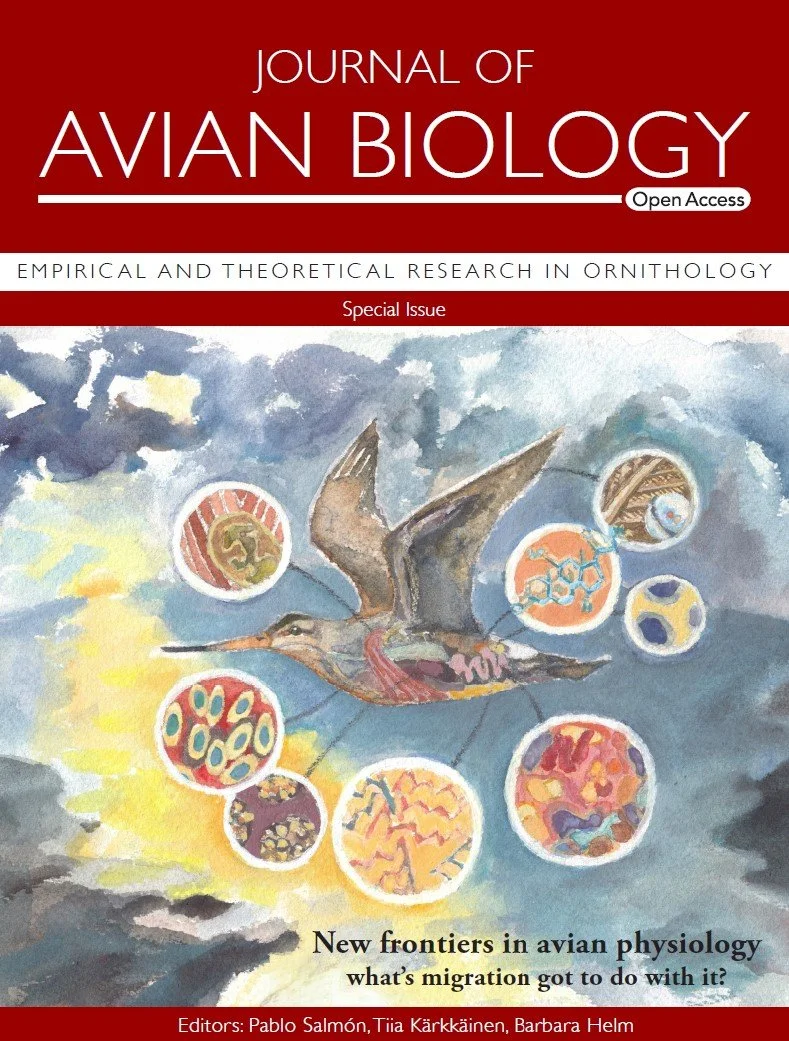
Cover caption and credit: Migratory birds face the complex challenges of migration with an array of physiological adaptations, exemplified clockwise: thermoregulatory, endocrine, microbial, energy metabolism (fuel use), immune and mitochondrial. Water colour painting of a Hudsonian godwit by Abby McBride.
Barbara: For me, the perhaps biggest message to someone just diving in is: hey, this is a highly fascinating research area with so much achievement, and yet: nature continues to baffle us by being more sophisticated, more complex, than we thought. As an editor, I was surprised how many of the papers in this special issue came to unexpected conclusions or to intriguing conundrums. Thus, the field is wide open for curious minds, the tools are increasingly there, so come and join the quest. In terms of themes, the special issue offers many ports of entry. For example, we advertised the call for papers by highlighting that birds are amazing athletes, but we still really don’t know how they do it. Then, there are still lots of issues that we didn’t even touch on, for example sensory capacities and the birds’ information processing. Honestly, I think that there is still no super-computer that could generate the perfect journey.
“As an editor, I was surprised how many of the papers in this special issue came to unexpected conclusions or to intriguing conundrums.”
There’s quite a range of topics covered—were there any studies or findings that particularly stood out to you?
Pablo: What really stood out for me was the number of approaches covered as I think that diversity is a great reflection on how integrative the field has evolved. One contribution that caught my attention was the review on microbiome in the context of avian migration. Although microbiome research has increased in the last years, I think this review provides a neat synthesis on a new layer of understanding in migration physiology, i.e., a link between physiology, community ecology and animal behaviour through microbial processes.
How are newer tools and approaches changing the way researchers study bird physiology today?
Barbara: I’m particularly excited about two sets of newer tools. Firstly, molecular tools can provide insights into the many pathways in the body that make birds’ journeys possible. We’re not quite there yet but soon a small, minimally invasive sample taken from a bird can inform on so many aspects of its physiology. Comparative studies, for example of migrant and resident genomes, are already narrowing down candidate mechanisms for integrated migration physiology and help generate new hypotheses. Yet it’s still a real challenge to link genomic findings to function and performance of birds. For this, experimental studies, and especially ideas-exchange with researchers who study other taxonomic groups, will be invaluable. The second set of tools that excite me are biologging devices that either take direct physiological measures or record performance in parallel to physiological and genomic data collection. Both sets of tools can help bridge the gap between the wild and the lab.
What do you see as the biggest unanswered questions or next steps in this field?
Pablo: One of the biggest unanswered questions is how we can integrate the different levels of biological organisation. We currently have increasingly detailed data at the molecular level, e.g., gene expression, proteomics or metabolomics (two studies in this issue), but linking these changes to whole organism performance and ecological outcomes remains a major challenge. I think the field will benefit from more integrative studies that combine controlled experimental approaches with ecologically relevant contexts. Of course capturing the whole picture in a single study is difficult but developing collaborative networks/consortiums across disciplines, systems and geographic regions, including in the Global South, could be a powerful vision.
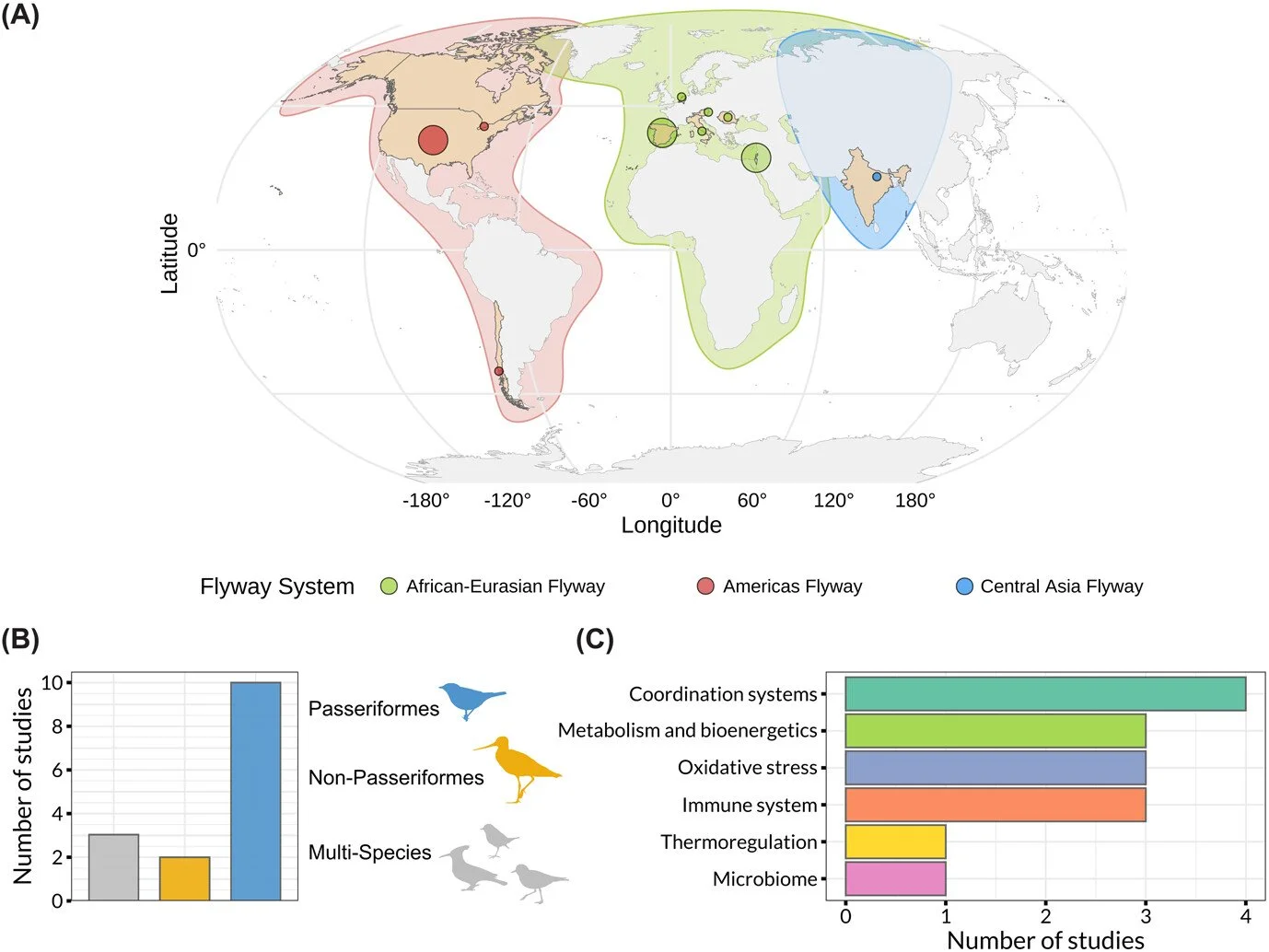
Figure 1 from the Editorial: Features and topics of the studies included in the Special Issue. (A) Global distribution of studies with Flyway System boundaries and names defined according to BirdLife International (Americas, African-Eurasian, and Central Asian; BirdLife International 2025. The circle size represents the number of studies per country. (B) Taxonomic composition of studies grouped into broad species categories. (C) Distribution of studies across physiological domains addressed in this issue.
What do you hope readers—especially early-career researchers—will take away from this special issue?
Tiia: One of the aims of this special issue is to continue bringing together migration ecologists and physiologists, so I hope that the readers from either field can get new insights and understanding. Special issues in general are a good and easy way to update one’s knowledge base in a specific topic. I believe this is especially useful for early-career researchers, who might still be searching for research ideas and directions. I hope that this special issue can offer exactly that and thus generate new, insightful research on the interesting and important topic of physiology of avian migration!
Journal of Avian Biology—who are we?

JOURNAL of AVIAN BIOLOGY: Empirical and Theoretical Research in Ornithology is an Open Access journal owned by the Nordic Society Oikos.
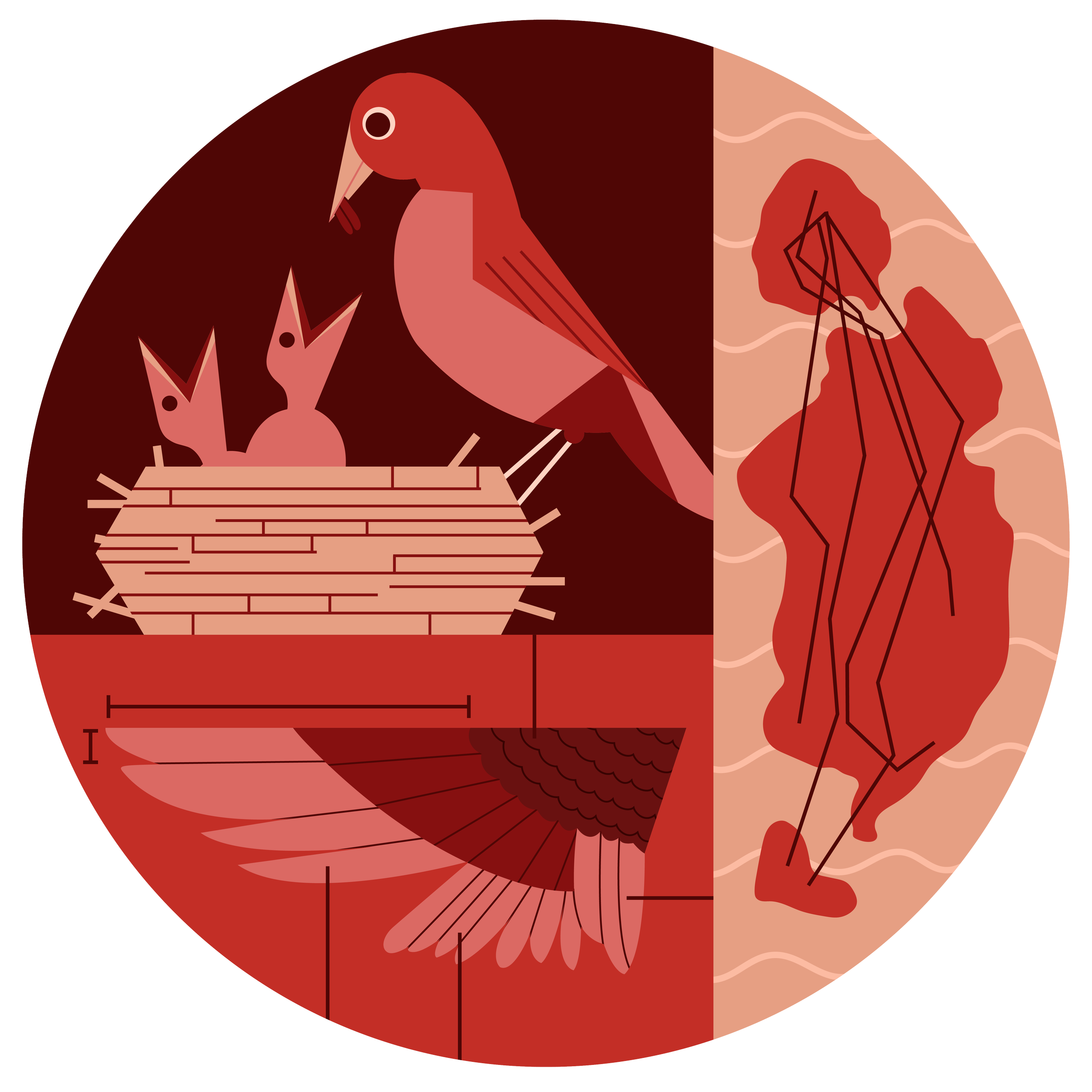
We are a journal for innovative, hypothesis-driven research on the biology of birds, with a particular emphasis on ecological, evolutionary and behavioural studies. We welcome submissions that study avian biology across all levels of ecological organization, from organisms and populations to communities and ecosystems. The journal also welcomes studies that report negative results, provided they are conducted rigorously and are scientifically informative. As a Nordic Society Oikos journal, we advocate research that is fair, openly accessible and reproducible.
Thinking about publishing with us?
Journal of Avian Biology offers a Review Award for early-career researchers.
We value ethical standards in science (EDI, Open Access, waivers, accessible data and code, CRediT)
Check out JAB’s journal metrics and see our Author Guidelines
Our journals, our society—join us!
The Nordic Society Oikos engages the global scientific community through five international journals…

…and supports the national ecological societies of the five Nordic countries. Anyone worldwide can join the Nordic Society Oikos.
NSO is a home for ecologists, a nexus for knowledge, and a guiding light for ecology worldwide. We are an active network of ecologists in the Nordic region and around the globe.
Why join NSO? Membership benefits include:
Connections across a global community of ecologists and five national societies
NSO newsletters with member-only updates about Nordic ecology and society activities
Ongoing opportunities for promotion on NSO’s digital platforms and social media channels
Discounted registration for NSO’s biennial conference
Eligibility to apply for NSO Grants
Each member receives additional benefits from one of our five national societies:
Danish Oikos Society
Oikos Finland
Icelandic Ecological Society
Norwegian Ecological Society
Swedish Oikos Society
When you join NSO, you also become a member of one of our national societies. Which one? That’s up to you! Each national society provides its own benefits, including discounts to national conferences. Learn more about us at nordicsocietyoikos.org.