
*Editor’s Choice | Ecology of swift foxes in a novel landscape beyond their range
Editor’s Choice, November/December 2025
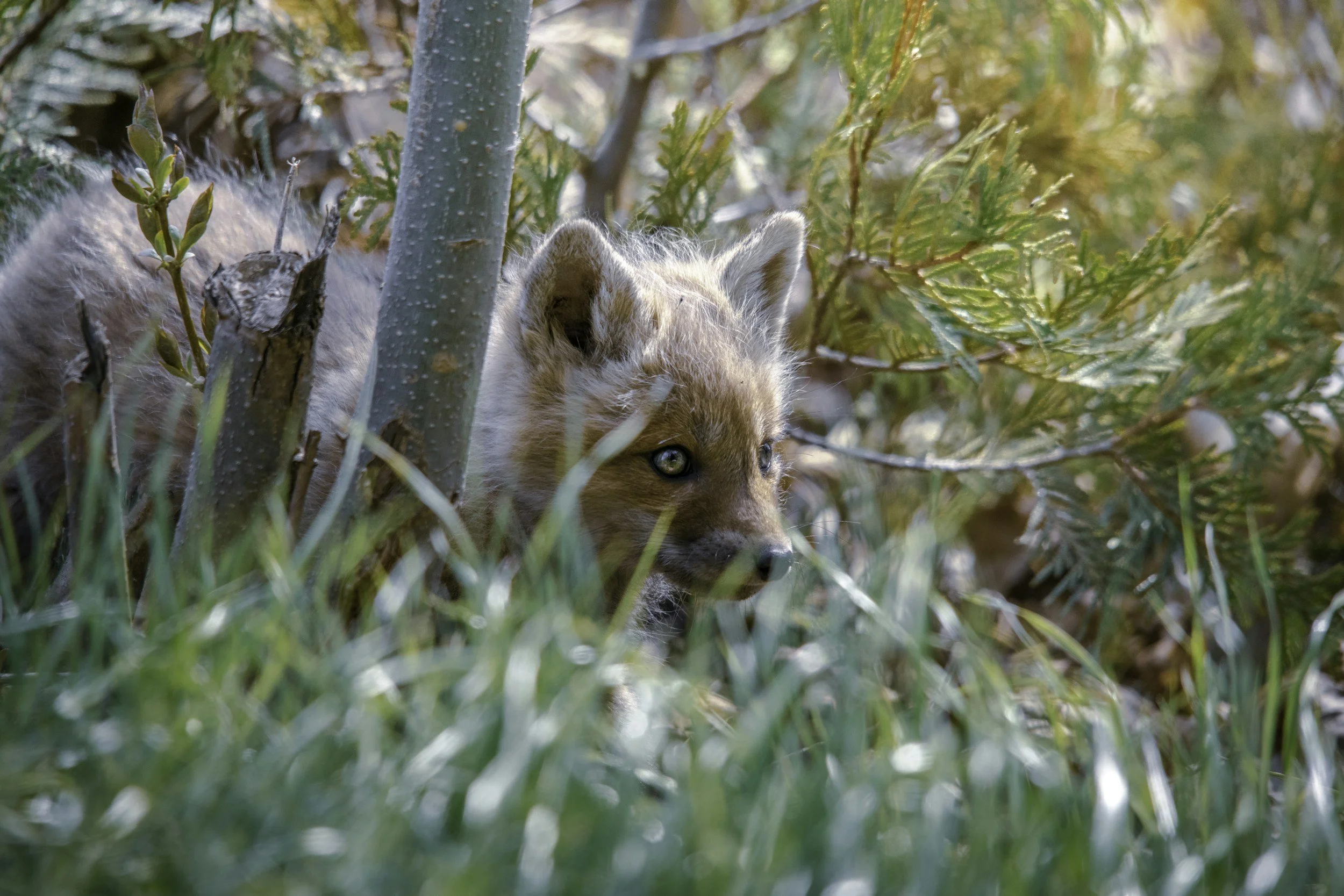
Heading west: Ecology of swift foxes in a novel landscape beyond their range by Smith et al.
Habitat models have become an indispensable tool in wildlife ecology, influencing conservation priorities and management decisions. However, their apparent precision often conceals methodological and conceptual challenges. Most habitat models infer 'suitability' from correlations between environmental variables and animal occurrences. They assume that used habitats reflect ecological needs, and that species-habitat relationships remain constant across space and time. In reality, however, such assumptions rarely hold true. Species distributions are also influenced by historical contingencies, dispersal constraints, and interactions such as competition or predation. Furthermore, models developed within a limited environmental context may fail when applied elsewhere, resulting in misleading conclusions about what is “suitable” habitat. Smith et al. illustrate these pitfalls nicely in their study of the swift fox (Vulpes velox), documenting the species' expansion outside its historical range into habitat types that were previously considered unsuitable.

Using GPS telemetry and camera trapping, the authors identified key environmental correlates of fox occurrence in this new habitat and found minimal spatial and temporal segregation from competitors such as coyotes and badgers. The results suggest behavioural and ecological flexibility far beyond what conventional habitat models had assumed. This study exemplifies how and when habitat suitability models can go wrong: it exposes the danger of equating observed distributions with ecological limits. By challenging long-held assumptions about the swift fox’s habitat requirements, the study demonstrates that species may persist, and even thrive, in landscapes that have been dismissed as unsuitable. In doing so, the study provides a powerful, empirically grounded reminder that predictive models must be tested, not trusted, and that adaptability and behavioural plasticity are as integral to species persistence as any measured environmental variable.
Ilse Storch, Editor-in-Chief
More News from Wildlife Biology
Wildlife Biology is an Open Access journal proudly owned by the Nordic Society Oikos. We promote a scientific basis for the conservation and management of wildlife. We welcome theoretical, empirical, and practical articles from all areas of wildlife science. We adopt a broad concept of wildlife management to safeguard sustainable relationships between wildlife and other human interests. Learn more about Wildlife Biology.
More News from NSO Journals
The Nordic Society Oikos publishes five international journals—Oikos, Ecography, Journal of Avian Biology, Wildlife Biology, and Nordic Journal of Botany—and supports the national ecological societies of the five Nordic countries. Learn more about the Nordic Society Oikos and the NSO Journals.