
Cover | Vanilla × robusta, the first natural Vanilla hybrid for South America
July 2025 Cover
Photograph by Emerson Pansarin
Download the high-resolution image
Vanilla x robusta is the first natural hybrid described for Brazil. Vanilla x robusta is a result of the inter-crossing between V. phaeantha and V. pompona.
Read the open access paper in Nordic Journal of Botany, by Panzarin. (2025): Vanilla × robusta (Orchidaceae: Vanilloideae), the first natural Vanilla hybrid for South America.
Abstract:
Hybridization plays a relevant role in the evolution and diversification of flowering plants. Natural hybridization has been recorded in many orchid genera, including Vanilla. During surveys performed in Brazilian biomes, a plant with characteristics intermediary between V. phaeantha and V. pompona was found.
The plant corresponds to a natural hybrid between these sympatric species, and is described here as V. × robusta. A morphological comparison with the parental species is presented, along with an illustration based on living specimens, and its geographic distribution. Vanilla × robusta is recognized by its long and asymmetric leaves that are longer than the internodes. The flowers of V. × robusta present characteristics intermediary between V. phaeantha and V. pompona. The shape, the size and the coloration of the labellum of V. × robusta is clearly intermediary between the parental species. The labellum of the nothospecies is discretely 3-lobed, while in V. phaeantha this structure is distinctly 3-lobed. In V. pompona the labellum is 1-lobed to obscurely 3-lobed.
To date, V. × robusta is only known from a single locality in southeastern Brazil. Extensive field work, besides accurate morphological analysis of parental species was crucial to elucidate its hybrid origin. Since the occurrence area and the flowering season of V. pompona and V. phaeantha sometimes overlap, they share some Eulaema species as pollinators, and they are inter-compatible, it is plausible that the natural hybridization event documented here is not an isolate case.
Nordic Journal of Botany—who are we?
NORDIC JOURNAL OF BOTANY: An International Journal for Botany and Mycology is an Open Access journal owned by the Nordic Society Oikos.
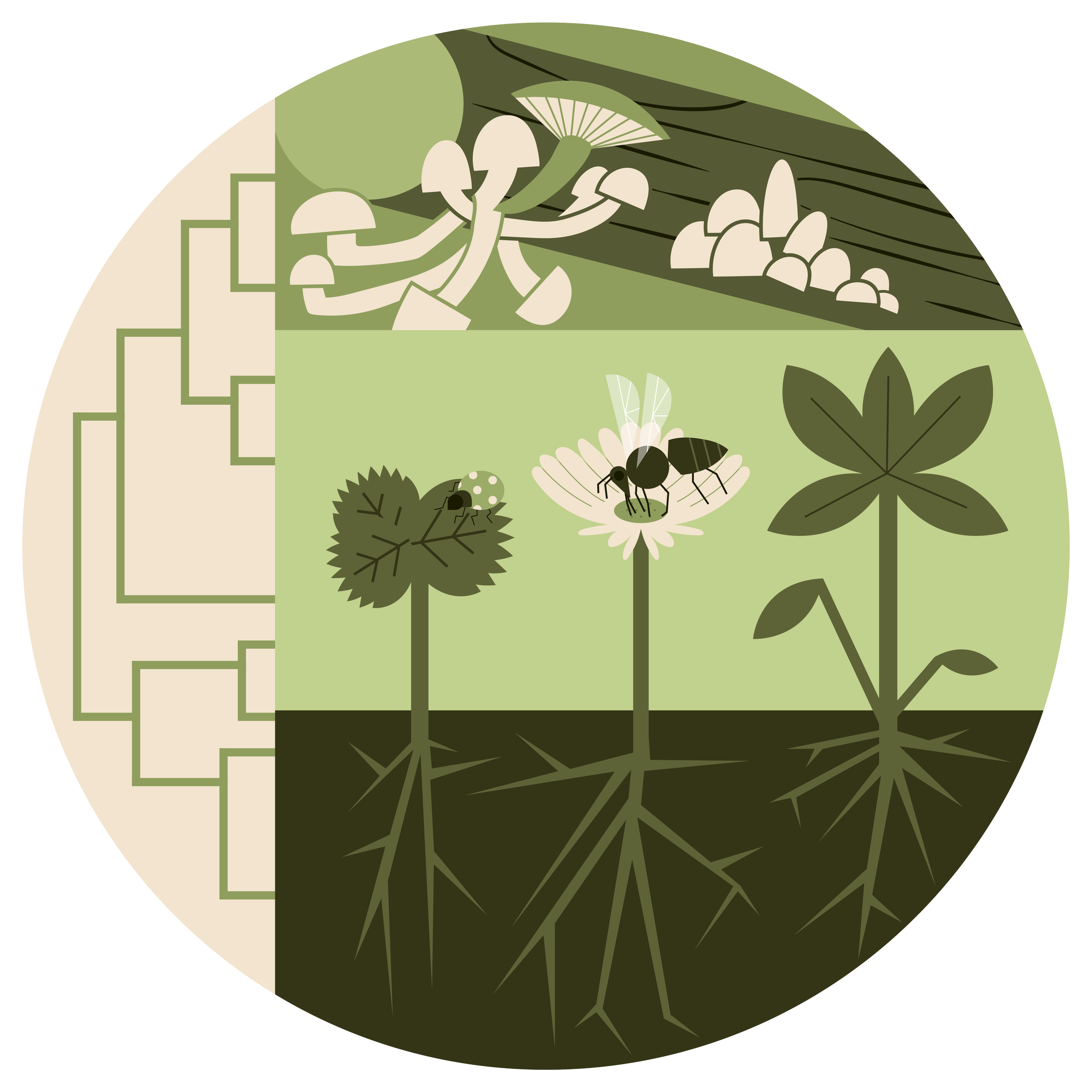
We are an international journal publishing research on all aspects of plant and fungal ecology, evolution, conservation, biogeography, and taxonomy. We welcome cross-disciplinary research such as plant-pollinator interactions, human-plant relations, and plant-ecosystem connections. Our scope includes algae and bryophytes and all groups of fungi. We explore trending topics in plant sciences and publish research from both established experts and early-career researchers.
Thinking about publishing with us?
NJB publishes Research Articles, Short Communications, and Review Papers
We value ethical standards in science (EDI, Open Access, waivers, accessible data and code, CRediT)
Check out NJB’s journal metrics and see our Author Guidelines
Our journals, our society—join us!
The Nordic Society Oikos engages the global scientific community through five international journals…

…and supports the national ecological societies of the five Nordic countries. Anyone worldwide can join the Nordic Society Oikos.
NSO is a home for ecologists, a nexus for knowledge, and a guiding light for ecology worldwide. We are an active network of ecologists in the Nordic region and around the globe.
Why join NSO? Membership benefits include:
Connections across a global community of ecologists and five national societies
NSO newsletters with member-only updates about Nordic ecology and society activities
Ongoing opportunities for promotion on NSO’s digital platforms and social media channels
Discounted registration for NSO’s biennial conference
Eligibility to apply for NSO Grants
Each member receives additional benefits from one of our five national societies:
Danish Oikos Society
Oikos Finland
Icelandic Ecological Society
Norwegian Ecological Society
Swedish Oikos Society
When you join NSO, you also become a member of one of our national societies. Which one? That’s up to you! Each national society provides its own benefits, including discounts to national conferences. Learn more about us at nordicsocietyoikos.org.