
Cover | A comprehensive key to several Carex taxa
August 2025 Cover
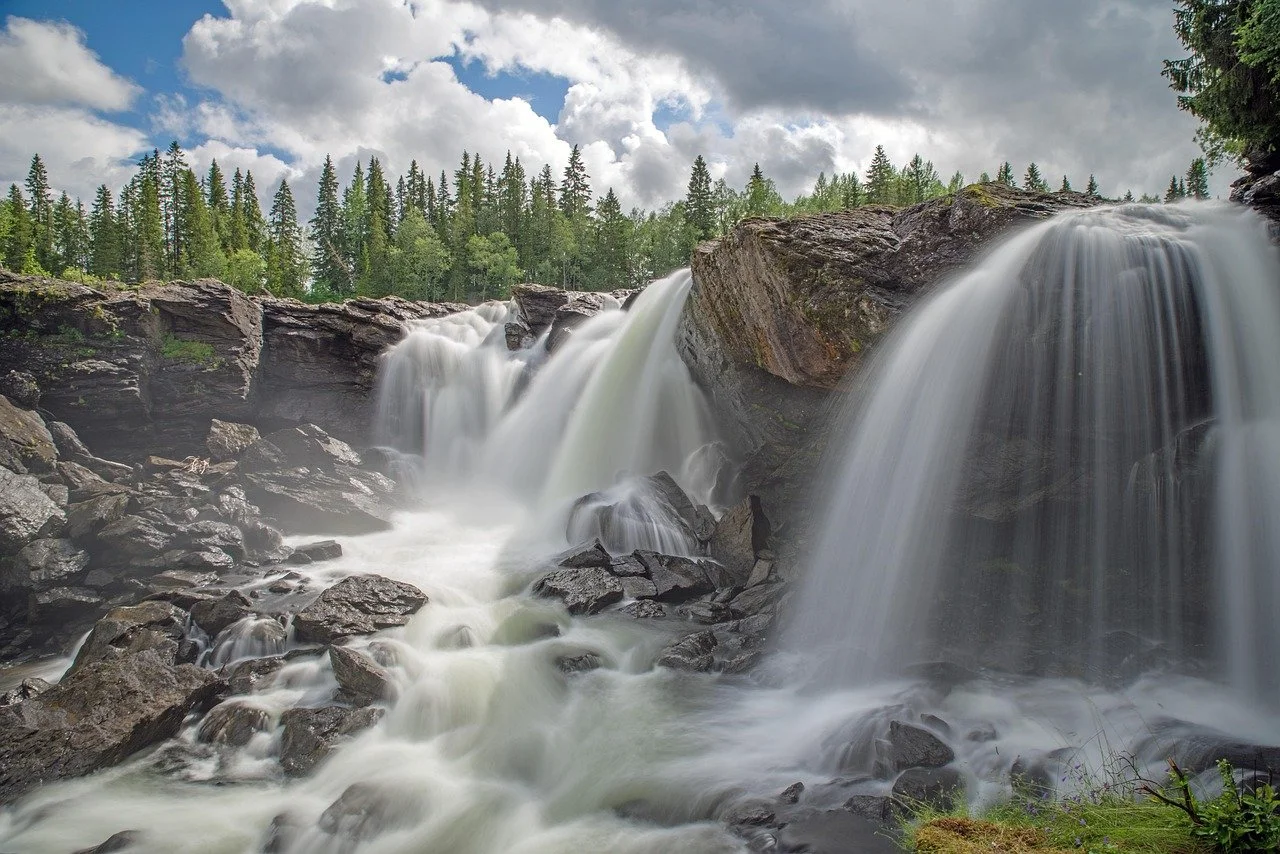
Photograph by Arne Jakobsen
Download the high-resolution image
Carex fuliginosa, a more or less rare mountainous species from the Subarctic and Subalpine Northern Hemisphere. All spikes are similar in appearance, and there are three stigmas in each female flower. With the Key this densely caespitose species has to be keyed out in Key C (Koopman et al. 2025). The photo was taken on 6th August 2020 in the Dovrefjell Mts. in Trøndelag county in Central Norway at 1300 m.
Read the open access paper in Nordic Journal of Botany, by Koopman et al. (2025): An upgraded key for identifying all native species, subspecies and varieties of the genus Carex (Cyperaceae) in Europe and the Caucasus.
Abstract:
The last pan-European key to Carex taxa was published in 1980 by Chater. Since that time several new species have been described, and numerous nomenclatural changes, including the recognition that the former genus Kobresia should be incorporated into Carex as C. subg. Euthyceras, have been made. This article provides a comprehensive key to identify all native European and Caucasian Carex taxa, plus two North American taxa, C. crawfordii and C. vulpinoidea, which are commonly regarded as being widely established in Europe. The key presented includes a general access key that directs the reader to one of five detailed keys (keys A–E), thus enabling the identification of all 316 European and Caucasian Carex taxa: 239 species, 63 subspecies and 14 varieties. Hybrids and introduced taxa, other than the two species mentioned above, are not included.
Nordic Journal of Botany—who are we?
NORDIC JOURNAL OF BOTANY: An International Journal for Botany and Mycology is an Open Access journal owned by the Nordic Society Oikos.
We are an international journal publishing research on all aspects of plant and fungal ecology, evolution, conservation, biogeography, and taxonomy. We welcome cross-disciplinary research such as plant-pollinator interactions, human-plant relations, and plant-ecosystem connections. Our scope includes algae and bryophytes and all groups of fungi. We explore trending topics in plant sciences and publish research from both established experts and early-career researchers.
Thinking about publishing with us?
NJB publishes Research Articles, Short Communications, and Review Papers
We value ethical standards in science (EDI, Open Access, waivers, accessible data and code, CRediT)
Check out NJB’s journal metrics and see our Author Guidelines
Our journals, our society—join us!
The Nordic Society Oikos engages the global scientific community through five international journals…
…and supports the national ecological societies of the five Nordic countries. Anyone worldwide can join the Nordic Society Oikos.
NSO is a home for ecologists, a nexus for knowledge, and a guiding light for ecology worldwide. We are an active network of ecologists in the Nordic region and around the globe.
Why join NSO? Membership benefits include:
Connections across a global community of ecologists and five national societies
NSO newsletters with member-only updates about Nordic ecology and society activities
Ongoing opportunities for promotion on NSO’s digital platforms and social media channels
Discounted registration for NSO’s biennial conference
Eligibility to apply for NSO Grants
Each member receives additional benefits from one of our five national societies:
Danish Oikos Society
Oikos Finland
Icelandic Ecological Society
Norwegian Ecological Society
Swedish Oikos Society
When you join NSO, you also become a member of one of our national societies. Which one? That’s up to you! Each national society provides its own benefits, including discounts to national conferences. Learn more about us at nordicsocietyoikos.org.