
Call for Papers | Special issue “Decomposing avian diet: linking food, foraging and fitness”
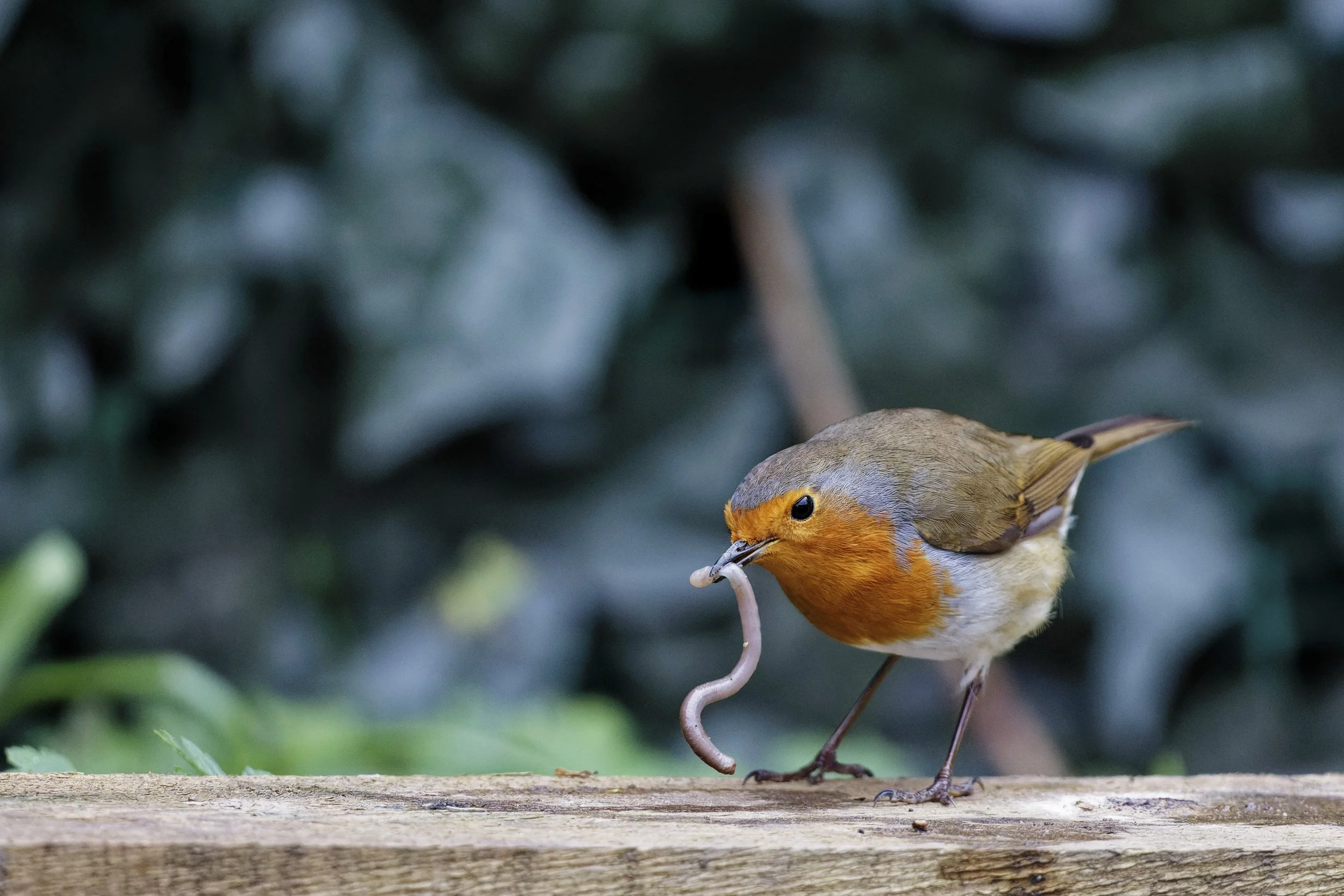
European robin eating an earthworm. Photo: iStock.
Calling for submissions for a new special issue, “Decomposing avian diet: linking food, foraging and fitness”
Manuscript Submission Deadline: 30 September 2027.
Diet is a fundamental aspect of the ecology of birds. From nutrition and physiology to competition, predation, and seed dispersal, what a bird eats shapes its movement and survival, ultimately scaling up to influence demography, population dynamics, and ecosystem functioning. Decoding avian diets is also essential for their conservation: identifying cryptic food resources or key sources of essential nutrients can make the difference between success and failure of conservation efforts. Advances in analytical approaches—including molecular diet reconstruction, stable isotopes, nutritional profiles, and integrated movement and behavioural analyses—are rapidly expanding our ability to quantify avian diets and how they impact the ecology, conservation, and evolution of birds.
Despite this progress, many aspects of avian diet remain poorly understood. How flexible are dietary niches across individuals, life stages, and environments? How do diet composition and resource use shape behaviour and fitness outcomes, and what are the trade-offs and mechanisms underpinning these links? How are land-use and climate change impacting these processes? And how can emerging techniques be integrated with behavioural, ecological and evolutionary frameworks to better understand the role of diet in shaping avian biology?
This Special Issue aims to bring together empirical, theoretical and methodological contributions that examine avian diet from multiple perspectives—from individual foraging decisions to food-web dynamics and macroevolutionary patterns. By integrating approaches across disciplines, the issue will highlight how diet links behaviour, physiology, ecology, conservation, and evolution in birds.
We welcome submissions of hypothesis-driven studies on the following topics:
Novel advances in methodology around quantifying diet and/or nutrition
Diet specialisation and/or flexibility and its impacts on individual performance, life histories and population dynamics
The effects of rare or specific dietary nutrients on health and fitness
Variation in diets across urban to rural gradients and its ecological consequences
Links between intraspecific variation in foraging or movement behavior and dietary intake
Links between diet, parasites and disease transmission
Research on the reciprocal relationship between diet and gut microbiota in wild birds, and its impact on avian fitness
How diet choice or diet specialisation shape avian evolution
Diet-mediated exposure to pollutants and contaminants, and its links to avian ecology and behaviour
Be part of a diverse collection of studies exploring what birds eat, why diets vary, and what this means for individuals, populations and ecosystems. We welcome contributions that advance our understanding of avian diet across ecological, evolutionary and applied contexts, from novel methods and fundamental insights to conservation challenges in a rapidly changing world. Studies that are purely descriptive are outside the scope of this species issue. If you are unsure about whether your study is within scope, please contact us (see editor contact details below)!
We encourage submissions coming from underrepresented geographic areas. If your institution does not currently have an Open Access agreement with Wiley to cover publication costs and if you are not covered through the research4life partnership, Journal of Avian Biology (JAB) is able to provide a limited number of waivers to cover publication costs. Read more about JAB waivers.
As soon as an article is accepted, it will be curated and typeset so that it can be published on the journal webpage. All accepted articles will be published together in a JAB Special Issue, accompanied by an editorial. Special issue content will be widely promoted on the social media channels of the Nordic Society Oikos journals and the platform of our publisher Wiley.
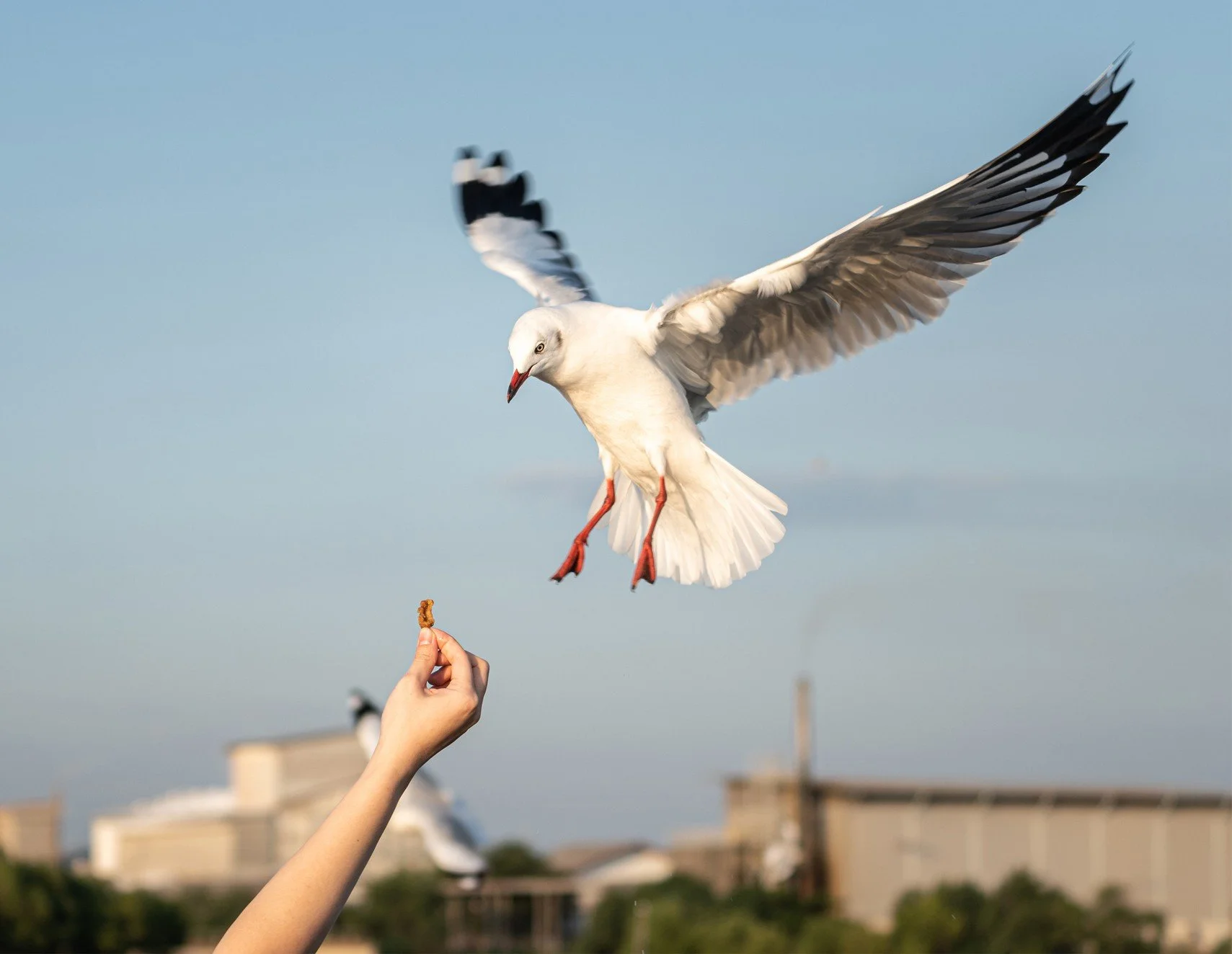
Photo: iStock
How to submit a manuscript:
If you intend to submit a manuscript for our special issue, please send a short email to any of the guest editors (see contact information below) including a tentative title, the type of article, a brief summary of the research questions and methodology, and name of the corresponding author. Please note that we do not expect any results to be included in this short description nor that the content is definitive for the resulting manuscript. The short description is merely used to assess whether your research fits the topic of the special issue. If you have any questions, please do not hesitate to contact any of the four guest editors.
The manuscript will undergo the regular peer-review process. Please submit your manuscript through the JAB online submission system (indicate in the system and the cover letter that your manuscript is a contribution to the special issue). Please, check out the author guidelines of the journal about how to prepare your manuscript before submission.
Editors of the special issue:
Ana Paula Aprigio Assis, University of São Paulo, Brazil (paulaassis@ib.usp.br)
Interests: adaptation in a changing world; evolutionary ecology; natural selection; intraspecific variation
Alice Risely, University of Salford, United Kingdom (A.Risely@salford.ac.uk)
Interests: avian diet, disease ecology, microbial ecology, animal movement
Jennifer Uehling, Department of Biology, West Chester University of Pennsylvania, USA (juehling@wcupa.edu)
Interests: foraging ecology, behavioral ecology, environmental pollutants
Alex Sutton, Bangor University, United Kingdom (a.sutton@bangor.ac.uk)
Interests: winter ecology, food caching behaviour, how behaviour shapes functional characteristics of the microbiome, interactive effects of land use and climate on prairie plant population dynamics, population dynamics of boreal breeding songbirds
Journal of Avian Biology—who are we?
JOURNAL of AVIAN BIOLOGY: Empirical and Theoretical Research in Ornithology is an Open Access journal owned by the Nordic Society Oikos.
We are a journal for innovative, hypothesis-driven research on the biology of birds, with a particular emphasis on ecological, evolutionary and behavioural studies. We welcome submissions that study avian biology across all levels of ecological organization, from organisms and populations to communities and ecosystems. The journal also welcomes studies that report negative results, provided they are conducted rigorously and are scientifically informative. As a Nordic Society Oikos journal, we advocate research that is fair, openly accessible and reproducible.
Thinking about publishing with us?
Journal of Avian Biology offers a Review Award for early-career researchers.
We value ethical standards in science (EDI, Open Access, waivers, accessible data and code, CRediT)
Check out JAB’s journal metrics and see our Author Guidelines
Our journals, our society—join us!
The Nordic Society Oikos engages the global scientific community through five international journals…

…and supports the national ecological societies of the five Nordic countries. Anyone worldwide can join the Nordic Society Oikos.
NSO is a home for ecologists, a nexus for knowledge, and a guiding light for ecology worldwide. We are an active network of ecologists in the Nordic region and around the globe.
Why join NSO? Membership benefits include:
Connections across a global community of ecologists and five national societies
NSO newsletters with member-only updates about Nordic ecology and society activities
Ongoing opportunities for promotion on NSO’s digital platforms and social media channels
Discounted registration for NSO’s biennial conference
Eligibility to apply for NSO Grants
Each member receives additional benefits from one of our five national societies:
Danish Oikos Society
Oikos Finland
Icelandic Ecological Society
Norwegian Ecological Society
Swedish Oikos Society
When you join NSO, you also become a member of one of our national societies. Which one? That’s up to you! Each national society provides its own benefits, including discounts to national conferences. Learn more about us at nordicsocietyoikos.org.