

OIKOS
OIKOS LOGO HERE,
linking to Oikos home.
The logo at top left (linking to Journals home) should be NSO JOURNALS LOGO.
ABOUT THE JOURNAL
OIKOS HOME | ABOUT THE JOURNAL | FOR AUTHORS | CONTACT US
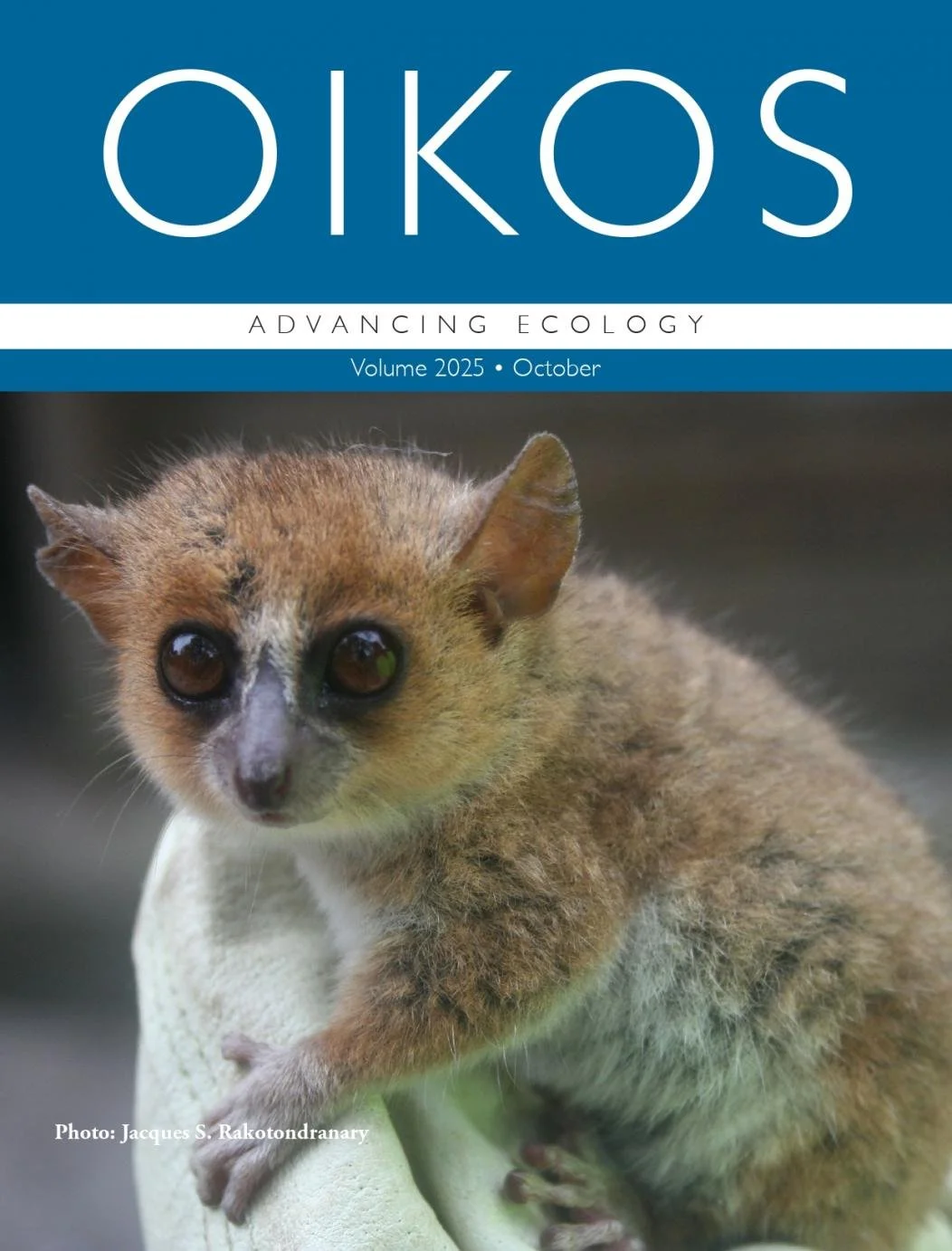
We publish empirical & theoretical research on all aspects of ecology.
Oikos focuses on advancing our understanding of ecological mechanisms, processes, and patterns. Our journal fosters debate and speculation, encouraging innovative and provocative ideas that shape ecological thinking.
Oikos article types include Forum, Ignite, and Dialogue papers.
We value ethical standards in science. Check out information on EDI, double-anonymized peer review, accessible data and code, and CRediT.
See journal metrics.

See OIKOS NEWS.

Editorial Policies
Oikos is a hybrid journal published by the Nordic Society Oikos in cooperation with Wiley. Please read the NSO Publishing Policies for detailed information regarding conflict of interest, authorship, roles of editors, copyright and licensing, Open Access conditions, and more. The article publication charges associated with Open Access articles are the only fees for publishing in NSO journals. Papers submitted to NSO journals are evaluated using double-anonymized peer review, with implications for manuscript formatting specified in our Author Guidelines. NSO believes that accessible and transparent data and code are essential for scientific progress. To make science more just, we ask our authors to declare whether the conduct of their study considers equity, diversity and inclusion when they submit their papers.
Manuscript Referrals
Editors of Oikos may refer authors to the NSO sister journals Nordic Journal of Botany and Journal of Avian Biology, or to the Wiley Open Access Journal Ecology and Evolution. If referral within the journal network is not available, manuscripts may be referred to Wiley’s Transfer Desk Assistant which identifies suitable Wiley journals that are a match for the manuscript. Authors can then opt to transfer their manuscript to one of the recommended titles. The manuscript will be automatically transferred, along with any related reviews, for consideration by the editorial team of the receiving journal. Transfers are offered to facilitate rapid publication of good quality research that is unable to be accepted by the original journal, and to reduce overall editor burden and reviewer fatigue.
EDITORIAL TEAM
-
Paulo R. Guimarães Jr.
Editor-In-Chief
University of Sāo Paulo
Brazil -
Pedro Peres-Neto
Editor-In-Chief
Concordia University
Montreal, Canada -
Åsa Langefors
Managing Editor
Lund, Sweden
oikos@oikosoffice.lu.se -
Monica Gabell
Editorial Assistant
Lund, Sweden
assistant-ed@oikosoffice.lu.se -
Bucur Mironescu
Editorial Assistant
Lund, Sweden
assistant-ed@oikosoffice.lu.se -
Petter Oscarson
Technical Editor
Lund, Sweden
oikostech@oikosoffice.lu.se

Subject Editors
Karen Abbott, Cleveland, Ohio, USA – theoretical ecology, spatial ecology, stochasticity, and transient dynamics
Isabel C. Barrio, Reykjavík, Iceland – tundra, herbivory, grazing, invertebrate herbivory, biotic interactions, arctic and alpine ecosystems
Léa Beaumelle, Toulouse, France – soil biodiversity, ecosystem functioning, above-belowground interactions, global change biology, pollution, agroecology
Carolina Bello, Zurich, Switzerland - Species interactions, Functional diversity, Ecosystem services, Defaunation, Forest restoration, Carbon Cycle
Matthew Bracken, Irvine, USA – biodiversity, bottom-up processes, community ecology, consumers, ecosystem functioning, herbivory, nutrients, physiologial ecology, predation, top-down processes
James Bullock, Wallingford, UK – demography, dispersal, population modelling, invasions, conservation, restoration, ecosystem services
Jarret Byrnes, Boston, USA – biodiversity, ecosystem function, marine ecology, kelp forest, fouling communities, meta-analysis, structural equation modeling, statistical ecology
Paul Caplat, Belfast, UK – spatial ecology, land-use change, population biology, landscape ecology, integrative modelling, invasion biology, dispersal ecology, predictive traits, temperate forests, temperate agroecosystems
Eliana Cazetta, Ilhéus, Brazil – frugivory, landscape ecology, seed dispersal, plant-animal interactions, pollination
Karoline Ceron, Fortaleza, Brazil – trophic ecology, ecological networks, metacommunity dynamics, natural history of neotropical herpetofauna
David Chalcraft, Greenville, USA – species interactions, pred-prey, plasticity, biodiversity, community assembly, community ecology, ecosystem function and stability
Si-Chong Chen, Wuhan, China – macroecology, biogeography, plant ecology, seed ecology, species interaction
Julien Cote, Tolouse, France – dispersal, biological invasions, intraspecific phenotypic variation, climate change, animal personality
Dylan Craven, Santiago, Chile – functional biogeography, diversity-stability, biodiversity - ecosystem function (BEF), secondary succession, functional ecology, macroecology
Antonino Cusumano, Palermo, Italy – plant-insect herbivore interactions, plant-herbivore-microbe interactions, parasitoid ecology, insect chemical ecology
Melanie Dammhahn, Münster, Germany – animal ecology, behavioural ecology, life history, and community ecology particularly in mammals
Gerlinde De Deyn, Wageningen, the Netherlands – plant-soil interactions, plant traits, nematodes, mycorrhiza, grassland, trait-based ecology, carbon sequestration
Ellen Decaestecker, Kortrijk, Belgium – host-pathogen, parasite interactions, epigenetics, immunology, host-microbiome interactions, eco-evolutionary dynamics
Steven Declerck, Wageningen, the Netherlands – rapid adaptation, experimental evolution, ecological stoichiometry, aquatic ecology, zooplankton, biodiversity
Hideyuki Doi, Kyoto, Japan – community ecology, food web, aquatic ecology, biodiversity, climate change, environmental DNA
Allan Edelsparre, Toronto, Canada – movement ecology, polymorphism, habitat/landscape connectivity, animal personality, behaviour genetics, dispersal/migration, foraging
Marcos Fernández-Martínez, Barcelona, Spain – ecological stoichiometry, functional traits, ecosystem functioning, carbon balance, bryophyte ecology, plant reproduction
Emanuel Fronhofer, Montpellier, France – evolutionary ecology, eco-evolutionary dynamics, metapopulations, metacommunities, dispersal, experimental evolution, agent-based models
Benoit Gauzens, Leipzig, Germany – networks, food webs, population dynamics, global change, ecosystem functioning
Stefan Geisen, Wageningen, the Netherlands – soil ecology, microbiome interactions, higher trophic organisms (trophic cascades etc), plant-soil interactions
Jean-Philippe Gibert, Durham, NC, United States – food webs, microbial food webs, temperature, eco-evo, theory, microcosms
Bente Graae, Trondheim, Norway – plant functional traits, seedling recruitment, seed dispersal, plant communities, land-use changes, restoration ecology
Pamela Graff, Buenos Aires, Argentina – plant-animal interactions, community ecology, grassland ecology, plant facilitation, grazing, restoration ecology, plant invasion
Matthew Grainger, NINA, Trondheim, Norway – Evidence Synthesis, Wildlife Management, Applied Ecology
Jacopo Grilli, Trieste, Italy – ecological networks, microbial communities, macroecology, theoretical ecology
Sandra Hamel, Quebec, Canada – life histories, population dynamics, behavioural ecology, statistical ecology, wildlife management and conservation
Simon P. Hart, Brisbane, Queensland, Australia – population dynamics, community dynamics, species coexistence, evolution, plasticity, intraspecific variation, fluctuating environments, abrupt ecological change, plants, freshwater
Julia Kemppinen, Helsinki, Finland - plant ecology, biogeography, microclimates, tundra, arctic, alpine
Mayank Kohli, Bangalore, India – grasslands, plant-animal interaction, community ecology, ecosystem ecology, grazing, carbon dynamics, herbivores, alpine ecosystems
Deliang Kong, Zhengzhou, China – plant functional traits, global change, biodiversity, fine roots, mycorrhizal associations
Johan Kotze, Helsinki, Finland – entomology, ecosystem services, urban (ecosystem) ecology
Silke Langenheder, Uppsala, Sweden – microbial ecology, community ecology, metacommunities, community assembly, ecosystem functioning and stability, bacteria, aquatic ecology
Chelsea Little, Simon Fraser University, Burnaby, Canada - Community ecology, biodiversity, freshwater ecology, alpine and arctic ecosystems, ecosystem functioning, global change, spatial ecology, meta-ecosystems, data synthesis, meta-analysis
Yanjie Liu, Changchun, China – plant ecology, plant invasions, plant-soil interactions, plant-plant interactions, phenotypic plasticity
Leif Egil Loe, Ås, Norway – arctic ecology, ungulate ecology, biotelemetry, habitat selection, movement ecology
Lucas Medeiros, Woods Hole, MA, USA - theoretical ecology, population dynamics, time series analysis, ecological stability, ecological networks, plankton ecology
Francois Massol, Lille, France – theory, community ecology, interactions, metapopulation, modelling, dispersal, metacommunity, network
Dan Mayor, Southampton, UK – sediment biogeochemistry, aquaculture and food security, plankton interactions/eco-physiology, ecological stoichiometry/nutrition, anthropogenic impact on marine environment, ecology of deepest environment on Earth
Kim McConkey, Hyderabad, India - plant-animal interactions, seed dispersal, tropical Asia & the Pacific, defaunation, megafauna, mammals
Richard Michalet, Bordeaux, France – plant community ecology, plant interactions, community genetics, biogeography, forest ecosystems, soil ecology, mountain ecology
Marco Molina-Montenegro, Talca, Chile – plant ecophysiology, Antarctic ecology, plant invasions, biodiversity, protected areas, functional ecology, plant-microorganisms symbiosis
Kailen Mooney, Irvine, USA – plants, insects, herbivory, predation, multi-trophic, community ecology
Elly Morriën, Amsterdam, the Netherlands – soil ecology, soil food webs, biodiversity-ecosystem functioning, carbon sequestration, plant-microbe interactions, stable isotope tracing
François Munoz, Grenoble, France – metapopulation, metacommunity, plant biogeography, functional ecology, theoretical ecology, tropical ecosystems
Wendt Müller, Antwerp, Belgium – maternal effects, developmental plasticity, family ecology, seabird ecology, foraging ecology
Germán Orizaola, Oviedo, Spain – evolutionary ecology, phenotypic plasticity, life history, environmental gradients, ecophysiology, radioecology, herpetology
Robin Pakeman, Aberdeen, UK – grazing, restoration, conservation, dispersal, seed regeneration and seed banks, plant functional traits, ecosystem function
John D. Parker, Edgewater, USA – plant community ecology; biological invasions; biodiversity and ecosystem function; climate change and range expansions; plant-herbivore interactions; mangroves; forest ecology
Will Pearse, Berkshire, UK – ecology, evolution, conservation, statistics, phylogeny, bioinformatics
Pedro Peres-Neto, Montreal, Canada – spatial ecology, biodiversity, community ecology, aquatic systems, quantitative ecology, fish ecology, macroecology, trait ecology, metacommunities, metapopulations, ecophylogenetics
Ignacio Perez-Ramos, Seville, Spain – climate change, functional ecology, interactions between organisms, masting, plant community dynamics, seed dispersal
Alexandra Pires, Rio de Janeiro, Brazil – conservation biology, defaunation, plant-animal interactions, rewilding, seed dispersal
Denis Réale, Montreal, Canada – life history, quantitative genetics, evolutionary ecology, behavioural ecology, animal behaviour, animal personality, host-microbiome interactions
Jiří Reif, Prague, Czechia – avian population dynamics, bird community ecology and speciation, bird behaviour and habitat selection, migration
James "Jim" D. Roth, Winnipeg, Canada – food web dynamics, predator-prey interactions, population cycles, spatial subsidies, ecosystem engineering, applications of stable isotope analysis
Eric Seabloom, St. Paul, Minnesota, USA – community ecology, disease ecology, plant ecology, biological invasions, grassland ecosystems
William "Bill" Severud, Brookings, SD, USA – population dynamics, wildlife management, predator-prey interactions, wildlife health/disease
Isabel M. Smallegange, Amsterdam, the Netherlands – demography, evolutionary ecology, behavioural ecology, population biology, polymorphisms, foraging behaviour
Kathryn Stewart, Leiden, the Netherlands – evolutionary genetics, environmental DNA, conservation, hybridization, speciation, phenotypic plasticity
Christopher M. Swan, Baltimore, MA, USA – community ecology, community assembly, dispersal, ecosystem function, decomposition, biodiversity, urban ecology, aquatic ecology, decomposition
Matthew Symonds, Melbourne, Australia – evolutionary ecology, ecology of body size and body shape, insect and bird behaviour, evolution of chemical communication, phylogenetic comparative studies
Jakub Szymkowiak, Poznań, Poland – behavioral ecology, bird ecology, ecology of information, forest ecology, habitat selection, mast seeding, plant reproduction
Peter Todd, Singapore – tropical marine ecosystems, urban marine ecology, marine biology and conservation, ecological engineering
Carolina Tovar, Surrey, UK – biogeography, conservation, biodiversity, ecology, and tropical ecosystems
Justin M. J. Travis, Aberdeen, UK – space, models, ageing, dispersal
Werner Ulrich, Torun, Poland – macroecology, particularly species-area relationships, global diversity, size distributions, statistical ecology, neutral modelling and the analysis of ecological matrices
Ciska Veen, Wageningen, the Netherlands – soil ecology, aboveground-belowground interactions, community ecology, decomposition, grasslands, grazing
Miguel Verdú, Valencia, Spain – community phylogenetics, plant facilitation
Susan Whitehead, Blacksburg, VA, USA - chemical ecology, frugivory and seed dispersal, plant-herbivore interactions, agroecology
Thorsten Wiegand, Leipzig, Germany – spatial ecology, individual-based models, point pattern analysis, inverse modeling, species coexistence
Shawn Wilder, Stillwater, Oklahoma, USA – predation, food webs, spiders, nutrition
Meike Wittmann, Bielefeld, Germany – theoretical biology, mathematical modelling, evolutionary ecology, diversity, conservation biology, small populations
Jinsong Wang, Beijing, China - global synthesis, soil biogeochemistry, root traits, ecosystem functioning, alpine ecosystems, global change
Bob Wong, Melbourne, Australia – behavioural ecology, evolutionary ecology, behavioural ecotoxicology, anthropogenic change
Sa Xiao, Lanzhou, China – plant ecology, soil ecology, above-belowground interactions, species coexistence and diversity, community structure and function
Regino Zamora, Granada, Spain – plant-animal interactions, and plant-plant interactions
Zhiwei Zhong, Changchun, China – plant-herbivore interactions, predator-prey interactions, predation risk, trophic cascades, ecosystem engineer
Explore OIKOS
The journal is available at Wiley Online Library. Back issues are at JSTOR.
Oikos is an official journal of the Nordic Society Oikos, published in cooperation with Wiley.